

Summer Bummer 2026
Summer Bummer
August 29 & 30, 2026
Antwerp, Belgium
Review by Ken Waxman
Photos by Susan O’Connor
An oxymoron if ever there were one, the two-day summer improvised-music festival organized annually in Antwerp is anything but a bummer. Located in Belgium’s second largest city, best known for its working port and extensive diamond district, Summer Bummer is curated to feature novel and improvised sounds from all over.
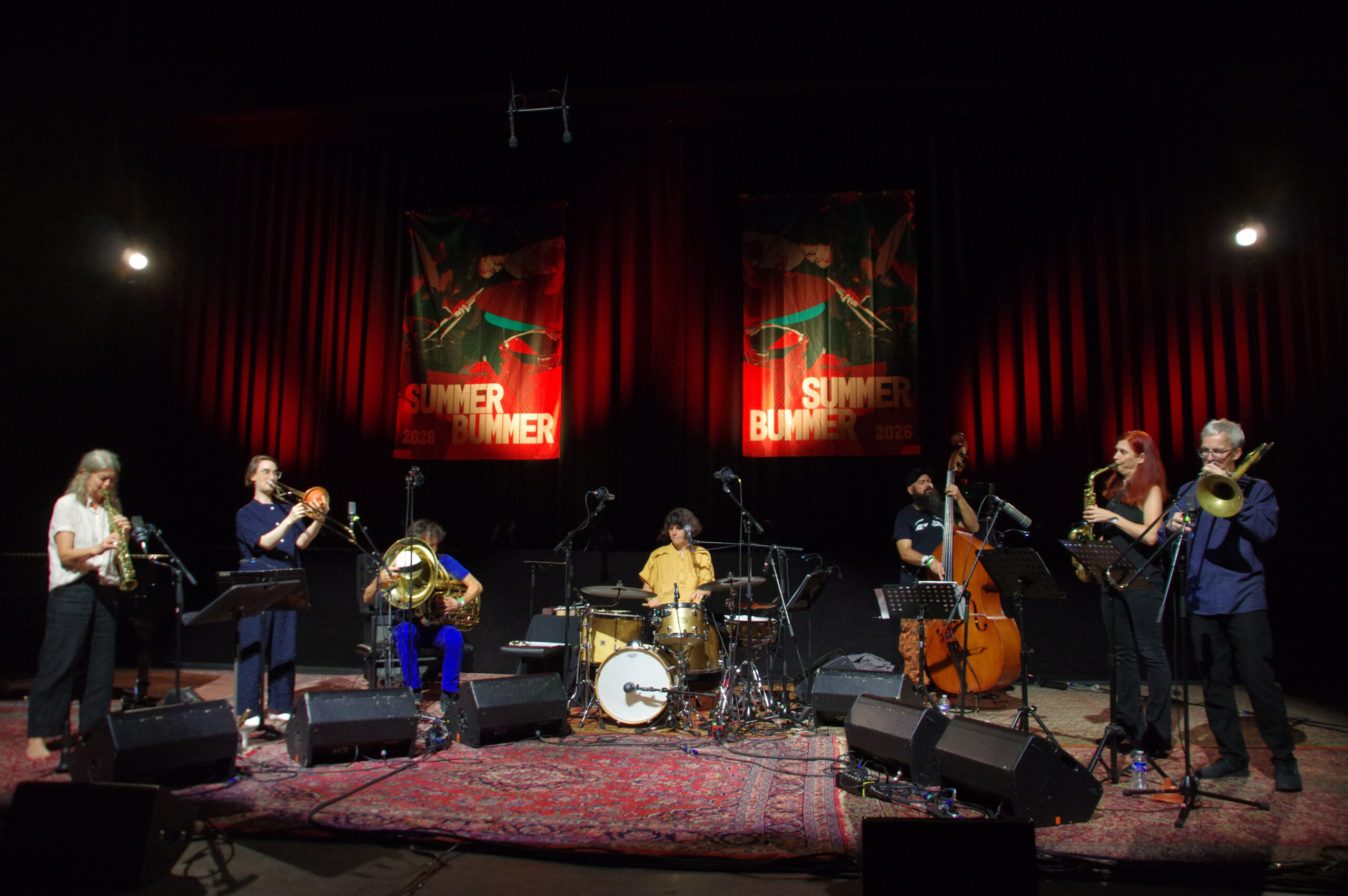
This year’s late August concerts, which took place at the multi-level, suburban Trix club, involved players from Europe and North and South America. The larger Main Stage was a seated venue, while in the smaller Café Stage, the audience stood or sat on the floor beside a raised stage. Also included during both days in a small arts space was Composite Mashworks, where UK musicians Cath Roberts and Tullis Rennie used a variety of audio and visual implements to encourage participants’ individual art-making.
Interestingly enough for a festival devoid of expected conventions, six of the sets involved some sort of vocalizing as far away from popular music as could be imagined. They included Brazilian standards and original tunes sung by drummer Mariá Portugal with her Erosão Septet, and in a duo with Polish pianist Marta Warelis; the vocals and violin of Romanian Diana Miron in her duo with countryman bassist Laurenƫiu Coƫac, and two different projects involving French guitarist Julien Desprez, one with vocalist/synthesizer player Claire Gapenne and the other with vocalist Audrey Chen. Plus of course there were the unique utterances along with the double-bass playing of France’s Joëlle Léandre during her trio set.
Besides this there were notable sets from one purely instrumental duo, a minimalist solo recital, two self-contained quartets, and an ad hoc meeting between the Belgian Kabas Sun Dog quartet, and American guitarist Jonathan Horne and Canadian alto saxophonist Karen Ng.
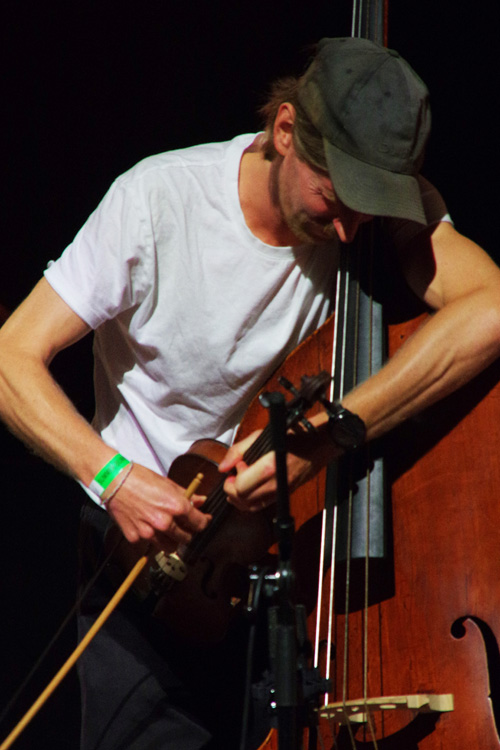
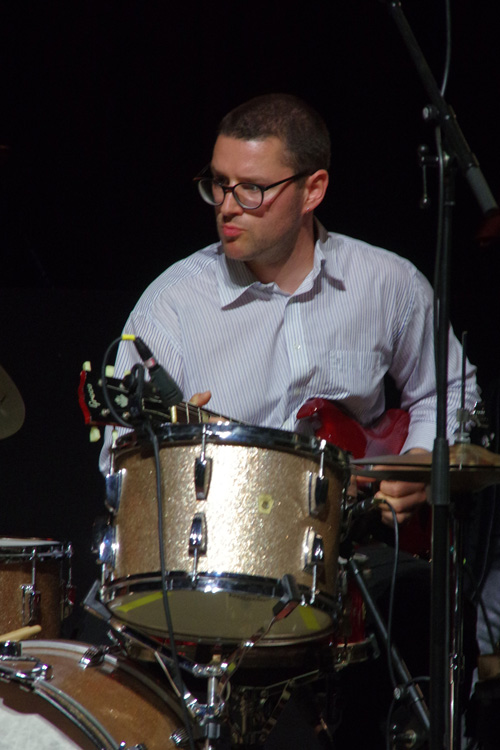
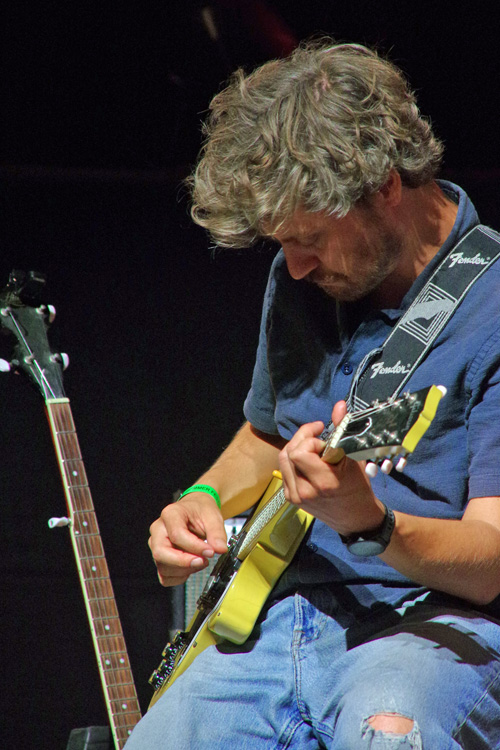
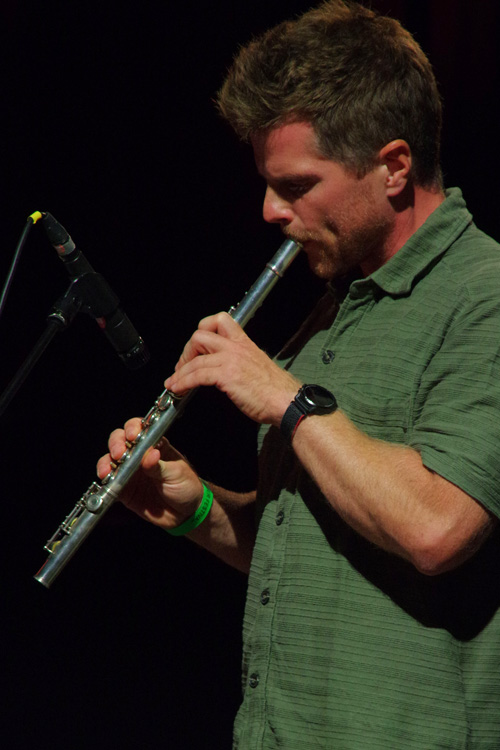
Grafting outsiders onto an already existing combo is sometimes problematic, but Kabas Sun Dog was ready for this addition during Summer Bummer’s first Main Stage concert on the opening day. Notably though, the performance radically changed shape during the sextet’s set. Initially Horne’s string-chiming plus Ng’s tongue stops, split tones and dissected aviary trills stood out among the concentrated Arcadian sound projected by Jan Daelaman’s twitters on flute or dizi, guitar twangs from Thijs Trocjh and Louis Evrard, who is usually the band’s drummer, and Niles Vermeulen’s anchored double bass continuum.
Yet at midpoint, timbres were rearranged so that Horne’s strums and violin bow screeches across the strings and Ng’s chanting bites, added to the solid groove projected by Vermeulen’s switch to electric-bass pacing, Trocjh’s banjo clanks and synthesizer washes, Evrard’s steadying drum beat and Daelaman’s vertical flute projections. Melding textures from the six, a Rock-inflected solid wall of sound was attained before the conclusion.
That setup and outcome was a study in contrasts to what happened the next day on the smaller Café Stage, as Ng and Horne joined forces with Canadian-in-Amsterdam bassist Aaron Lumley and Spaniard-in-Amsterdam percussionist Nasim L-P Navarro as the New Best Friend quartet.
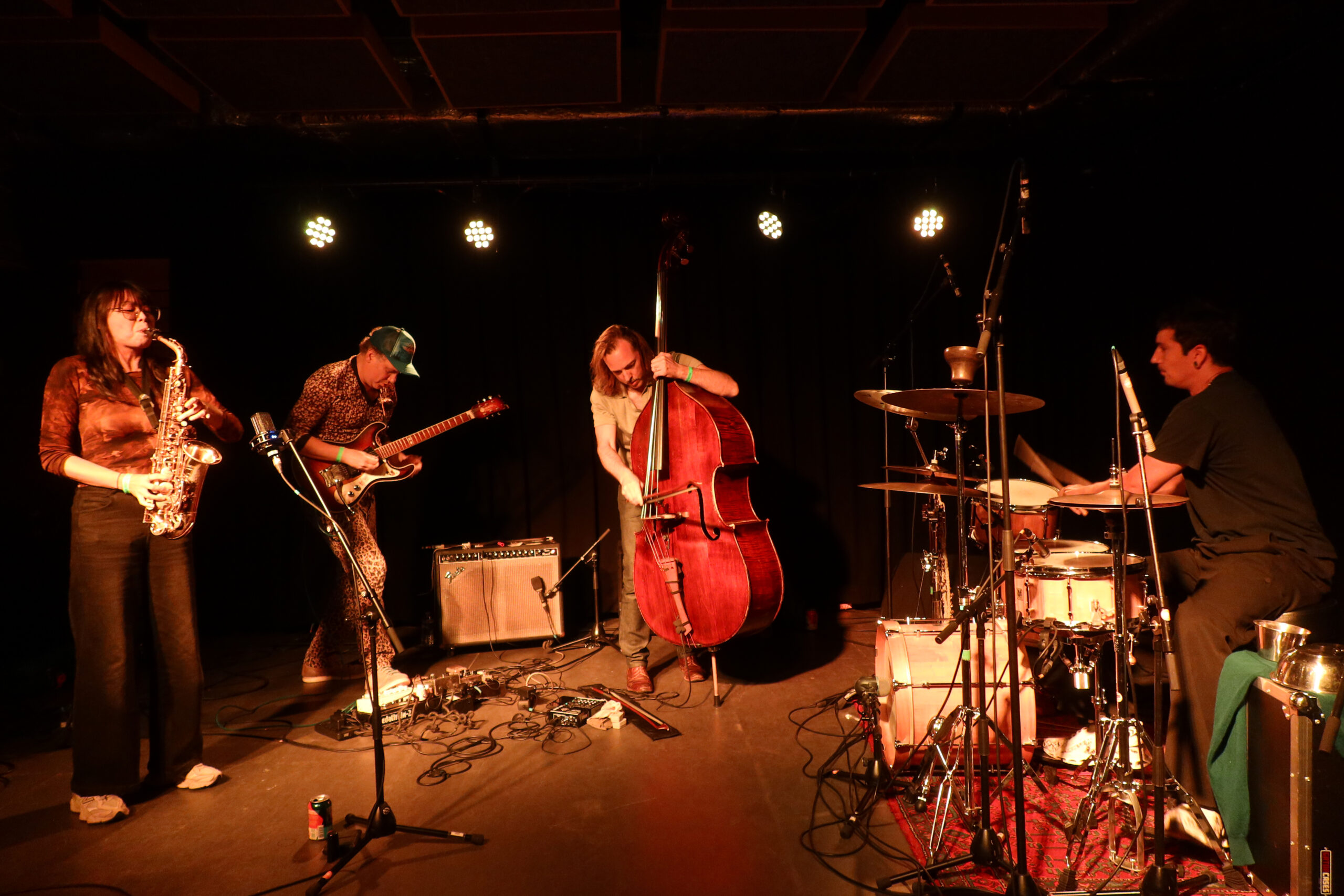
With all players in constant motion, the saxophonist’s note-bending flutters and irregular vibrations and the guitarist’s shredding flanges found niches among the bassist’s pizzicato thumps or wide buzzing strops across his strings, while the drummer not only rolled and popped patterns, but also broke up the time. He emphasized press rolls and ruffs and scratched a violin bow and an ebow along his cymbals.
As Ng’s pitch ascended to altissimo screams and smears, she connected with Lumley’s sharp pizzicato string snaps, while Horne’s below-the-bridge twangs or terse splayed-finger pressure made common cause with the percussionist’s solid drum-top rebounds. Eventually, ascending and descending saxophones tones led the others to the climax of this broken-octave interface.
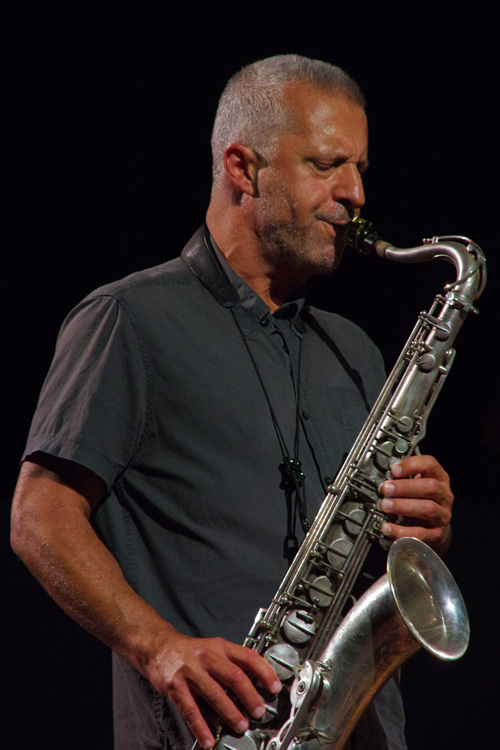
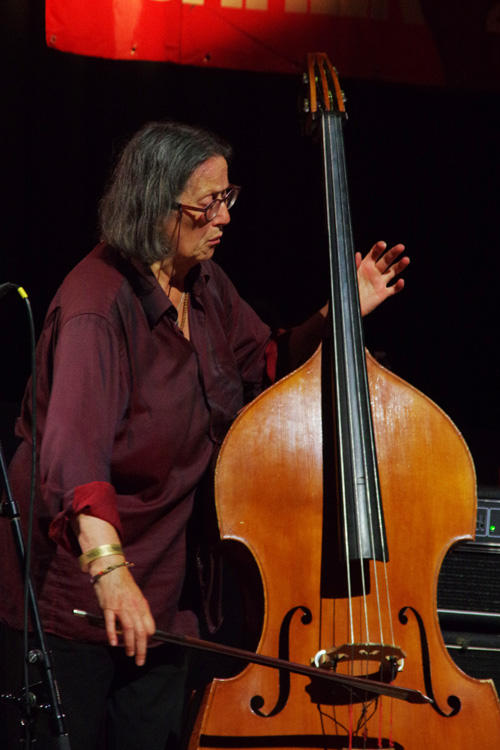
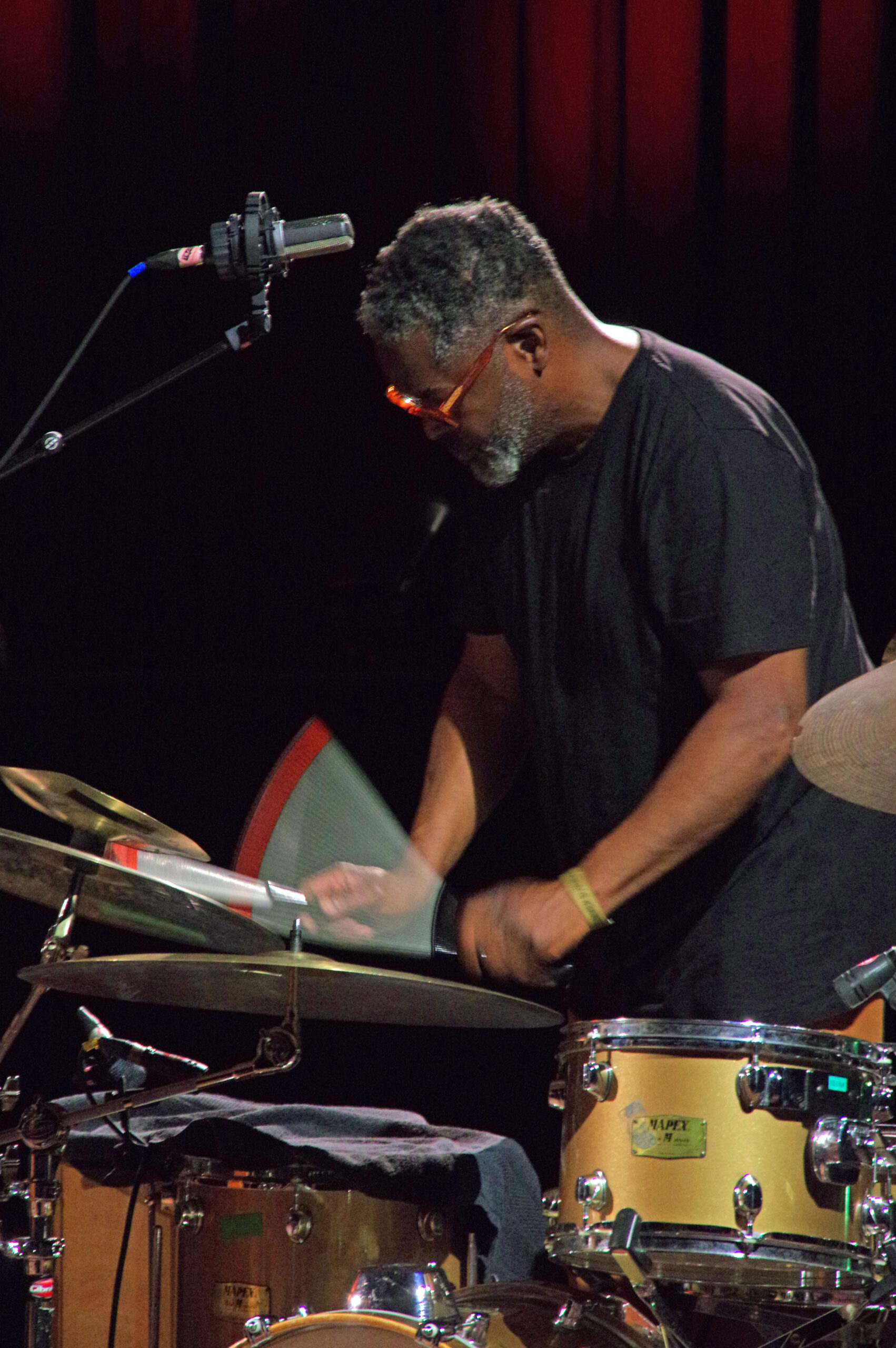
In contrast, during the festival’s last set on the Main Stage Saturday night, Portuguese tenor saxophonist Rodrigo Amado responded with invention and inspiration during his first-ever musical meeting with French bassist Joëlle Léandre and American drummer Gerald Cleaver, both of whom have frequently collaborated in the past.
More crucially among his ascending blares and animated blowing, Amado slid brief interludes of quiet lyricism into what was otherwise a wild-and-woolly improvisation. How it could be otherwise was no question as the bassist took every opportunity to sweep, slap and stop her strings, rolling continuous arco swipes into a speedy ostinato.
Meanwhile the drummer responded in kind, meeting Léandre’s percussive bow slices, and often simultaneous pizzicato strums with resonating drum-top vibrations and rugged cymbal scrapes. Adding speaking-in-tongues and murmurs to multi-string buzzes and spiccato emphasis on her bass strings, Léandre nudged the others to a resounding group climax. Responding to audience demand, a swift tensile encore allowed each player to expose a defining coda.
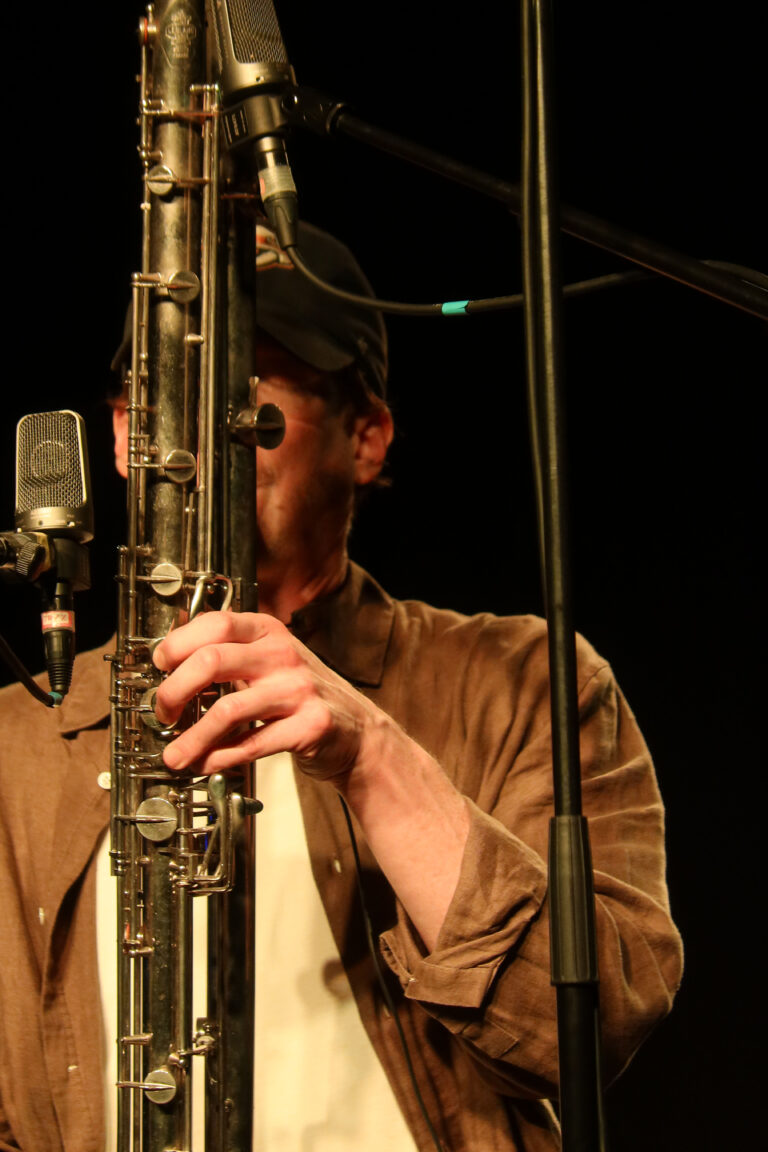
Part of the woodwind family, but as different from bright saxophone excursions as domestic cats are from jungle panthers, is the contrabass clarinet. American John McCowen’s hushed reed recital on the instrument earlier that second day was the only seated concert at the Café Stage, with the room filled with listeners.
Beginning barely heard, McCowen soon worked up to a vibrated drone, which reflected the room’s spatial architecture. Shaded with multi-tonal vibrations, his reed output encompassed nephritic snores, thin textural trills, skyscraper-pitched reflux and brief interludes of multiphonic explosions.
Always emphasizing the woody quality of his instrument, he sometimes inflated wind currents so that they dominated all the room’s aural real estate. Pauses between breaths merely adumbrated the following vibrations as the set concluded with potent low-pitched breaths.
Not all the imaginative improvisation was confined to reed focus however. In fact the Das B quartet’s unique recasting of John Coltrane’s “A Love Supreme” had Lebanese trumpeter Mazen Kerbaj in the place usually reserved for a saxophonist.
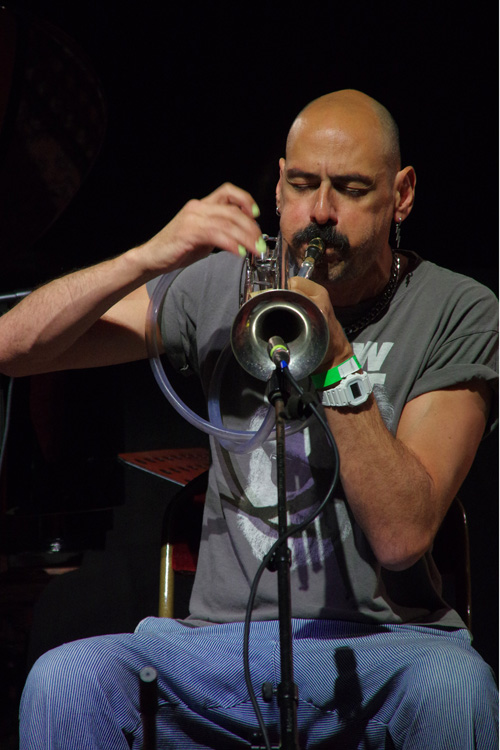
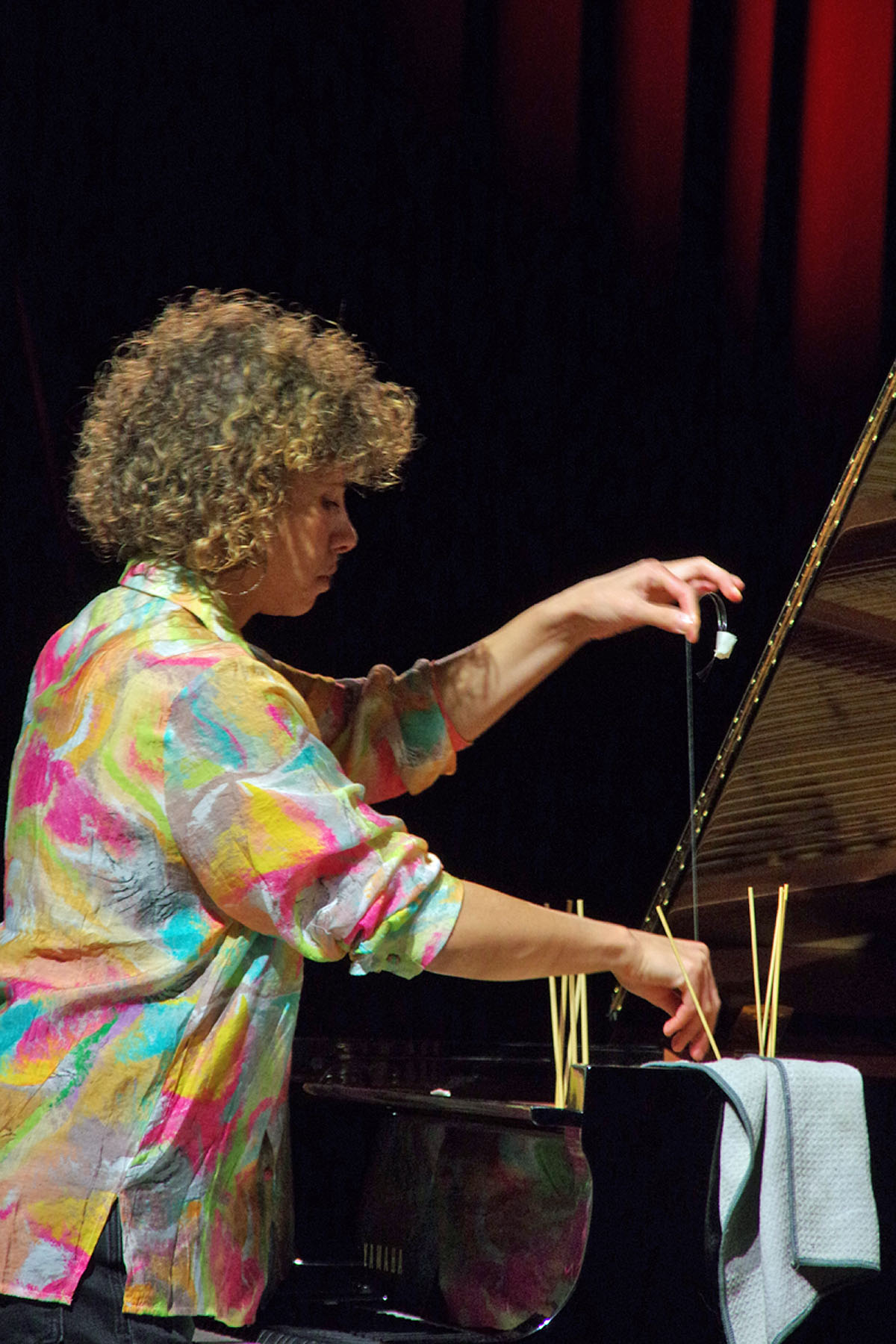
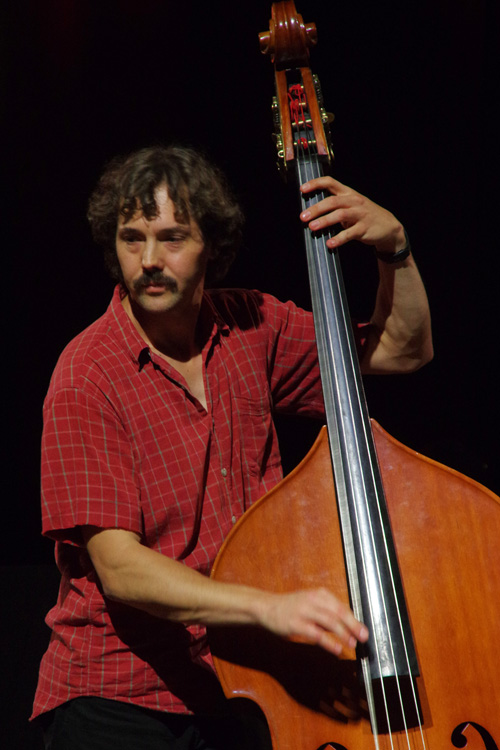
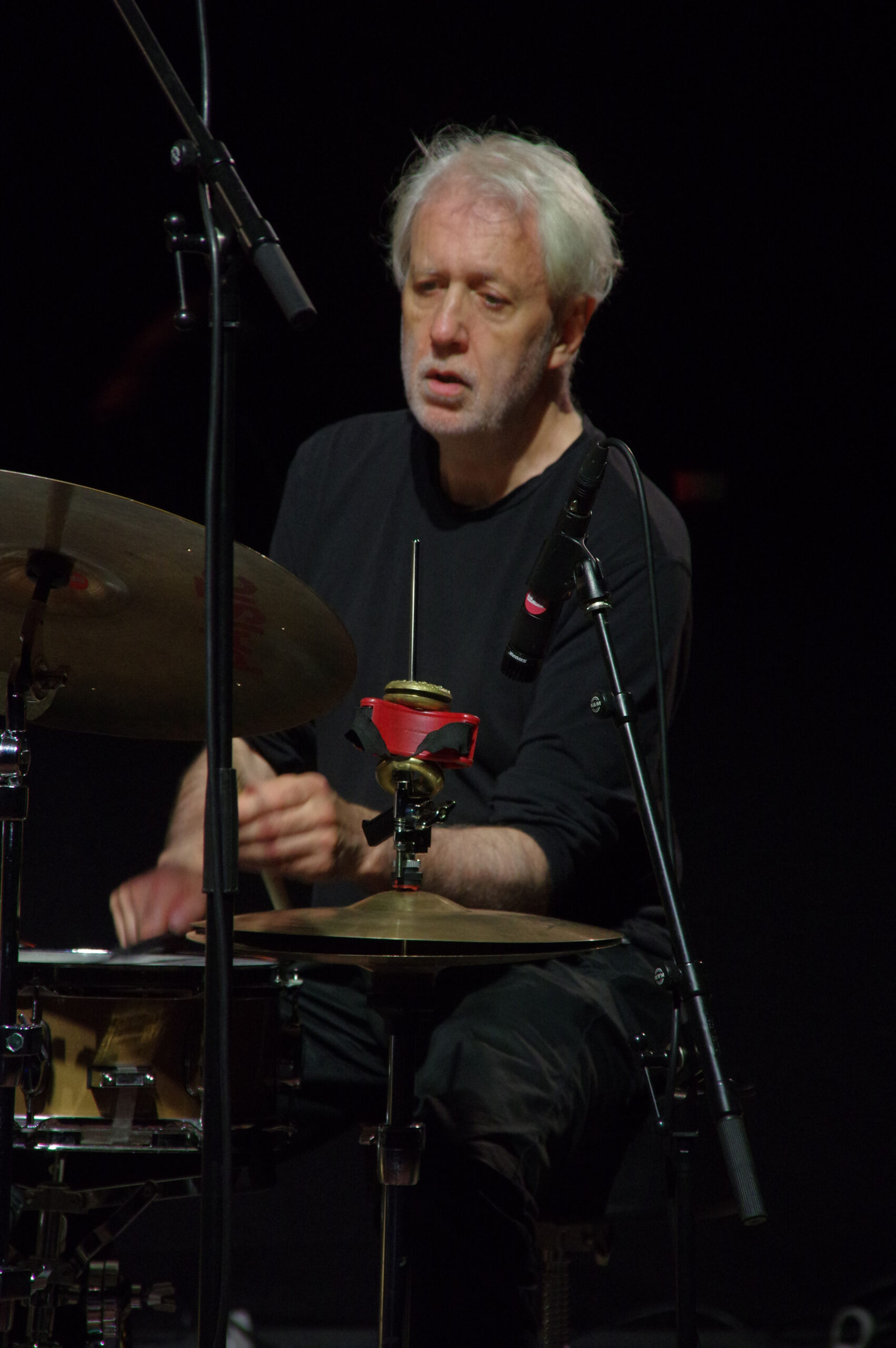
While the rhythm section personnel remained the same as the album’s with German pianist Magda Mayas and two Australians, bassist Mike Majkowski and drummer Tony Buck, the set, which took place on the Main Stage during Summer Brummer’s first day, was no exercise in programmed re-creation.
Introduced with thick double bass stops, the set began as Kerbaj suspended a long plastic tube between his reconfigured trumpet’s mouthpiece and it’s lead pipe, flamboyantly lassoing the tube in the air before attaching it to growl, low and smear tight overblowing breaths on top of strident rhythm section responses.
Meanwhile Majkowski slapped double bass strings, Buck thumped and clanked parts of his kit, and Mayas moved from cadenced chording to strum and pick at the piano’s inner strings. Following a few valve-less puffs for variety, Kerbaj first blew across a stationary tambourine then placed it atop the up-ended now vertical trumpet’s bell and by vibrating tiny item’s onto the tambourine’s framed head turned it onto a percussion instrument. Reversing the process, Buck ran brushes like a Swiffer along his drum heads for more restrained beats, and smacked a miniature unattached cymbal as Mayas swayed forward to sweep the keys with terse glissandi.
Blending these sound deviations with the bassist’s intermittent plucks and a wet brass bark from Kerbaj, a simultaneous textural cornucopia was heard that saluted the original while confirming Das B’s unique modifications of the Coltrane classic.
Equally unconventional instrumental expression with uncommon techniques, as well as reshaped vocal toners is what characterized the Saturday afternoon Café Stage set by the Romanian duo of bassist Laurenƫiu Coƫac and the voice and violin of Diana Miron.
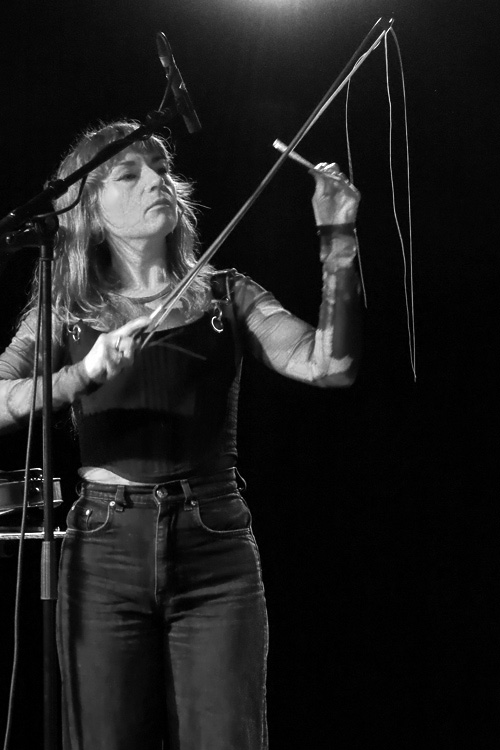
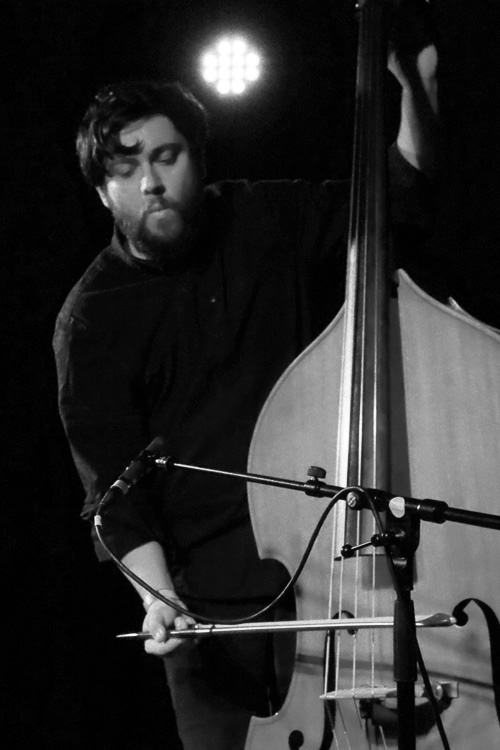
With Coƫac creating a sturdy undercurrent of arco buzzes, Miron’s mouth projections incorporated bedlam, bathos, billows and belting. At that same time, these unexpected verbal contrasts and combinations served to confirm the duo’s timbral definition as when witch-like cackles following yodels, cries and peeps introduced spiccato exploration from both string players, or when a sudden burst of bel canto lyricism emphasized the human impulses evolving alongside intense bass-string grinds.
Adding processed field recorded whooshes and splashes plus bursts of chorus-like voices augmented the program with more textures. Eventually, resonating drones resulting from both players rappelling down their string sets mixed with the violinist’s shrill yelps and cries attained a collective crescendo, leading to subsequent silence.
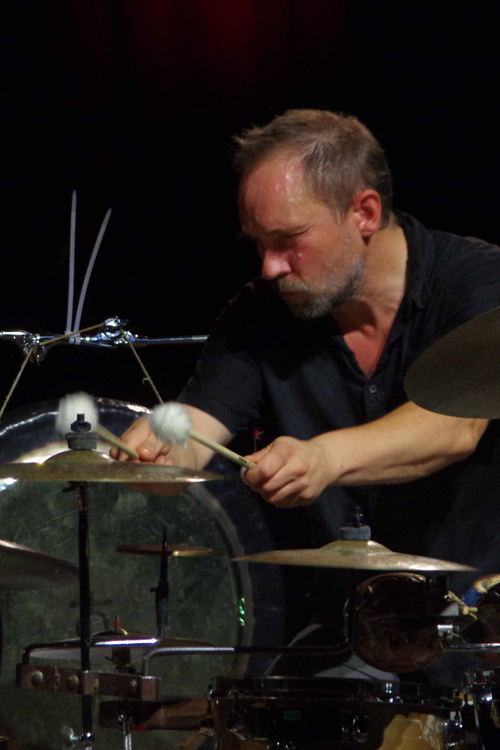
There were few obvious silences to be heard later than evening on the Main Stage during the duet between inventive Norwegian percussionist Paal Nilssen-Love, 51, and German pianist Alexander von Schlippenbach, 88, who was one of the founders of European Free Music in the mid-1960s. Arriving on stage using a cane for support, the pianist was slowly guided to the piano by Nilssen-Love; however, there was no hesitation but only power when he began playing.
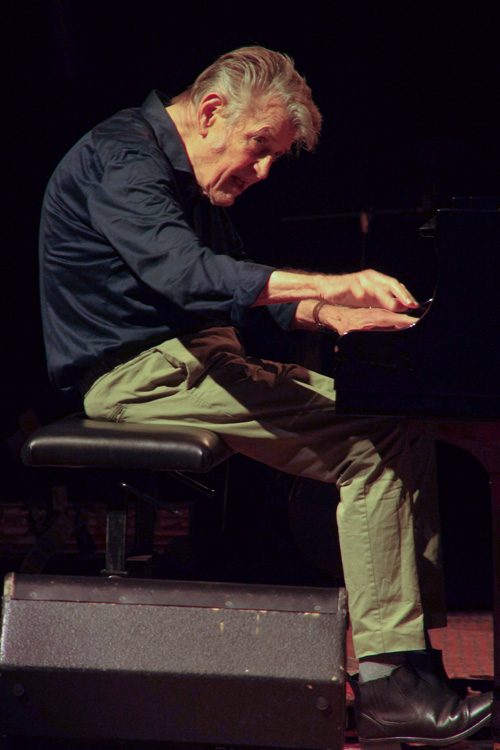
Spinning out a recognizable blend of terse, pinpointed chords, von Schlippenbach reached far back in Jazz history to emphasize boogie-woogie and Blues inflections, pivoted to free form extensions and instant extemporization and frequently evoked snatches of the compositions of Thelonious Monk, his avowed inspiration. With the pianist moving among speedy percussive lines, angular projections, alternating glissandi and single note emphasis, it often seemed as if he was indulging in a game of “name that tune”. At the same time his piano expression also included lyrical and languid episodes that swung as much as they stressed as forays onto the inner piano strings added to his expressions, while pedal-point descents confirmed his Freebop affiliations.
Faced with this onslaught, Nilssen-Love appeared hesitant at first, adding the occasional clank, bump and pop. As von Schlippenbach’s playing became more ferocious, the drummer first responded with fragility, slowly pressuring miniature bells and unattached cymbals. It wasn’t until the halfway point that he kicked into action with a collection of hard smacks, rat-tat-tats and reverberating thumps on his kit and pealing timbres from two large gongs mounted behind him. After the pianist responded in kind with a rhythmic take on “Blue Monk, Nilssen-Love toughened his stick maneuvers even further, emphasizing various drum beats with flat-fingered pumps and pressurized thumps.
Joining textures as the finale, the two improvisers still possessed enough musical torque to race through a brief percussive encore in response to the audience’s demand.
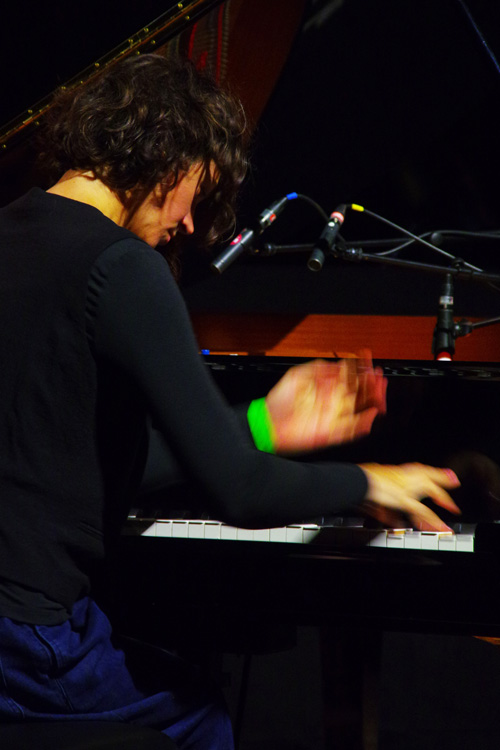
More particular piano-drum interaction was on display that Saturday when Brazilian drummer Mariá Portugal and Polish pianist Marta Warelis opened that day’s program on the Main Stage.
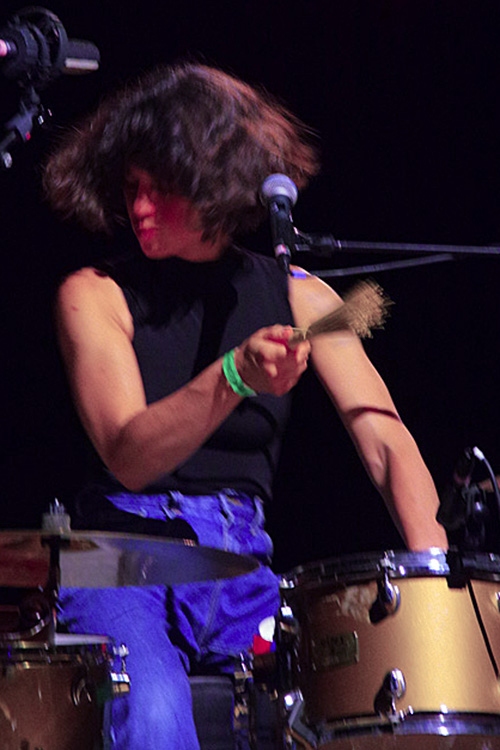
Simpler and more segmented than the later Nilssen-Love-von Schlippenbach duet, initially the pianist focused more on single note and popping patterns, while the drummer rubbed her snare top and clipped a single cymbal. The languid impression was further reinforced when Portugal voiced serene and fluid ballads with Portuguese lyrics.
The proceedings picked up a bit as expanded piano clips were met with a violin bow ratcheting across the drummer’s attached cymbal. Soon the two were trading motifs with a combination of passion and power. As Warelis began rolling note cascades in a speedier and speedier manner, Portugal accelerated her ruffs and rebounds, spurring herself on with vocalized yells and shouts. Eventually the pianist’s fingers were dynamically leaping from one side of the keyboard to the other, as energetic phrases followed phrases, and patterns followed patterns in an exhibition of power-chording.
Expanding the percussion input, Portugal smacked her bass drum, emphasized press rolls and shook a bag of small balls in the air. Emphasizing stop-and-go pianism and drum clanks, the two finally settled into a sound blend. An encore involved more Portuguese vocalizing from Portugal.
That pivot was writ large and extended musically during the final Main Stage set of Summer Bummer’s first day by percussionist Portugal’s Erosão Septet.
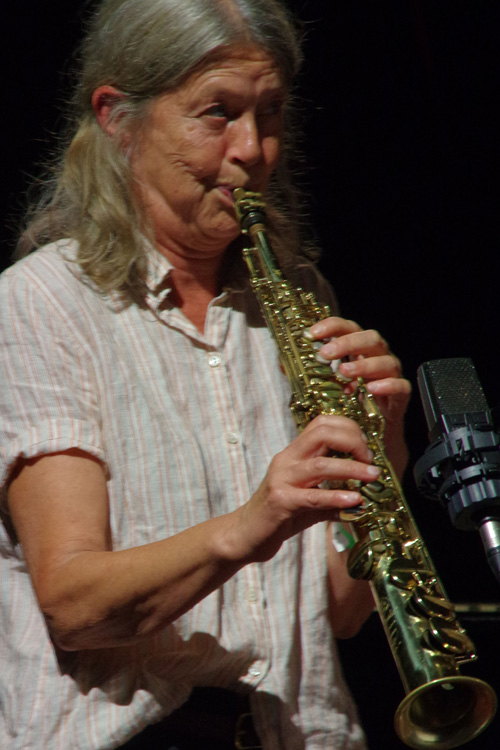
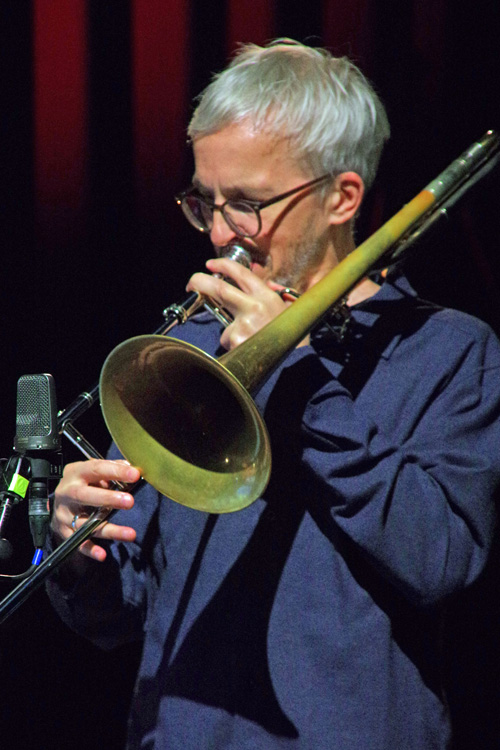
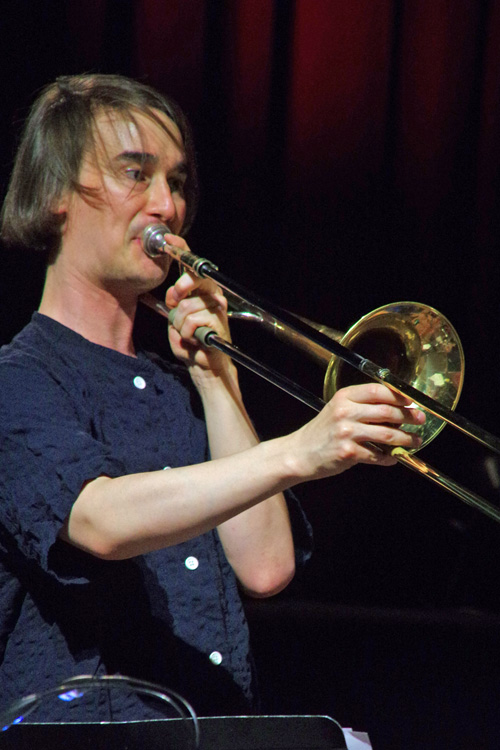
Augmenting her authoritative percussion explorations and earnest vocalizing, was tandem instrumental organization. There were two trombonists from Germany, Matthias Müller and Moritz Wesp; two reeds: Polish alto saxophonist Angelika Niescier and Dane Lotte Anker playing soprano and alto saxophones; and two low-pitched rhythm instruments: double bass played by German Reza Askari and fellow German Carl Ludwig Hübsch playing tuba, which in early Jazz was called the brass bass.
Rather than early Jazz, Portugal’s idea was to blend the traditions of Brazil’s tropical rhythms and songs with improvised elements. Initially the projection of squirmy melodies from the dual timbres juxtaposed from each instrumental coupling created expositions where tuba drones and double-bass thumps opened up the melodies to paced interpretations. These were further extrapolated into polyphony when Müller and Wesp puffed out plunger tones.
The excitement level was also augmented as Anker squeezed a Blues-like tone from around a water bottle placed in her horn’s bell. Niescier followed suit with tongue stops, whistles and growls and the bassist added arco sweeps. Yet the momentum was somewhat lost when the drummer traded her beat making for crooning.
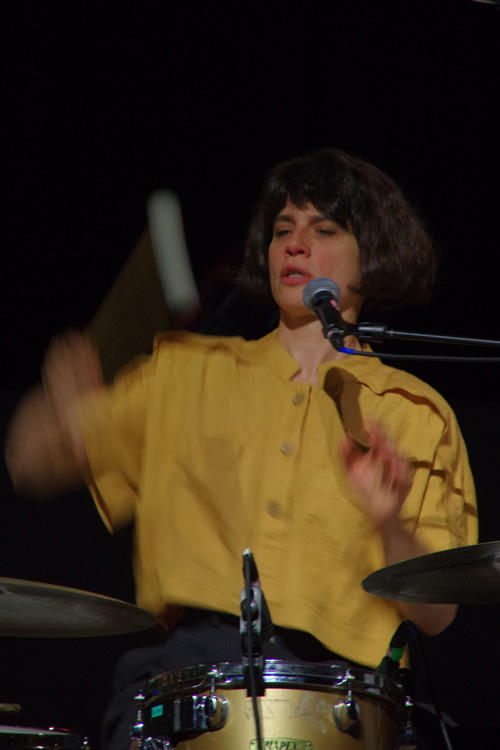
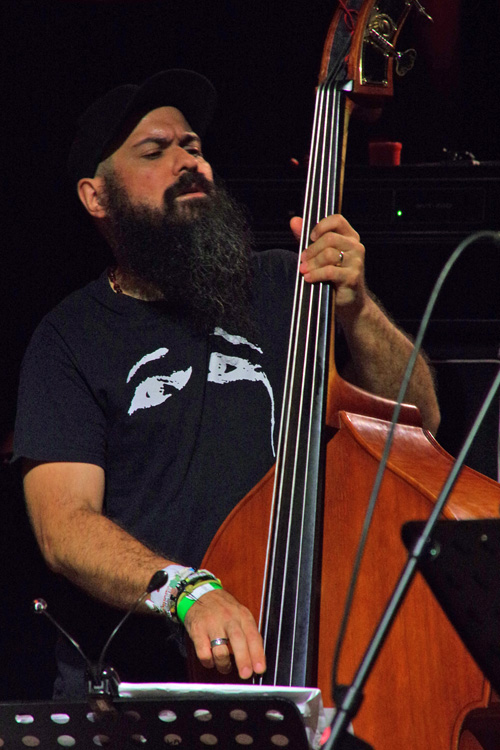
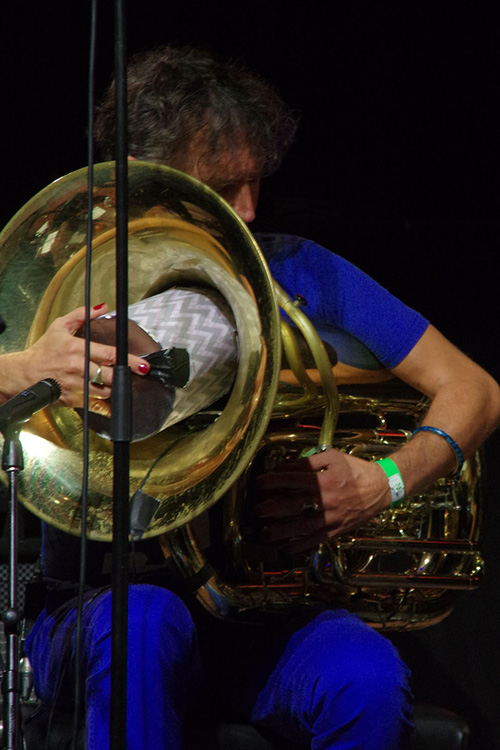
Songs, some in English, most in Portuguese, reoriented the narrative so that at certain points the workaday lyrics and their accompaniment seemed to exist at cross purposes to the waves of shaking stop-time rasps and buzzes which animated the program elsewhere.
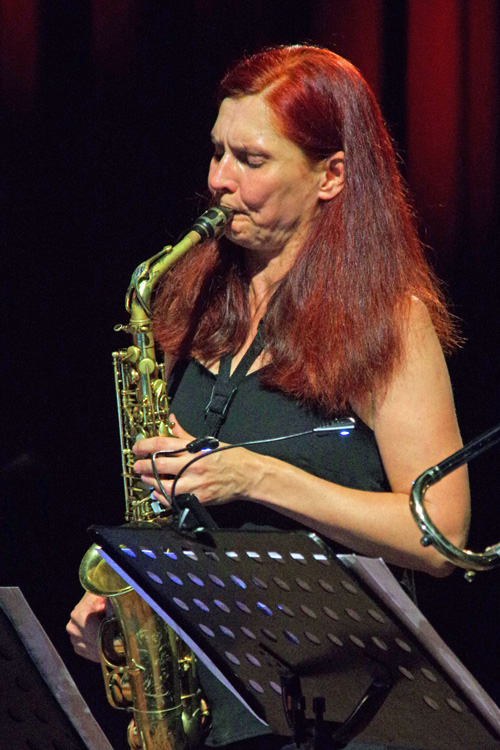
But such inconsistences and others that occurred during the two days are what distinguishes a festival like this one, featuring musicians attempting the new, from conventional ones that program only the tried and true. This focus on innovation and improvisation is what keeps adventurous audiences flocking to Antwerp and Summer Bummer year after year.
Lots more performance portraits on the /Artists pages of www.jazzword.com
For licensing and reproduction information, reach us at [email protected]