

Sound Disobedience 2026
15th Sound Disobedience Festival
March 26 – 28, 2026
Ljubljana, Slovenia
Review by Ken Waxman
Photos by Susan O’Connor
One advantage among many of a smaller improvised music festival is that participants get to experience the talents of innovators who are somehow under the Jazz-scene radar. So it was with Ljubljana’s 15th Sound Disobedience Festival in late March. During the festival’s three days that took place in the suburban yet sympathetic Španski boric arts space, the well-organized program highlighted not only local Slovenian improvisers, but also committed players from Germany, Belgium, Italy, Croatia, Austria, Portugal, Lebanon, Turkey, Iran, France, Mexico and even the United States.
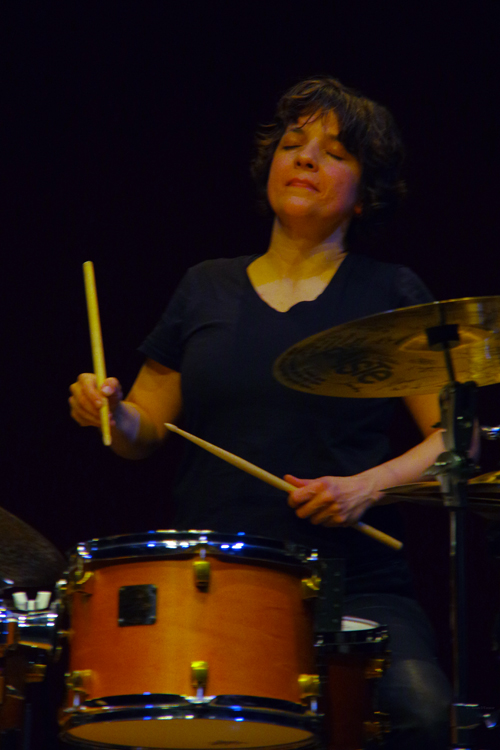
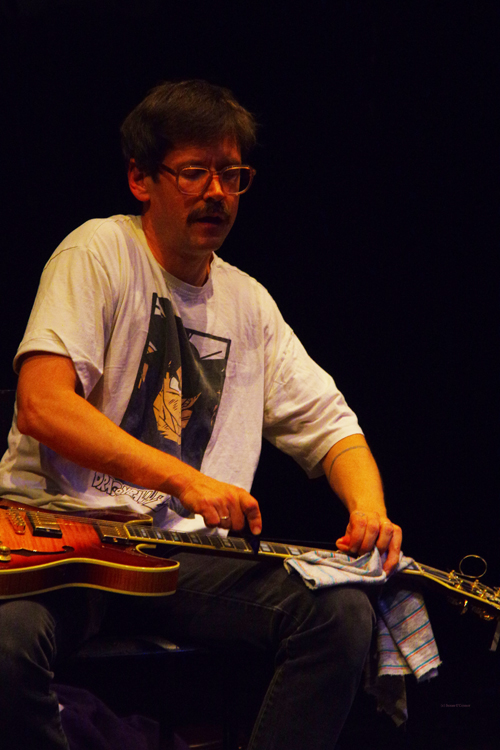
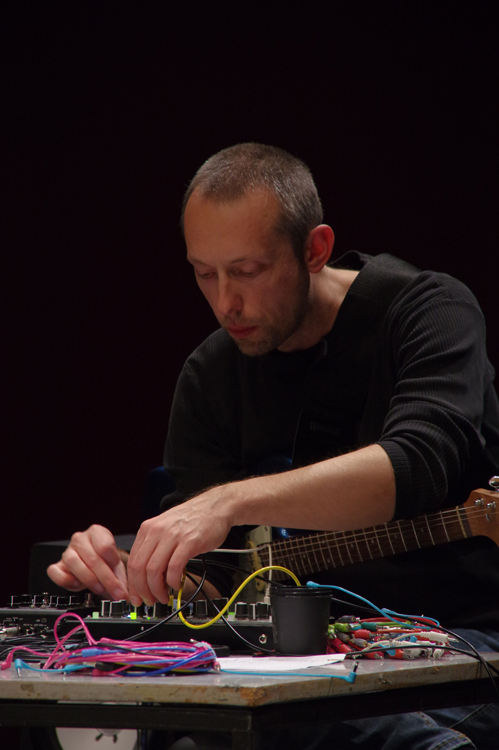
One of the notable sets took place in the middle of the festival’s second night with a trio consisting of Slovenian guitarist Gašper Piano, Belgian guitarist Quentin Stokart and Portuguese percussionist Sofia Borges. As the drummer clipped and clanked on her kit and shook small vibrating instruments, the two guitarists set up antiphony, careening timbres to one another from instruments often placed in tabletop positions. As Stokart jiggled multiple tones from beneath the bridge-resonator and added extended pressure with an e-bow, Piano wrenched metallic frails from his string set, as well as ranging up and down single strings with pinched stops and resonating slashes.
Those times when either seemed headed for guitar-hero-like excess with flanges and amp drones, the other restored horizontal motion with, for instance, Stokart creating steadying on/off static with his foot pedals.
Bonding the ongoing flow between the three, Borges also extended the improvisations a little further out by rasping a bolo-bat ball against her drum tops or propelling both drums and cymbals into a superfast exposition. Eventually after the two plectrumists pushed single string clangs up their instruments’ necks, or in Piano’s case smacked licks from his strings while positioning his guitar vertically, the trio members reached a group crescendo. It joined swelling strums and aggressive twangs from Stokart and Piano as Borges completed the piece with an echoing single gong reverberation.
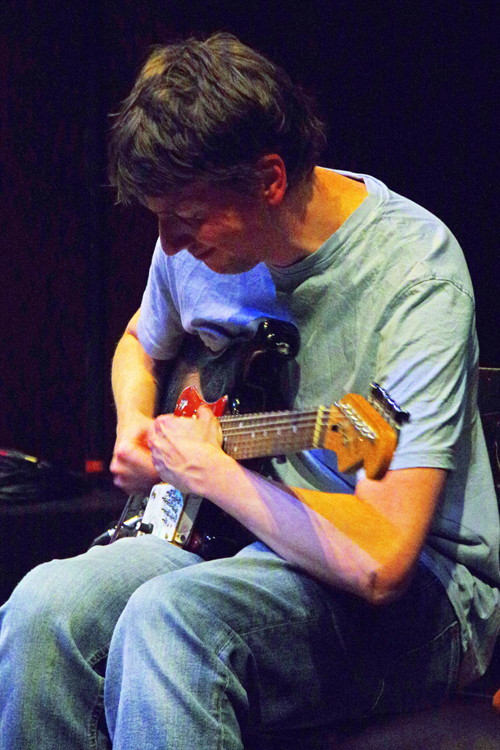
Both guitarists also played during the first set of the third evening when 12 local and visiting musicians presented the culmination of a workshop piece they had evolved improvising three hours a day during the three preceding afternoons, under the leadership of Lebanese trumpeter Mazen Kerbaj. The group-created piece was titled Take a Minute or Two.
What was termed Ensemble 280326 that performed it included guitarists Riccardo Silenzi, Jernej Babnik Romaniuk and Aleš Hvasti as well as Stokart and Piano; bass guitarist Jan Robek; horns Luka Zabric (alto saxophone), Enej Gala (bass clarinet) and Mišel Kosi (flute); violinist Vita Kobal, and Pia Skušek and Mojca Zupančič alternating among piano, snare drum and objects.
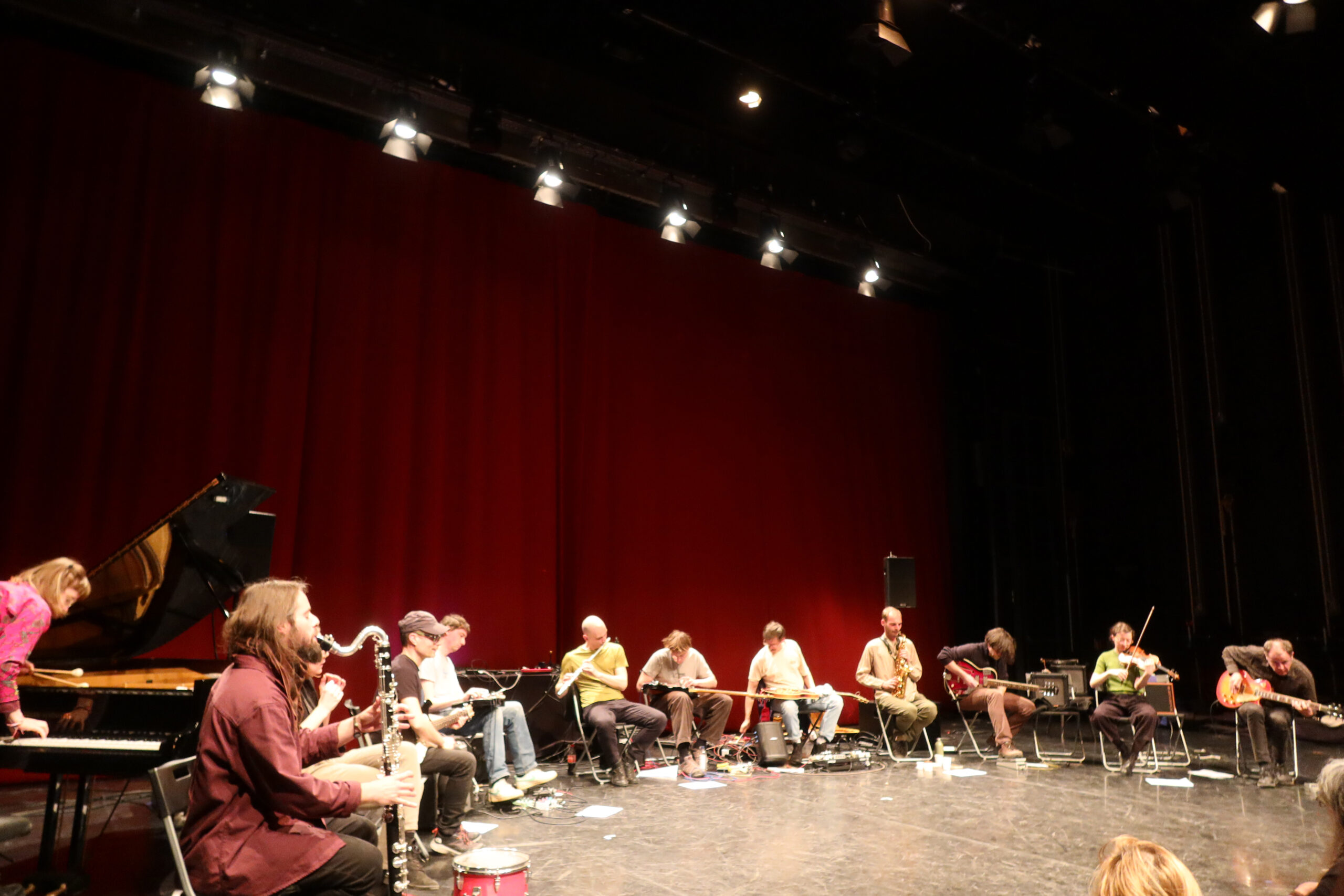
Beginning quietly with a singular guitar snap and bass clarinet slurp, the sequence slowly intensified, driven by violin squeaks, muted tones emanating from Zabric with a paper cup squeezed into his alto saxophone bell, and Zupančič’s snare drum taps. With the flutist and bass clarinetist harmonizing underneath, melodic motifs were worked into an exposition by Stokart and Piano, challenged by Robek’s low-pitched hammering, yet with lyricism also emphasized from Kobal’s string motions.
Finger-style guitar plucks, and layered high and low woodwind tones pulled the narrative in a lyrical direction as simultaneously Skušek’s keyboard comping and Zupančič’s drum- top slaps roughed up the exposition. The result was group intensification as multiple guitar flanges, pedal-point piano tones – now played by Zupančič – and bass clarinet tongue slaps toughened this section as Kosi’s dulcet peeps floated above the others concentrated tension. Eventually, ascending twangs, toots and trills from different band members marked the climax, which with pointed string vibrations then gradually faded to silence.
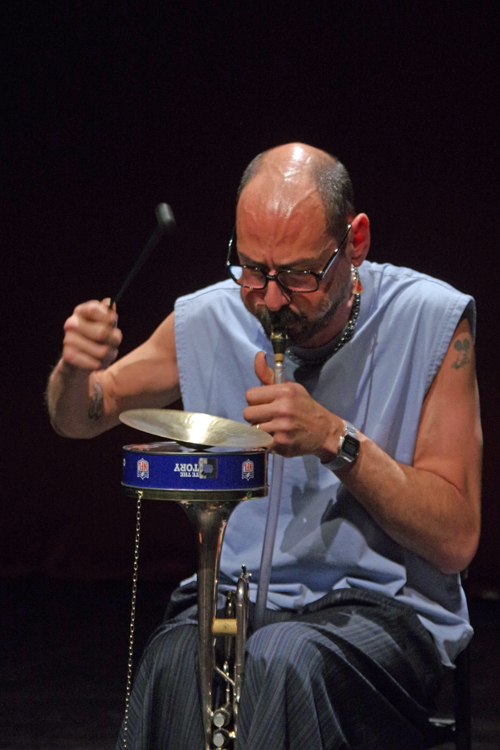
Playing on his own midway through Thursday night’s concerts, Kerbaj’s solo set was as much theatrical as musical. Beginning with him hidden off stage, shrieking harsh brass noises from behind the audience, an elongated plastic tube attached between his mouthpiece and the trumpet body were revealed as sound sources when he appeared from the darkness.
From that point he built on all the textures that could be squeezed from his horn. Barefoot, wearing dangling earrings, a long tunic and wide pants, he swung the attached tube lasso-like in the air around the stage as he depressed his trumpet valves for raucous vuvuzela-like sounds. As well as upending the trumpet vertically to create unexpected dental drill-like rasping timbres.
He later added such items as a plastic cup and a slide whistle within his instrument’s bell, and slapped its brass body with a rubber mallet. Sometimes he up-ended the instrument once again to project the tinkling of a tiny music box and an equally minute plastic hand fan into the mix.
Eventually combining the brass buzzes, peeps and slurs into resounding expression, Kerbaj aimed bright grace notes at various audience members as he wandered off stage in the same stealthy manner in which he had arrived.
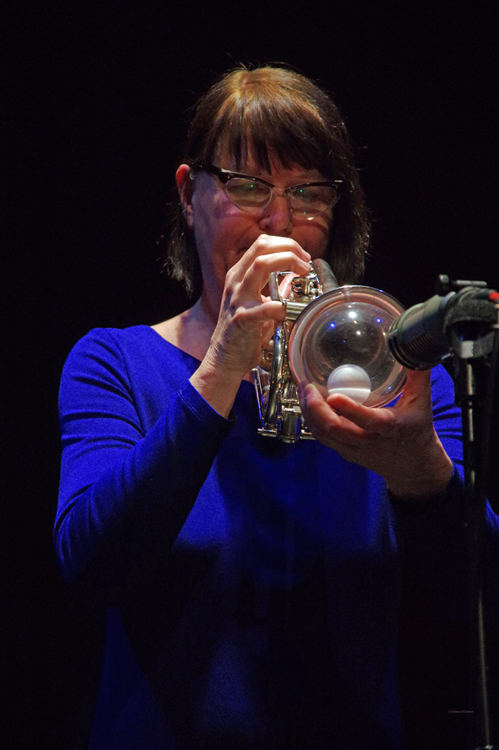
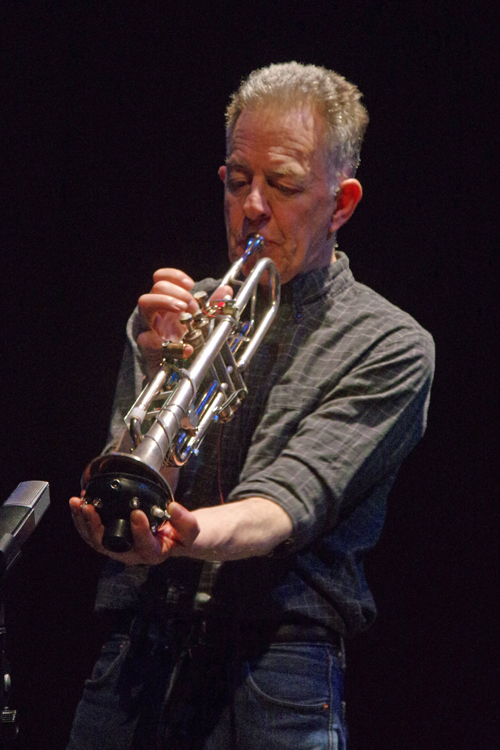
An equally distinctive, but dissimilar brass banquet was offered from the dual trumpets and add-ons of German Birgit Ulher and American Nicolas Collins during their duo that closed Sound Disobedience’s second day of concerts.
Usually an electronic music composer, Collins often flutter-tongued and growled pronged brass ripples that were amplified through his laptop attachment. However, he was involved enough in the acoustic interaction to command a snare drum from the previous band’s set up, and intermittently vibrated sounds to produce singular effects by placing his bell directly onto the drum’s Mylar surface. Not to be outdone, Ulher occasionally created rugged buzzes by resonating her instrument’s bell against a metal sheet. At one point she even blew downwards to manipulate a small ball floating inside a glass ball, or separated the mouthpiece from the trumpet’s lead pipe to huff across the exposed ending.
Despite these idiosyncratic turns, the Ulher-Collins duet was really about partnering, not pedantry. Maintaining connection throughout, the American’s valveless internal rumbles were met by the German’s low-pitched tongue slaps; her singular cries were expressed in contrast to his brassy yelps. Eventually as the metal body taps, peashooter-like triplets and half-valve whinnying subsided, final agreement was reached with tandem unaccented air projected from both horns.
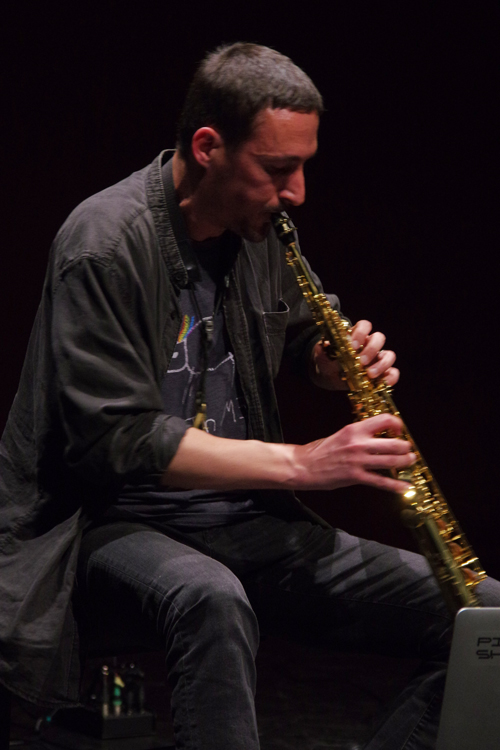
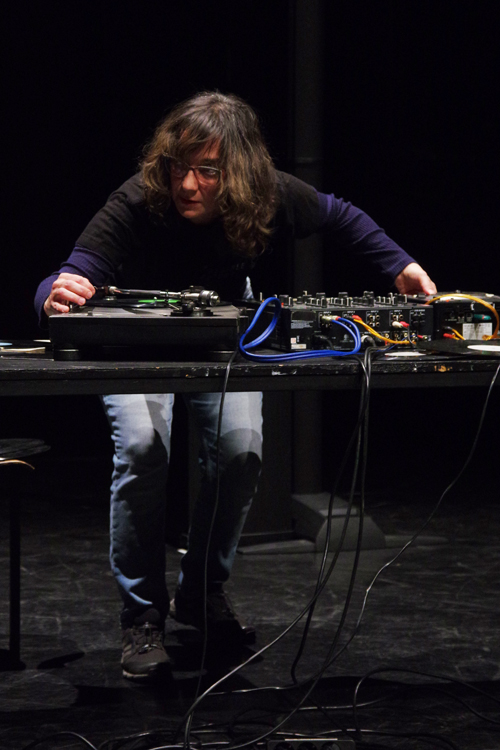
Unlike the Ulher-Collins brass encounter, Sound Disobedience’s three other duo performances were all electro-acoustic. Closing the first night’s performances was the duo of Croatian soprano and alto saxophonist Grgur Savić and Italian turntablist JD Zazie, while Saturday’s penultimate set consisted of Iranian bass clarinetist Shabnam Parvaresh and Turkish electronic explorer Korhan Erel.
Still, the only almost completely electronic concert opened the Friday night proceedings with the duo of French electronics manipulator Jérôme Noetinger and Mexican-Austrian Angelica Castello, who played Paetzold recorder and electronic samples.
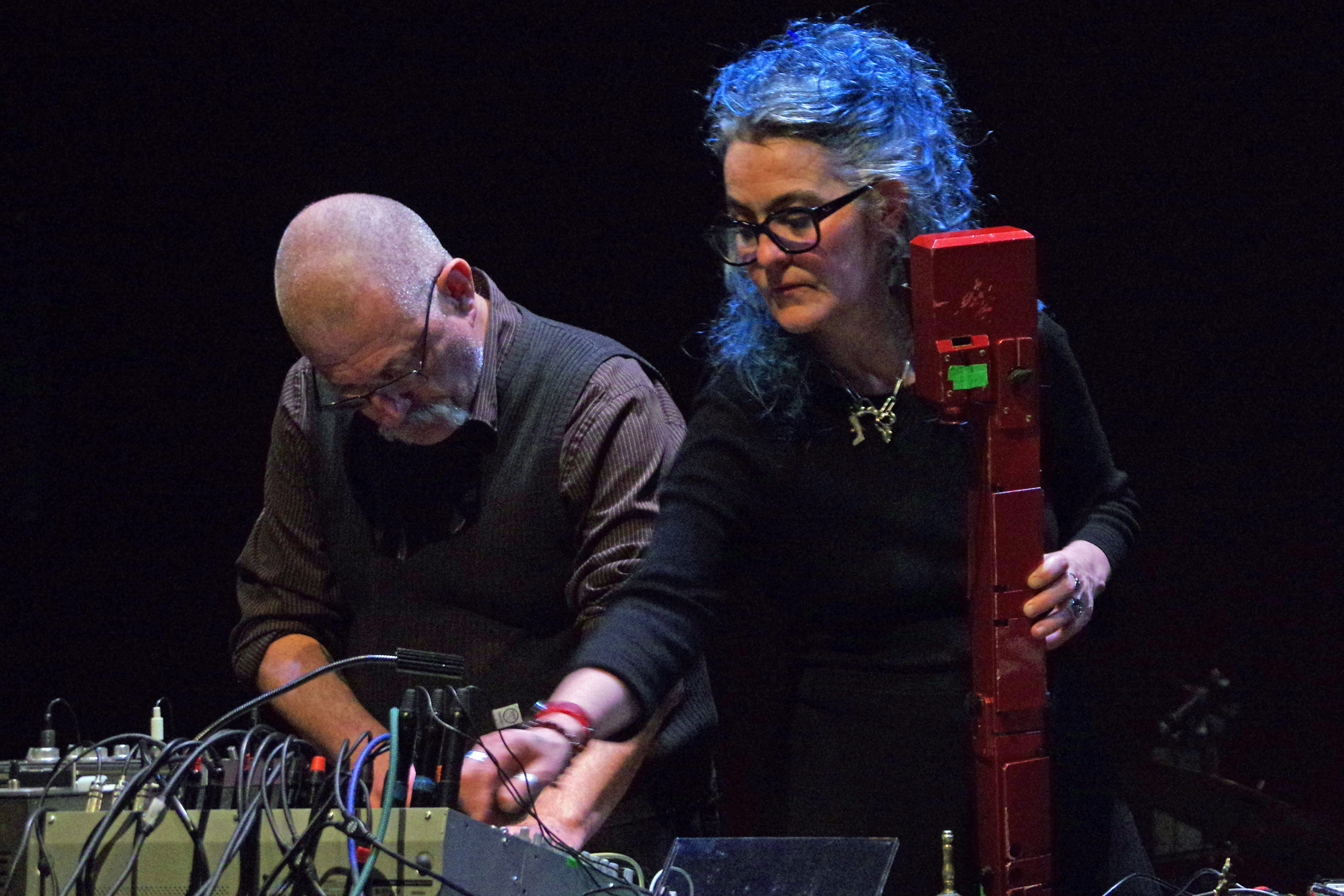
Of these the Noetinger and Castello interaction demonstrated the utmost wave-form interaction but with the finesse of a notated music, dual piano partnership. Creating an assembly line of rolling textures and unexpected stops, Noetinger mixed mutated voice and instrumental samples with buzzing crackles plus flanged sound reconfigurations as Castello responded with processed ear-splitting static and suspended air whooshes. Ironically, the textures she blew from the Paetzold added some of the few overt melodic motifs heard. Those dial-twisting asides that cut through the ever-evolving thumps and textural manipulations amplified the sonic differences between the duo’s elaborations, yet moved the collection of banshee-pitched drones into sliding and simpler peeps from both at the end.
With Shabnam Parvaresh’s shrilling reed timbres more acoustic, and Korhan Erel’s voltage cascades warmer and more subtle than those of Noetinger and Costello, the computer-clarinet blend widened into a fuzzy, but not fragile connection of airy drones and gentle smears during their set.
Sometimes the clarinetist created the underlying continuum with positioned flutters; sometimes Erel’s processed oscillations did the same with wavering hisses and reverberations. Often as not, both sonic streams combined into a quickened timbral kaleidoscope where the resulting echoes reflected straight-ahead riffs studded with pointed reed smears, and computer processed clanging plus jet plane-like landing textures. The finale was marked by a concluding reed buzz and laptop drone.
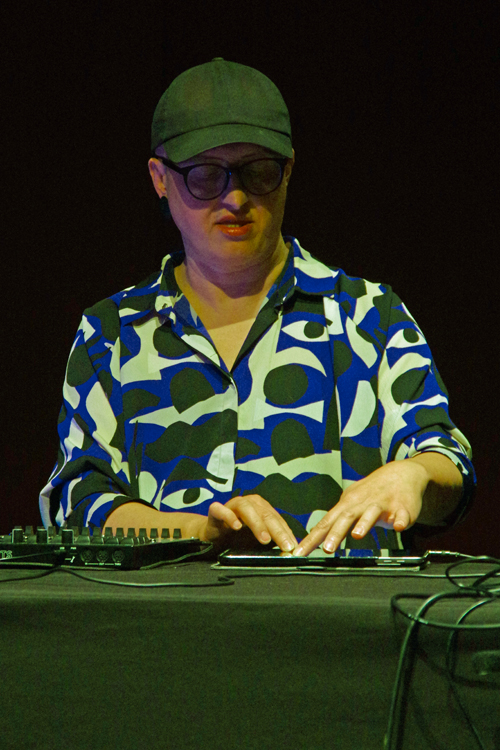
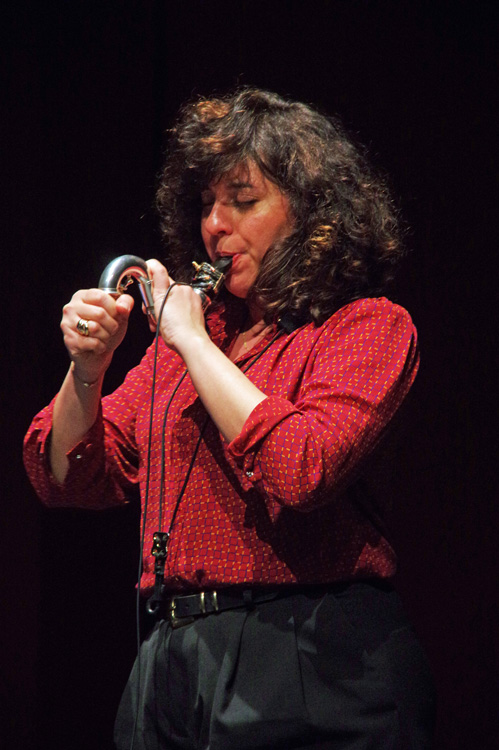
More precise electro-acoustic division was present in Grgur Savić’s and JD Zazie’s dual-program set as the turntablist used samples of LP-sourced vocal and instrumental music to comment on the reedist’s energetic honks, slurs and doits. Building counterpoint from sonority snatches, Zazie’s precise sound-and-motion involved backwards running flanges, the sudden audibility of aviary cries, animal squawks and percussion suggestions, platter whooshes and static.
Featuring unbroken single note emphasis, tongue slaps or split tones at points, Savić’s reed work occasionally pivoted to lyrical expansion on top of the turntable output of crackles and drones. However when blended vinyl-sourced voice and instrumental samples mutated into shifting calliope-like sound patterns, the saxophonist toughened his expositions with circular breathing, mouthpiece whistles and watery hisses.
Eventually the duo attained a tonal climax that mixed Free Jazz with foot-stomping rhythms.
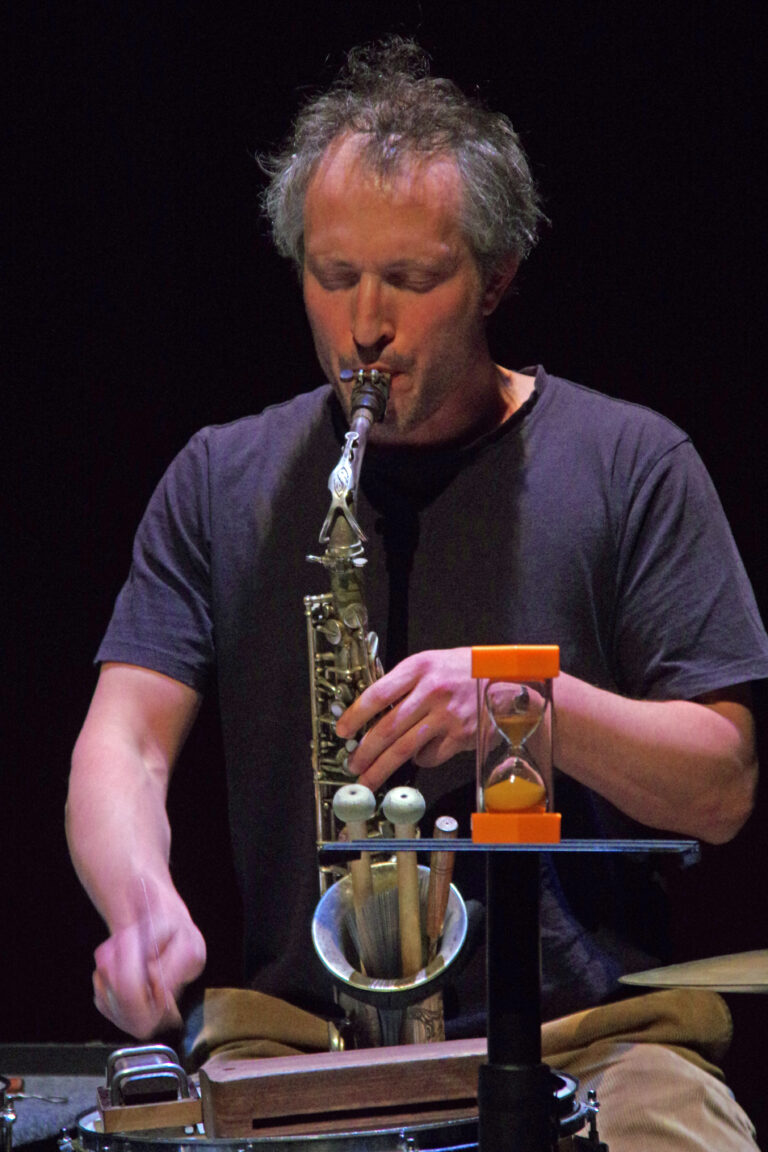
A unique variation on these duets was offered by France’s Pierre Borel, who closed the festival performances with a spectacularly singular set. That’s because during that time he played both alto saxophone and drums, usually simultaneously.
Distinctively expressed with drumsticks and mallets initially shoved inside his saxophone’s bell, he soon alternated the echoes produced by reed multiphonics, stifled screams and key percussion with complementary bass drum pumps.
Soon his straight clarion lines were further affiliated with snare drum and tom pops, which multiplied to distinct rhythms as his repeated squeaks and honks turned straight-ahead. From then on, martial drum ruffs were heard alongside respirated smears.
Not content to leave the cadenced mutation to the saxophone, Borel then placed a small wooden box on top of drum tops and while buzzing an e-bow and bearing down on miniature stick motions, created speedier rhythms that intersected with powerful foot-pedal drum whumps.
Attaining a crescendo of concurrent prestissimo reed whistles, hi-hat slaps and snare drum rumbles, he resonated those integrated timbres to a full stop.
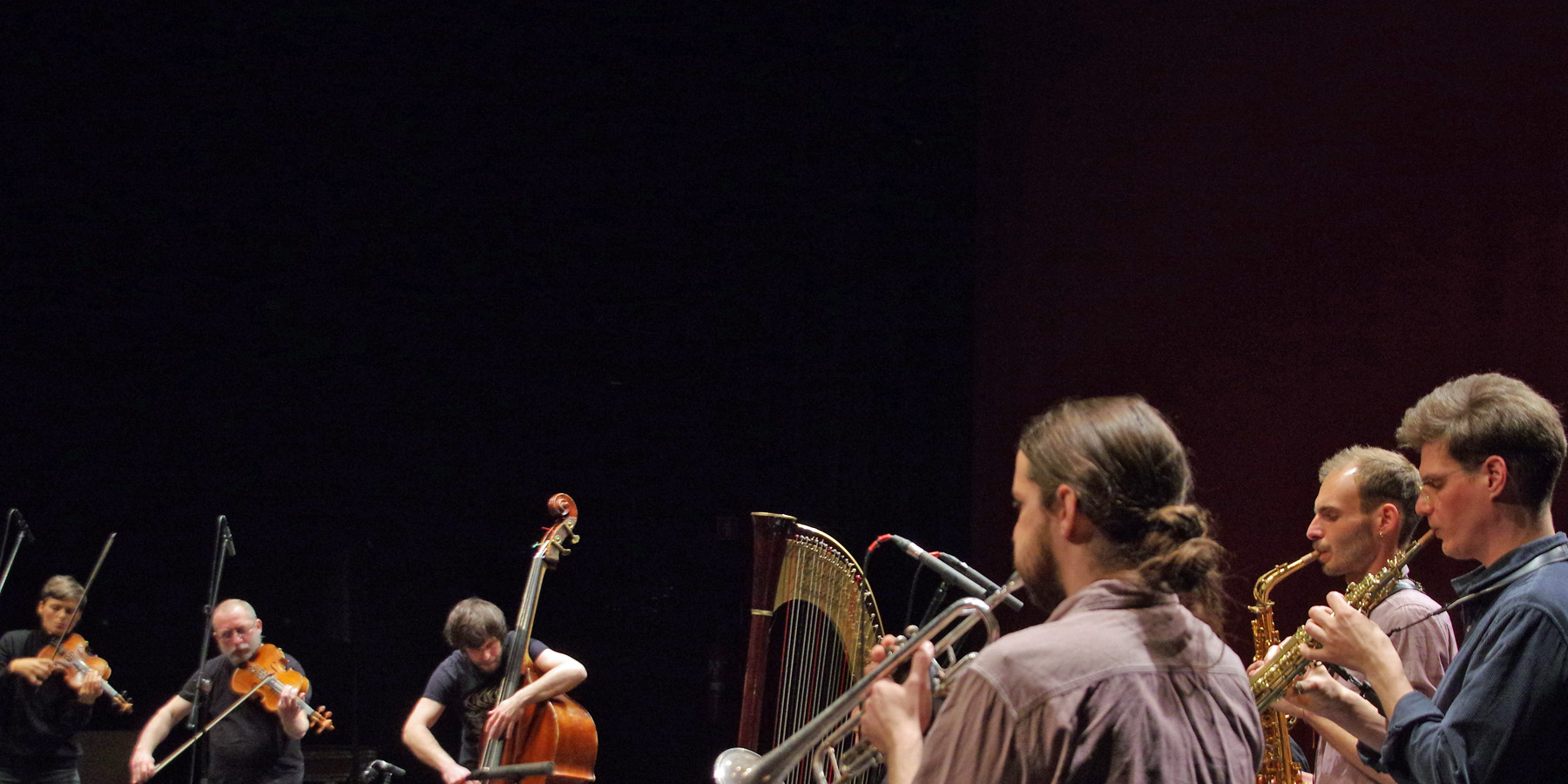
Another new production which was a counterweight to plugged-in voltage sets, and adumbrated the final night’s Take a Minute or Two improvisation in which he also participated, was Slovenian alto saxophonist Jošt Drašler’s Floating Machine project.
Opening the festival on Thursday evening, the ensemble also included Nikola Vuković (trumpet, electronics); Luka Zabric (alto saxophone); Tilen Lebar (soprano saxophone); Tena Novak (violin); Szilárd Mezei (viola); Domen Gnezda (guitar) and Eduardo Raon (electronics and harp). With acoustic instruments outnumbering the electronics six to two, wave-form affiliations were consistent but controlled never masking acoustic affiliations.
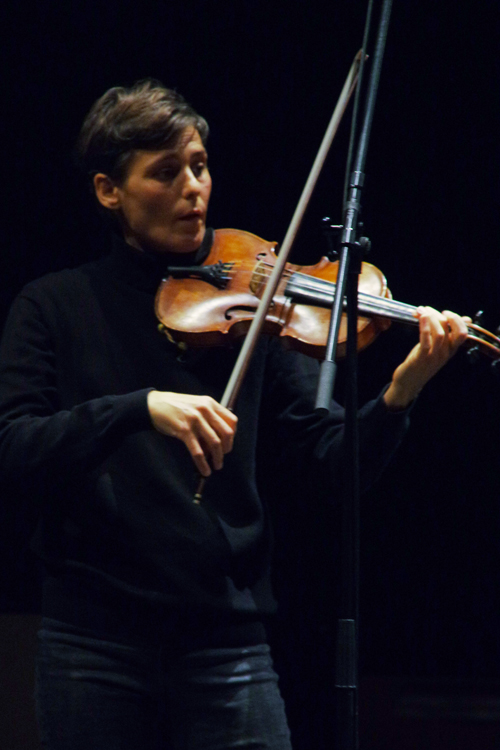
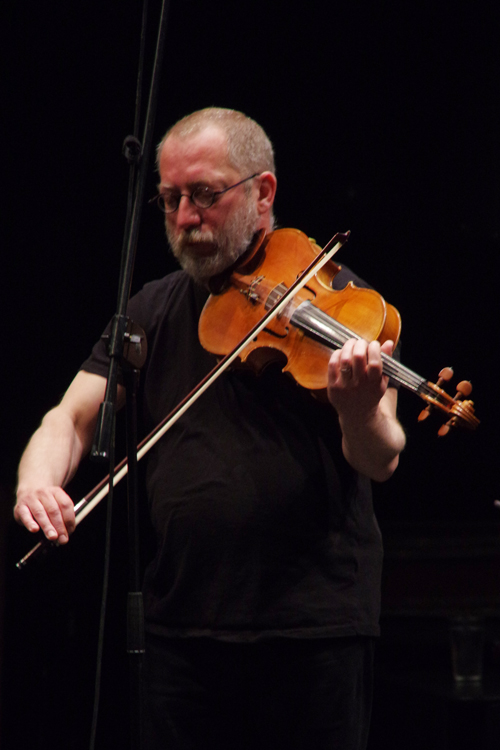
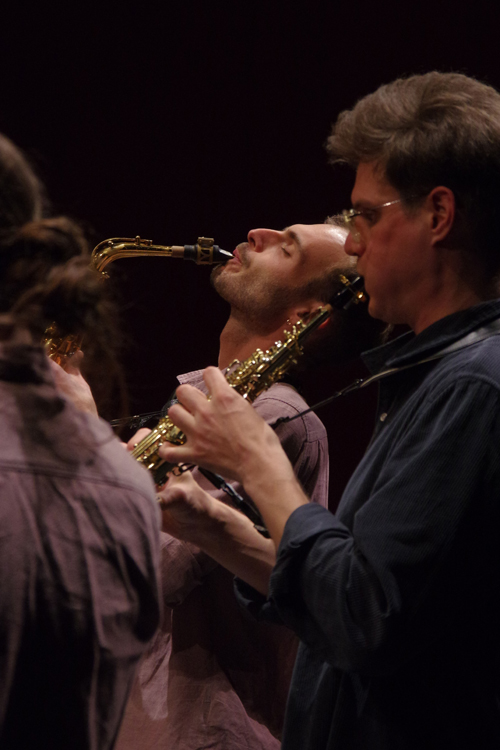
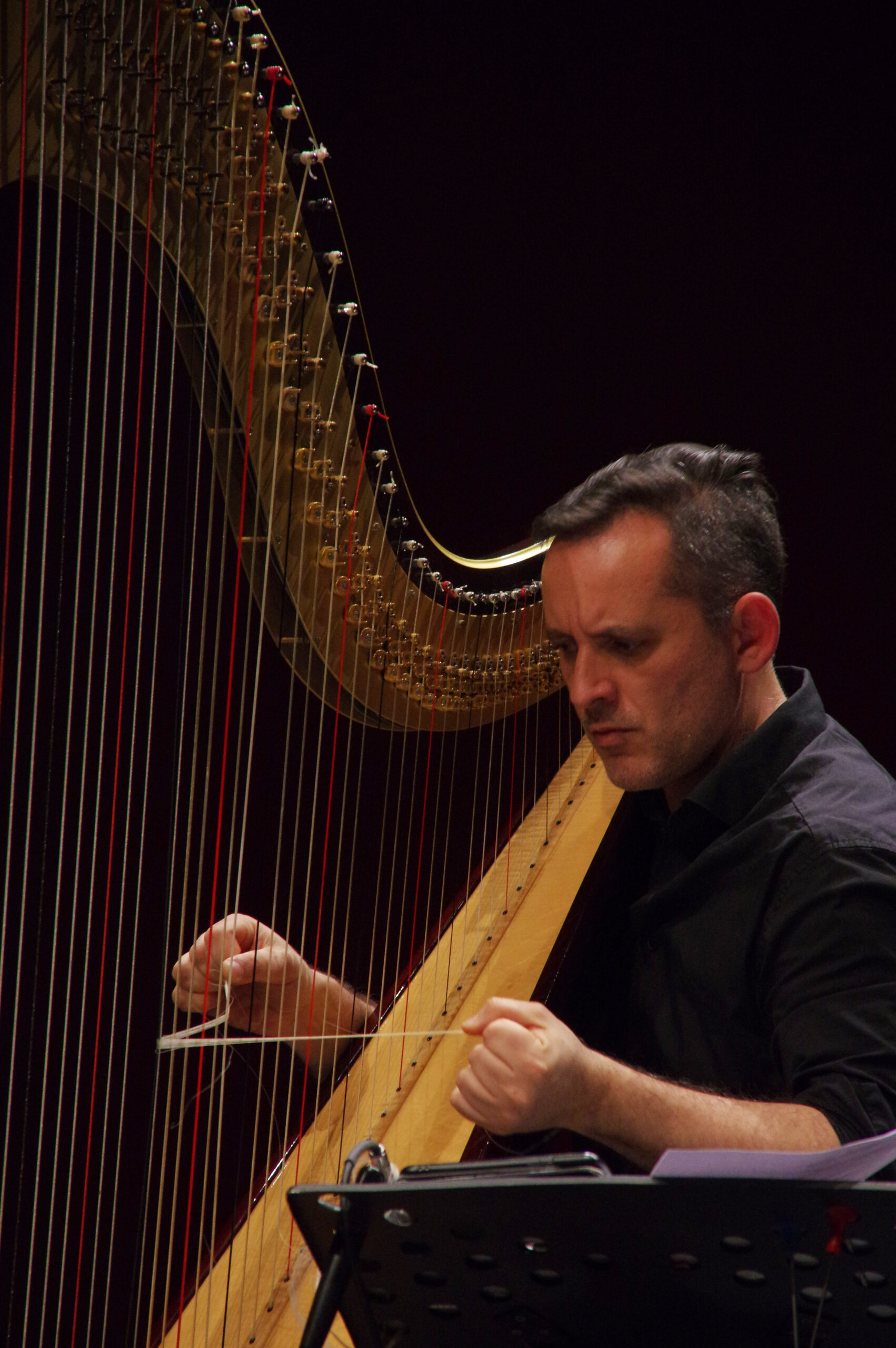
As Drašler directed while propelling reed textures tones muffled by a paper drinking cup placed within its bell, these near-static wisps often evolved alongside additional barely there breaths from the other horns as a lyrical and linear ostinato was projected by the strings. At points the mass output reached a crescendo that approximated pure noise, yet the piece was saved from descending into cacophony by Raon’s intricate harp-string plucks, which also involved vibrating small sticks among the taut string set. Also contributing to the timbral descent were muted grace notes sprayed over the narrative by Vuković from one of the three bells of his pocket trumpet. From that point on the interface moved from languid and lyrical to scratchy and speedy with intermittent oscillations preserving bottom timbres sometimes in the form of sul tasto, double-bass resembling plucks from the harp’s lowest-pitched strings.
Subsequently, viola and violin string scratches vibrated alongside harp strums and irregular reed accents to reach a crescendo of speedier group tones, later challenged by more formal string sweeps. Singular trills from both alto saxophonists joined positioned guitar-picking and descending pizzicato runs from the string players to finally reach a melded climax that was both staccato and subtle.
Persistent in its messaging and broad in scope, Sound Disobedience now heads into its late teens showcasing sound explorers from wider settings of genres and geography. Here, disobedience only refers to separation from commonplace musical norms with the platform uniformly open to new ideas.
§§§
More photos of individual artists, and reviews of their CDs can be found under/Artists.
Material on Jazzword may be reprinted only with permission from its creators; please contact [email protected] to make arrangements.