

Porta-Jazz 16
16° Festival Porta-Jazz
February 6-8, 2026
Porto, Portugal
Review by Ken Waxman
Photos by Susan O’Connor
Despite the unusually cold and rainy weather in Porto in early February, the 16th annual Festival Porta Jazz in Portugal’s second largest city, offered three days of distinctive improvised music in the century-old Teatro Rivoli. Unlike the weather, the performances of the 16 bands featured on different stages were hot, dry and brought forth other superlatives that could be applied to innovative musicians creating programs at the highest levels.
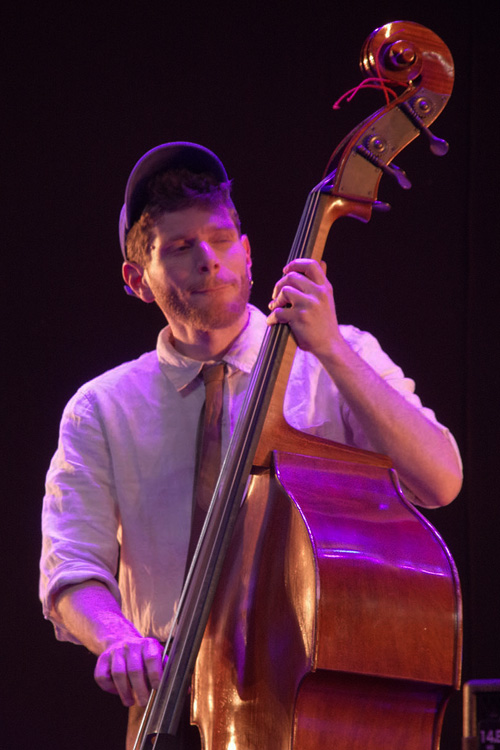
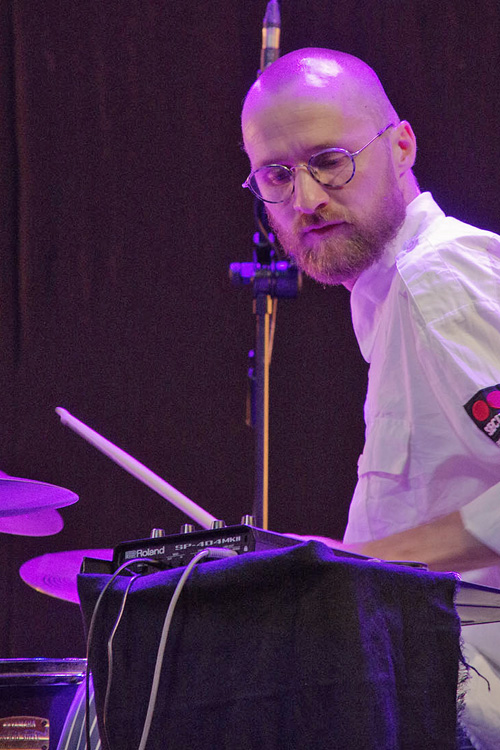
One configuration that illustrated both the universality and the imagination of the players at Porta Jazz was the SQUIGG trio, consisting of Portuguese guitarist Mané Fernandes, Italian bassist Luca Curcio and Norwegian drummer Simon Albertsen. Throughout their set they amplified their closely-knit variations on Fernandes’ compositions with timbral interpolations by additional musicians on different tunes, including Portuguese alto saxophonist José Soares, pianist/synthesizer player José Diogo Martins, Ricardo Coelho who played an amalgamation of a log drum with metallic attachments, and vocalist Mariana Dionísio as well as German singer Almut Kühne.
Kühne was also part of an usually constituted trio that used their opening spot on the following day’s theatre performances to debut their Seeds and Stones CD. Besides her voice, the other members were local multi-instrumentalist João Pedro Brandão playing flute, alto saxophone, clarinet and foot pedals, and endlessly inventive percussionist Marcos Cavaleiro, whose self-designed kit included temple bells, gongs, a frame drum and other idiophones as well as the standard implements.
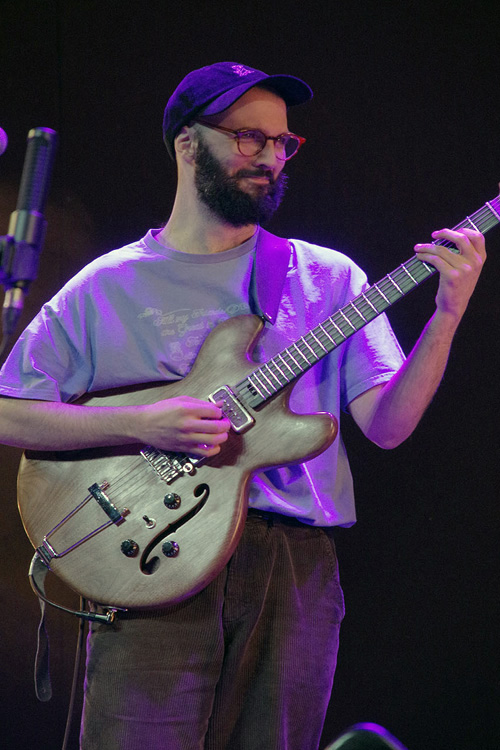
Interpretations ranged from the fractional to the focused. In a quartet setting with Soares, floating reed tones at points added a Cool Jazz-like patina, while harsher tempo-shifting split tones contributed to the narratives. In turn, the guitarist’s responses depended on the context, taking on Jim Hall-like lyrical strums or swift flanges and twangs.
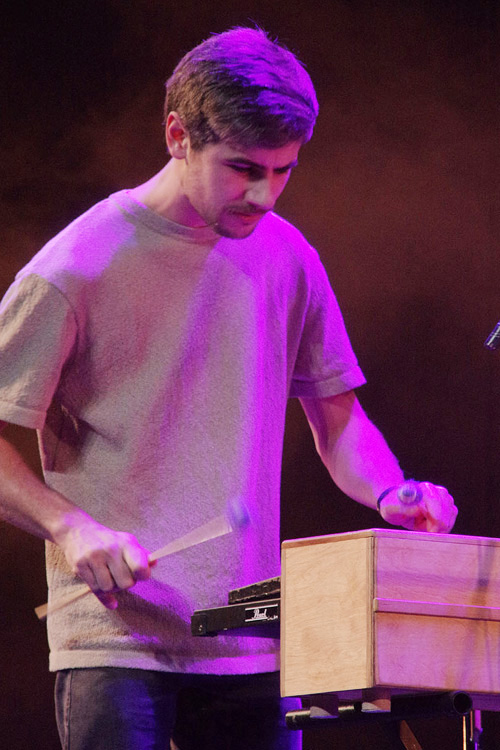
Similarly, the others projected a bass and drum groove, sometime extended with Curcio’s below-the-bridge string scratches, and Albertsen’s idiophone pops and mixing-board buzzes. Coelho’s seemingly jerry-built wooden box timbres didn’t so much add exoticism, but intensified the group’s bouncy rhythmic thrust. It also led the guitarist to create an ostinato underneath the others’ solos.
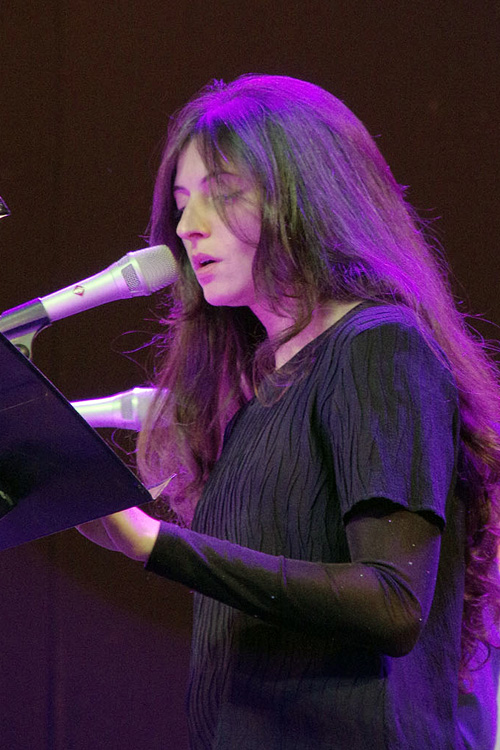
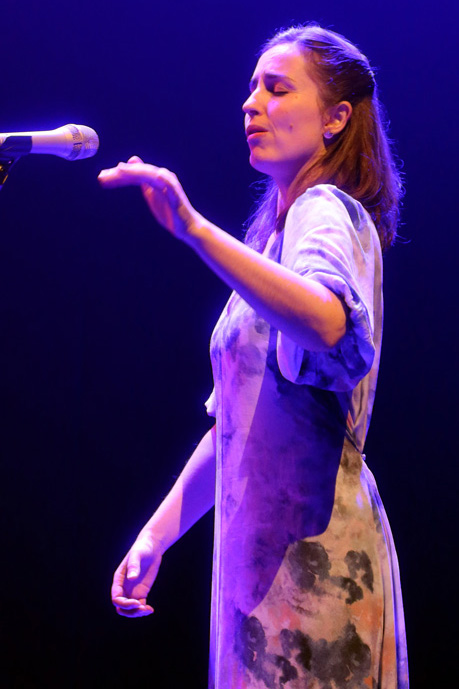
Also stretching the rhythmic breath, Dionísio and Kühne were anything but background singers. Although occasional cadenced harmonies came to the fore, their vocalizing mostly consisted of mumbles, gasps and word fragments. Intonation supplemented the instrumental output, and each extended dynamics with hand motions and sways.
Considering that Cavaleiro never missed an opportunity to emphasize various parts of his kit to expand the interaction, Kühne and Brandão also were constantly alert for twists and turns in the performance.
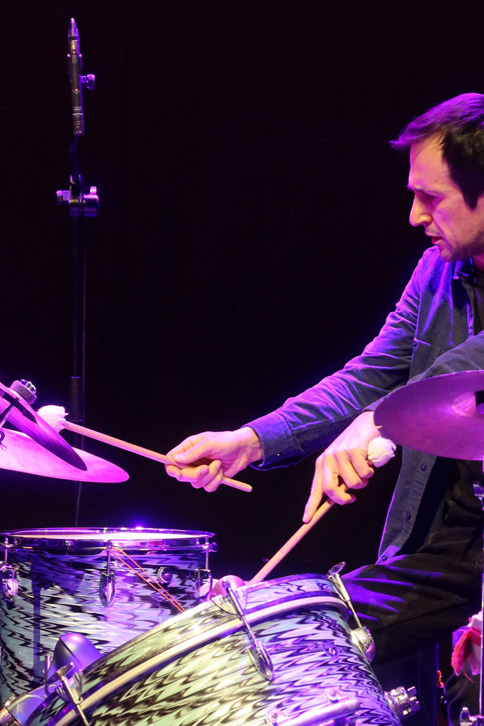
With the percussionist as likely to scratch a violin bow against a cymbal, gently swish a brush on Mylar tops, sound a tiny bell or emphasize a bass-drum boom, instant decisions were needed.
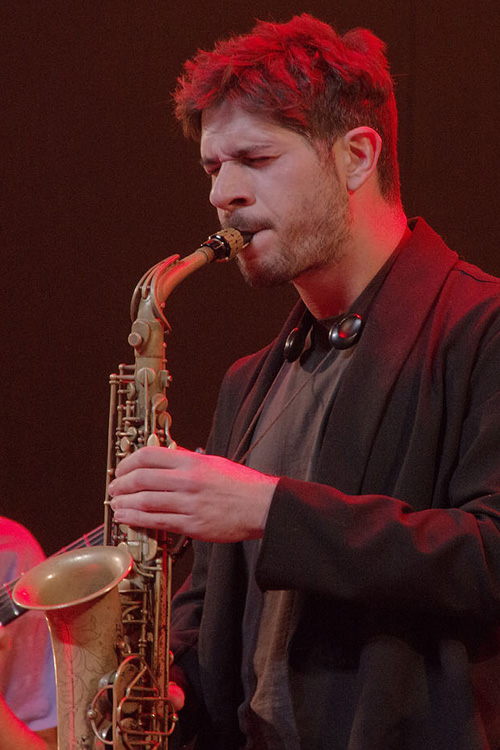
Brandão expressed light flute puffs at one point and strident alto saxophone slurs elsewhere. Reed timbres were often expanded or fragmented with foot-pedal oscillations, while transverse tones were harmonized with Kühne’s voice.
An unexpected duet when Kühne brought out her wood flute to match his metal one, also created an unexpected state of suspended animation. Yet suspended was the last adjective that could be applied to the vocalist.
Throughout the set she intensified her hand motions into full dramatic gestures. Kühne also intensified her articulation as she expelled a collection of sound fragments, nonsense syllables, whoops, whispers, hiccups and near soundless breaths. At one point her vocal trill was nearly indistinguishable from the flute’s.
Kühne’s non-traditional vocalizing was part of a Porta Jazz leitmotif, with another unique demonstration occurring that same evening with local vocalist Vera Morais’ Eupnea chamber ensemble.
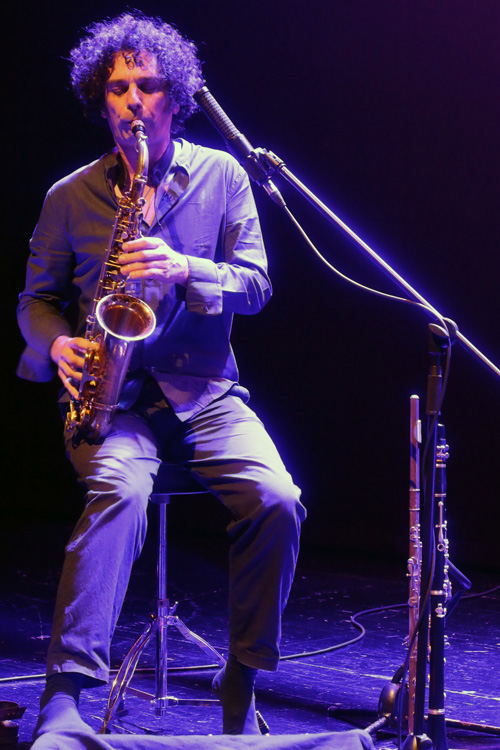
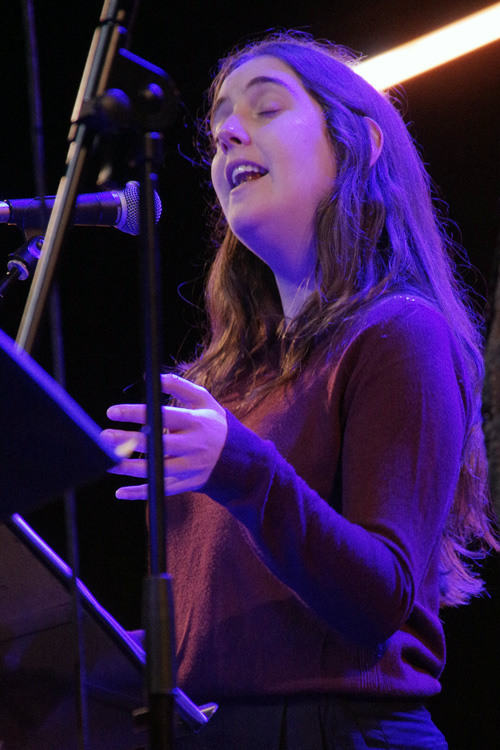
Distinctively, the set-up was as Jazz-combo unrelated as could be. Morais, Latvian Līva Dumpe and Italian Sarah van Eijk vocalized, with associated textures supplied by the flutes and piccolos of Portuguese Teresa Costa and Latvian Ketija Ringa-Karahona. While the vocal harmonies were expected, the use of English lyrics was not, although emphasis on the tessitura range was more prominent and impressive than the words themselves. Verbalized expressions such as “freedom is walking in each other’s shoes” and “unlike my ancestors I don’t want to conquer you” may be apt during 2026’s political climate, but what the vocalists’ lyrical beauty projected didn’t really need words.
Especially notable during the second selection was when all five breathed in sequence, passing parts back and forth with repetition and a variety of air-expelling.
At the same time, the bel canto lilts propelled by the three singers were perfectly complemented by the transverse trills. Besides blending soprano voice trills with reciprocating flute and piccolo puffs, there were times when those instruments’ bites and peeps added a harder edge to the words and melodies. This ensured that the harmony wasn’t pushed too far towards ecclesiastical chorale sounds, at the same time as carefully stacked vocal arrangements helped the singers avoid simple pop music tropes.
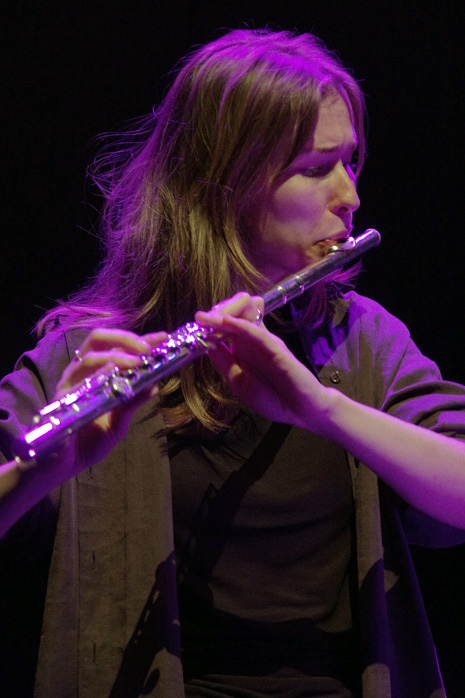
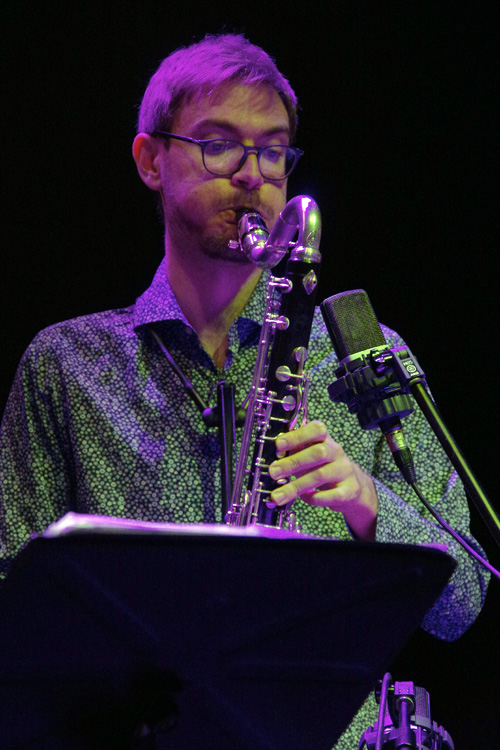
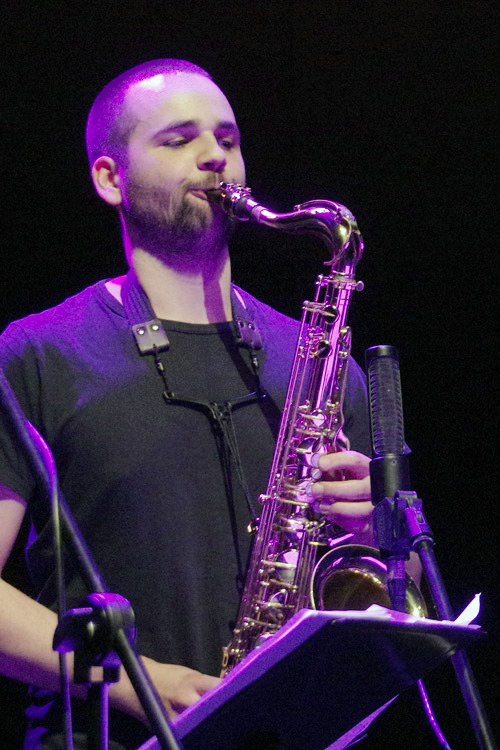
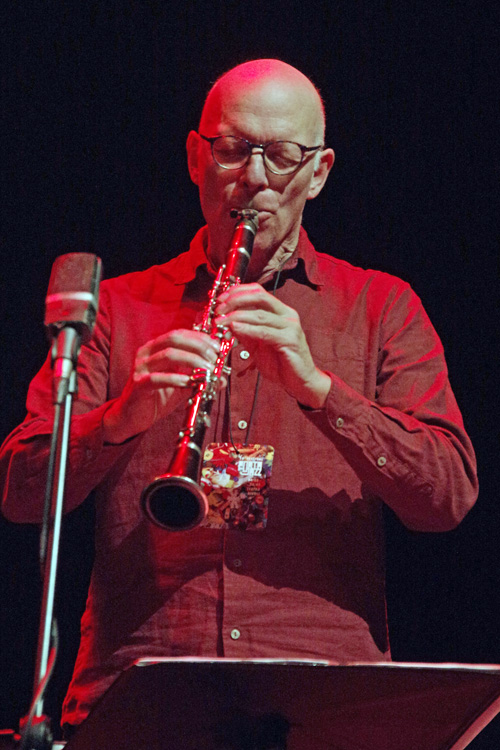
Ringa-Karahona’s flute and alto flute were also part of an all-woodwind configuration the next afternoon when she performed as part of the Diagonal Shift quartet. Another chamber-directed ensemble based in Amsterdam, the other members are Portuguese-Bulgarian tenor saxophonist Hristo Goleminov, Italian bass clarinetist Federico Calcagno and American clarinetist Michael Moore.
This unusual configuration didn’t mean the expositions were particularly avant-garde however. Careful harmonies and layered narratives kept the pieces linear, with most tunes wafting up and down.
Usually the bass clarinetist preserved the continuum as a contrapuntal balance to the high pitches usually expressed by the other horns. Most tunes were designed to recap the head as well. Calcagno sometimes contributed expressive reed shakes, Ringa-Karahona frail flutters, and Goleminov the occasional elevated pitch, although lyricism too was his usual starting point, even when the quartet played a pseudo-march.
Overall, it was Moore’s improvising that was most innovative as he replicated baby wails and pounded his palms on the upturned mouthpiece for percussive whumps. Midway through he even removed his mouthpiece from the clarinet body to blow across the naked body top.
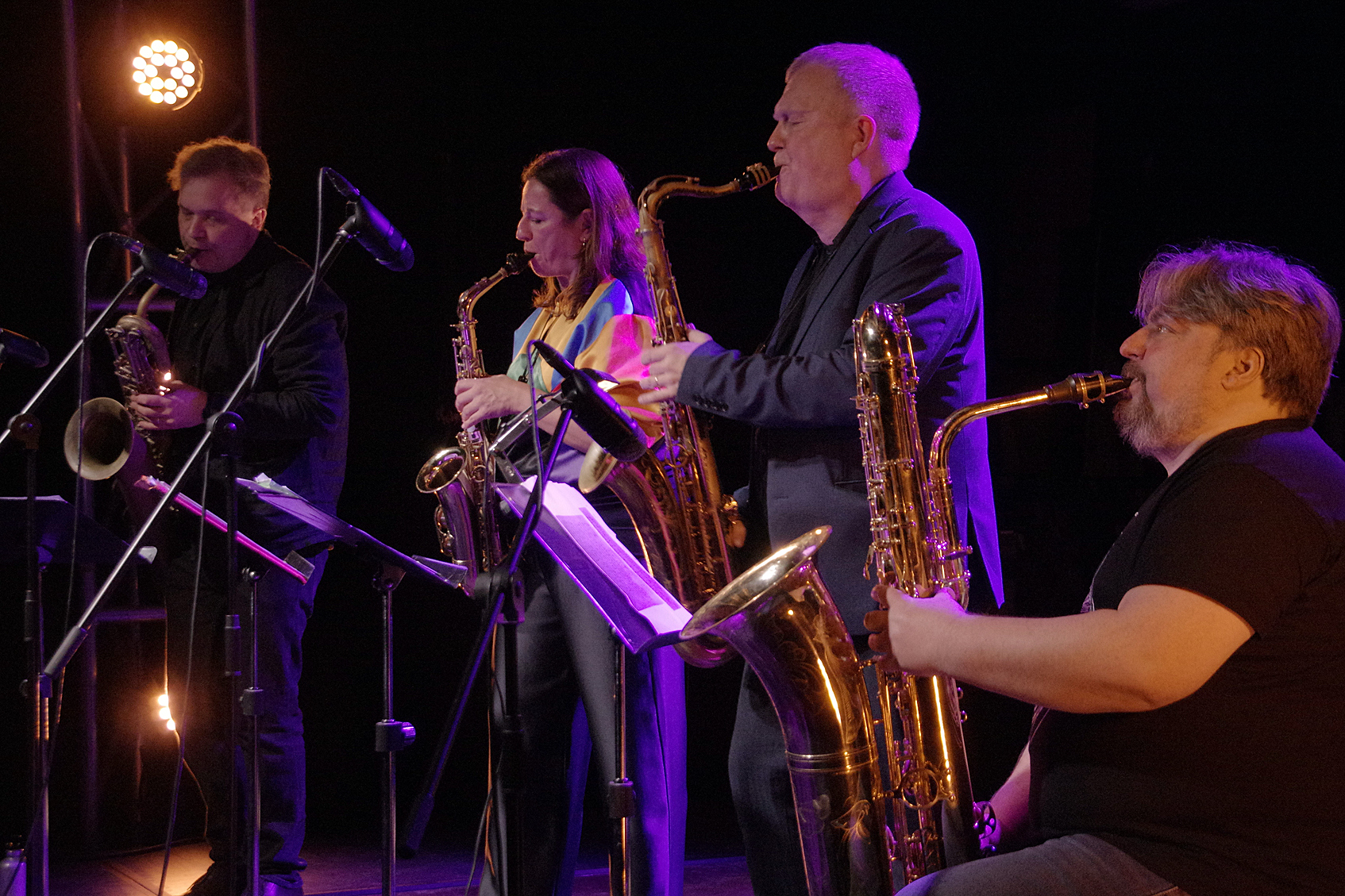
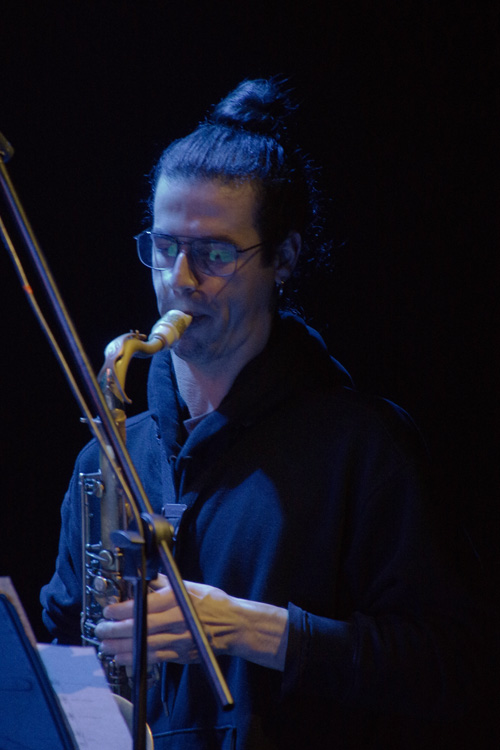
Diagonal Shift was only one of the reed-oriented small bands featured at Porta Jazz 16. Another all-reed and resolutely international ensemble was the Littorina Saxophone Quartet that played on the first evening. It featured Estonian Maria Faust on alto saxophone; Fin Mikko Innanen on alto, sopranino and baritone saxophones; Swede Fredrik Ljungkvist on soprano and tenor saxophones, and Lithuanian Liudas Mockūnas playing soprano and bass saxophones.
Bringing concepts from the Baltic Sea to the Atlantic ocean, the four book-ended the performance with themes jaunty and jubilant as they negotiated tones from the top to the bottom of their horns’ ranges. Creating reed polyphony at many junctures, the quartet’s antiphony was frequently obvious, usually as Faust or Ljungkvist squeaked, burbled or smeared distinctive timbres that were immediately answered by mid-range growls or harmonized basement pitches. Harmonies and head recapitulations didn’t mean that tone exploration was neglected however. Furthermore, focused lyricism was also part of the performance. Mid-way through the set for instance, fast-moving swing gave way to an emotional threnody projected by the alto and tenor saxophonist, which when concluded, returned the players to fast-moving linear puffs.
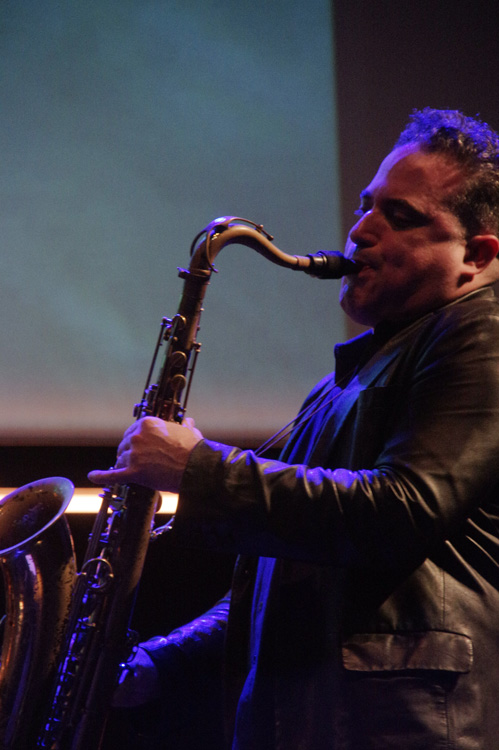
If the Littorina Saxophone Quartet skirted atonality, then Cuban Hery Paz, who played tenor saxophone, flute and claves with his quartet during the penultimate performance on the festival’s final night, outlined a 21st century version of undiluted Free Jazz.
Backed by Portuguese percussionist Pedro Melo Alves, Argentinean bassist Demian Cabaud, and local João Carlos Pinto on keyboards and percussion, Paz’s updating included Latinesque suggestions and electronic pulses, with the band’s performance surmounted with abstract visuals created by Maria Mónica projected on a screen above their heads. These separated, coalesced, wavered and were usually created in tandem with the music.
At the same time Alves often emphasized an assemblage of percussive tones and refractions with his idiophones including hand, brush-and stick pops, and screeches from moving a bow against a cymbal.
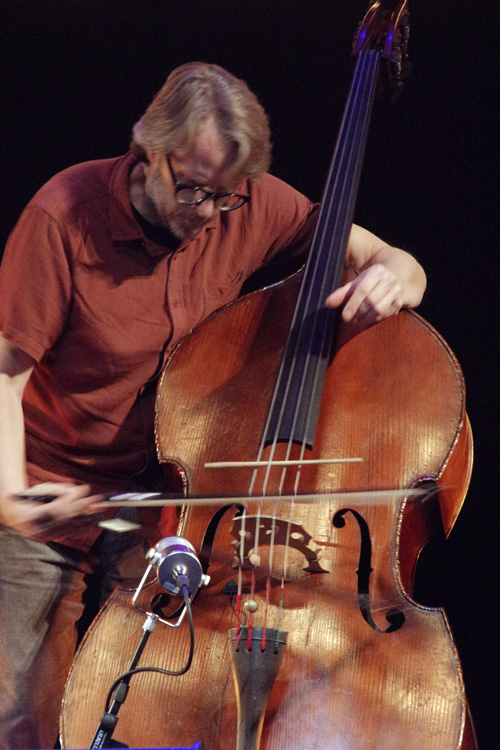
Cabaud, however, was not to be overwhelmed. At crucial times the bassist abandoned whatever time-keeping he was involved in to create new sonic colors by vibrating a small wooden stick among his strings, propelling arco slashes with his bow, or producing alternate parallel tones by rasping one bow horizontally and the other vertically across the strings.
Underlying electronic pulses were infrequently obvious and the only overt Latin inflection occurred when Paz rhythmically smacked the claves or singularly intoned in Spanish. Otherwise his reed soloing was characterized by overblowing wide honks, split tone reflux, high-pitched slurs, and when he turned to flute, energized transverse trills with extended peeps and sighs.
Playing midway through the second day of Porta-Jazz, and moving away from reed extensions, but concerned with showcasing exploratory motifs as well, was an accidental international trio. It consisted of well-integrated sounds from Austrian percussionist Alfred Vogel, Swiss bassist Christian Weber and Scottish pianist Greg Forbes.
The trio was accidental because the guitarist and keyboardist who ordinarily make up the scheduled SATT group were trapped in the Berlin airport by adverse weather conditions. Forbes, who had worked with the others in the past, was hastily recruited to fill out the group.
Forbes’ appearance was actually subversive though, for rather than performing as a conventional piano trio the three aimed for more adventurous sonics.
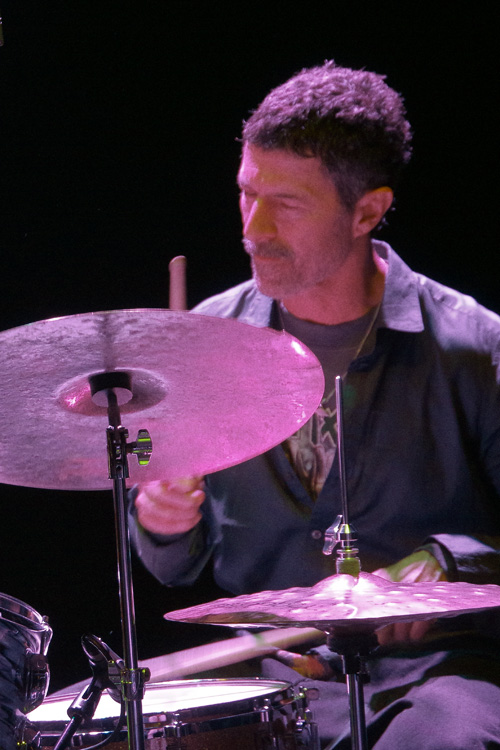
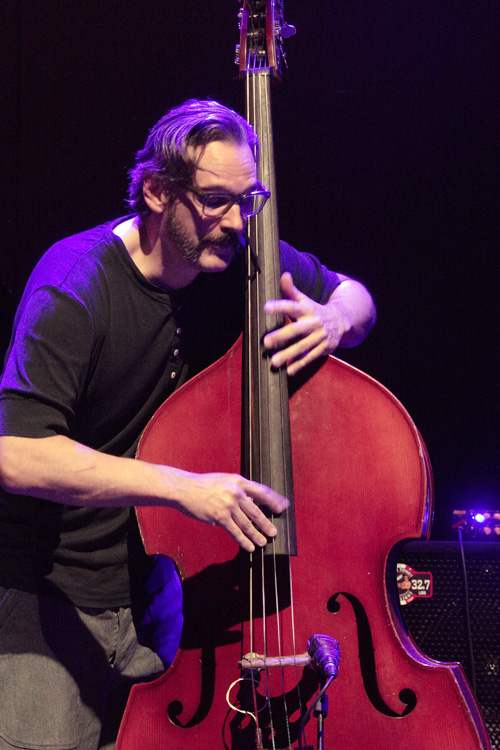
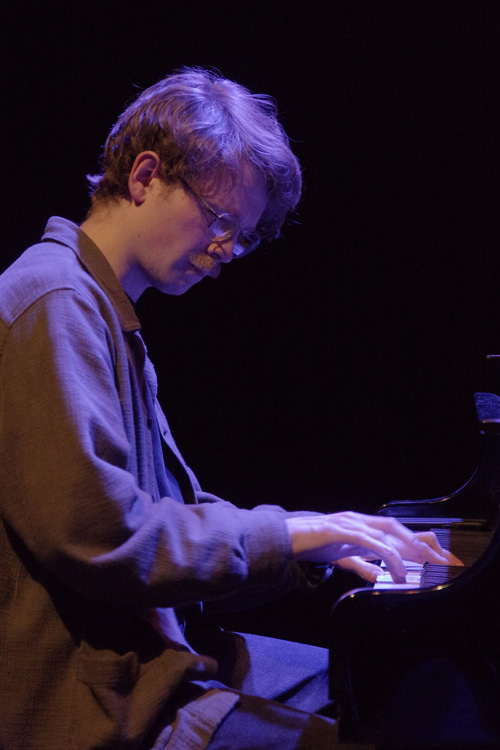
Starting with a positioned smack from Vogel’s kit, a semi-groove was established as Forbes moved back and forth from meditative lyrical comping to dynamic keyboard crunches and combative pedal pressure. Meanwhile Weber frequently interrupted his walking bass lines with multi-string arco buzzes.
Lilting or leisurely interludes constantly succeeded one another as the drummer varied his attack from light brush work to thick stick clunks and ruffs, depending on whether the piano expositions were meditative or erratic. As well, with the three fully invested in stop-start voicings, the bassist’s occasional col legno strokes added another dimension to the interchange. Overall no matter how many alterations in pitch and tempo were reached, foot-tapping swing still remained.
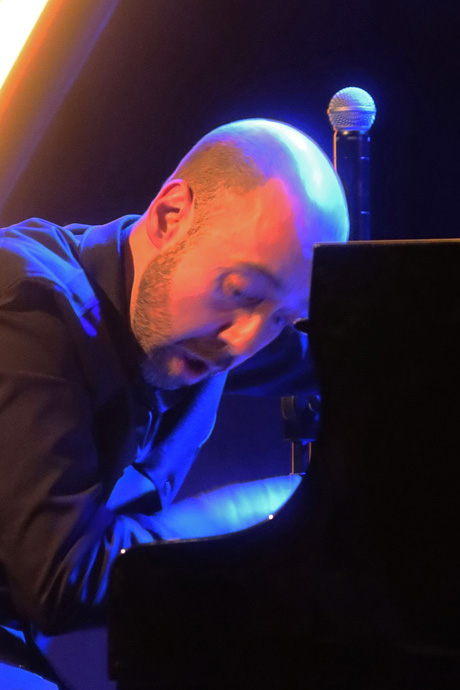
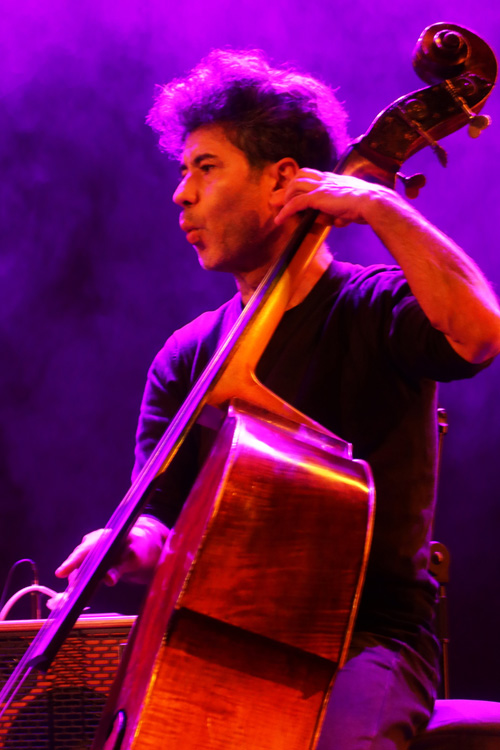
You couldn’t say the same for the hushed chamber improv created during the festival’s final afternoon by the Portuguese duo of pianist Renato Diz and bassist Sérgio Tavares. Long-time associates, the dual-concentrated tone-intuition exhibited during the performance ensured that the program barely skirted fragility. During a series of short études, the two’s familiarity crystalized the flow, making instantaneous connective or severed responses to each other’s motions. High-pitched keyboard jangles brought out thick double bass strums or stylized string squeaks; while stopped piano keys were met by slides up and down the bass’s neck.
Meanwhile, string stops preceded Diz‘s pressure along the keyboard involving forearms and elbows, while Tavares’ jagged string shrills led to piano jangles and jumps. Besides Diz’s finger plucks and mallet pops on the piano’s internal string set and knocks on the piano’s external wood, or Tavares’ hardened arco slashes across the bass strings, a connective ostinato was always maintained. Eventually the set climaxed with an echoing crescendo from both.
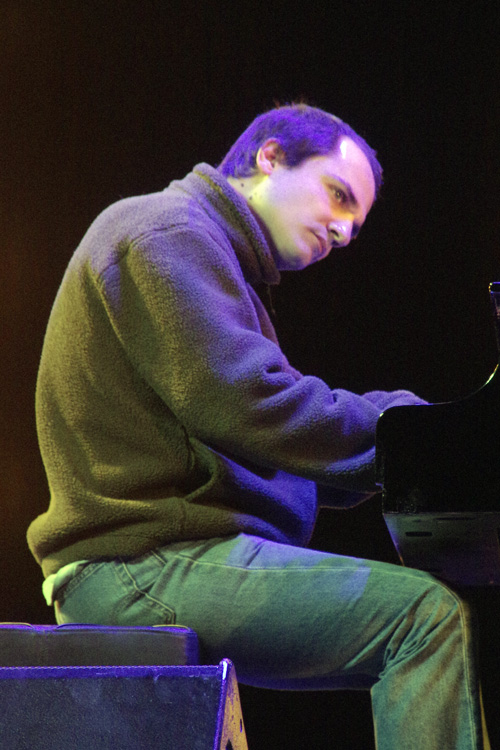
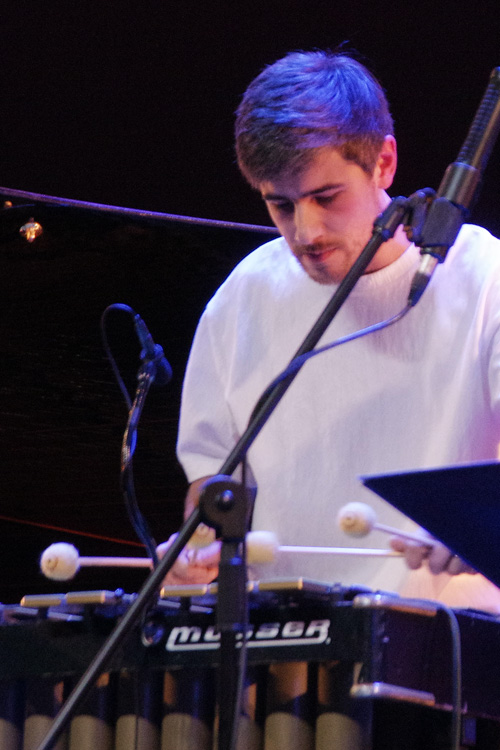
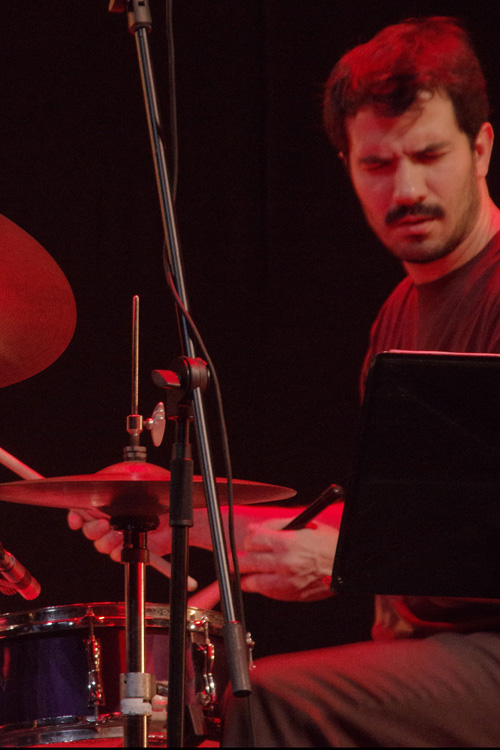
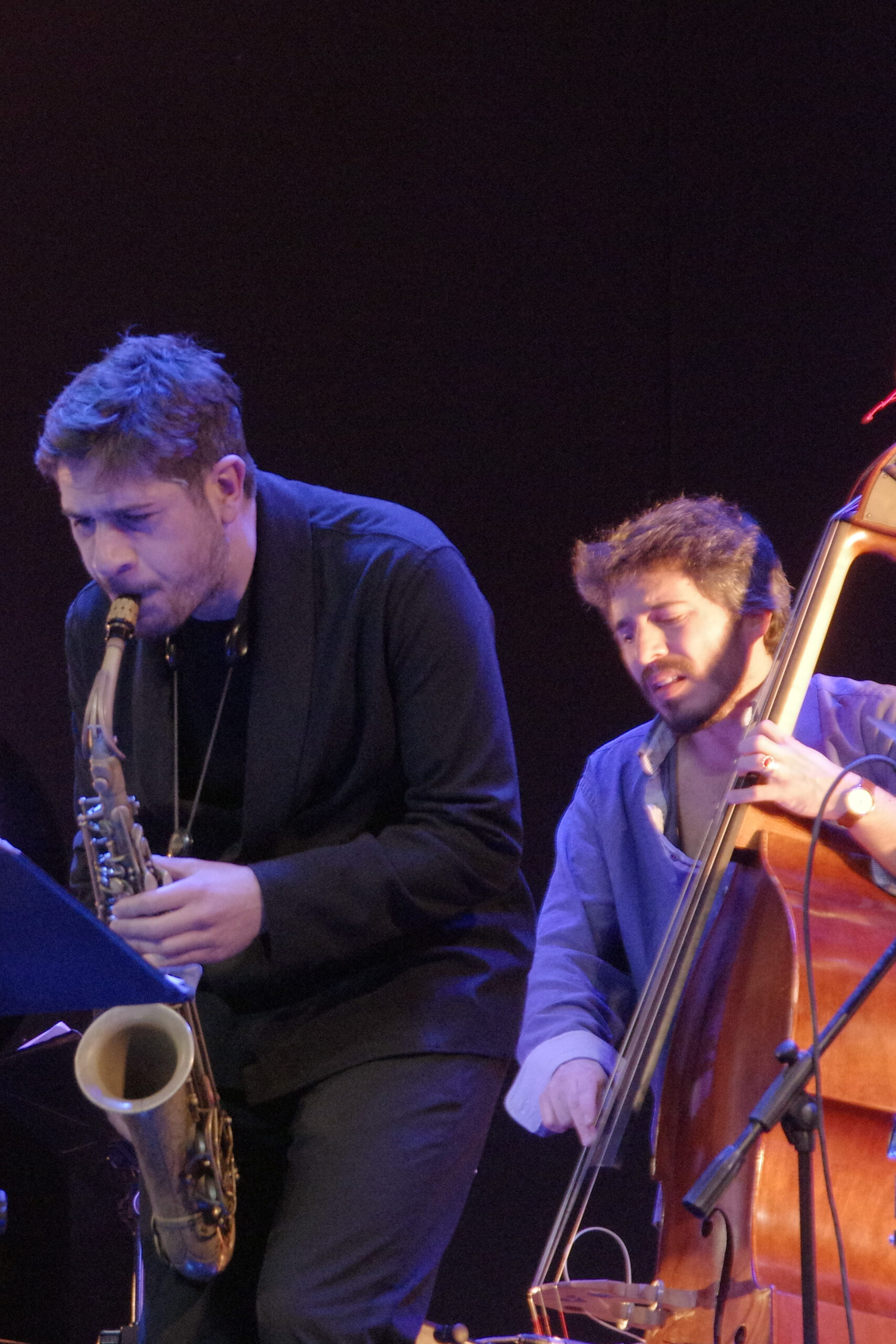
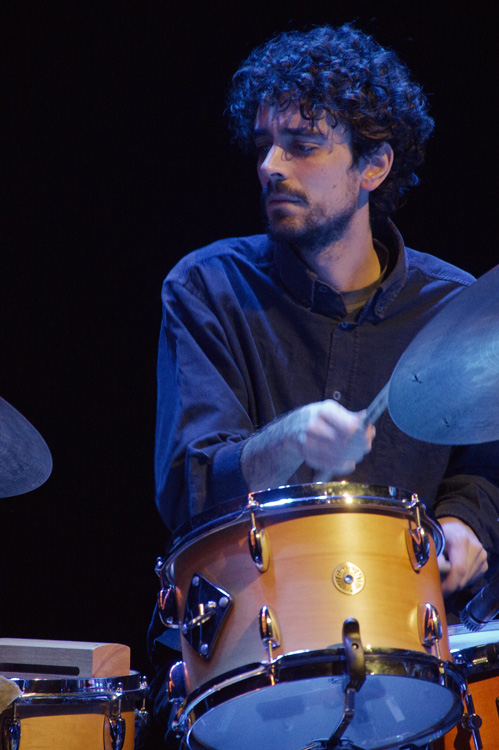
More mainstream in the Porta Jazz context during the festival’s second evening was Ricardo Coelho’s all-Portuguese Kohelet quintet. Coelho, who had guested with the SQUIGG trio the previous night, played only vibraphone with his own band. He was joined by alto saxophonist José Soares, who had also guested with SQUIGG, as well as pianist José Diogo Martins, bassist Romeu Tristão and drummer João Sousa.
Starting with appropriate group springiness, driven by vibraphone reverberations, block chords from the pianist and a heated-up solo from Soares, who overblew without losing control, the group’s pace ascended still more when joined by drum clip clops and the pianist’s keyboard propelling. At the same time though, even as the tempo shifted from adagio to allegro and up to presto, three-mallet vibraphone patterns created a continuum that when joined with a piano ostinato, at points also drew the group to near pastoral balladic interface. Even the saxophonist’s later pivot to a near-screech, mated with a harsh drum backbeat never became too unmanageable, especially when cushioned by straight-ahead vibe narratives.
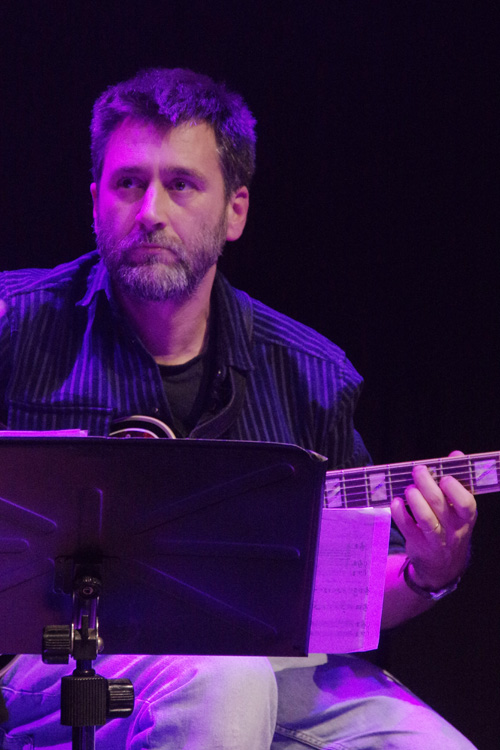
It was a similar tale at an early evening show on February 8 led by a local guitarist who is known only by the initials AP. Although there was no quarreling with the scope of the compositions’ sounds or the skill of the musicians playing them, something seemed to be missing.
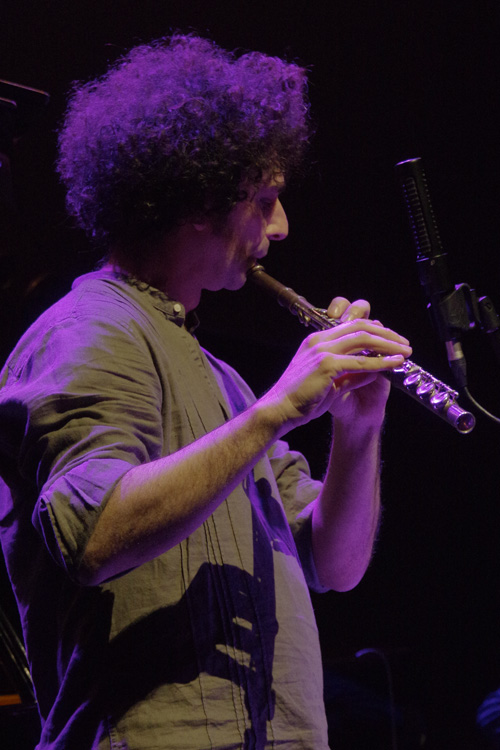
The all-Portuguese combo featuring tenor and soprano saxophonist Gil Silva, pianist Miguel Meirinhos, drummer Gonçalo Ribeiro and João Pedro Brandão, this time on flute, moved between microtones and melody, with the pieces often dissolved into intersection not inspiration.
Some depended on broken-octave evolution as guitar twangs and piano patterning backed tenor saxophone harmonies completed by hammering guitar licks; others matched guitar finger-picking and speedy flute chirps. Eventually each member’s output appeared to dissolve into simple comping before finally connecting for a decisive crescendo.
Other sets involving other bands throughout the festival’s three days included presentations that brought out more emphasis on mainstream, Latin-and rock-affiliated sounds. Still, the first evening’s final set probably best summed up what Festival Porta Jazz represents and where it aims musically.
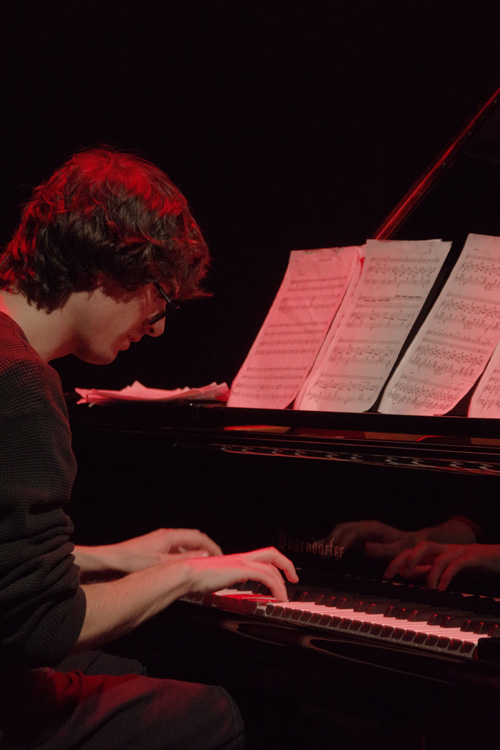
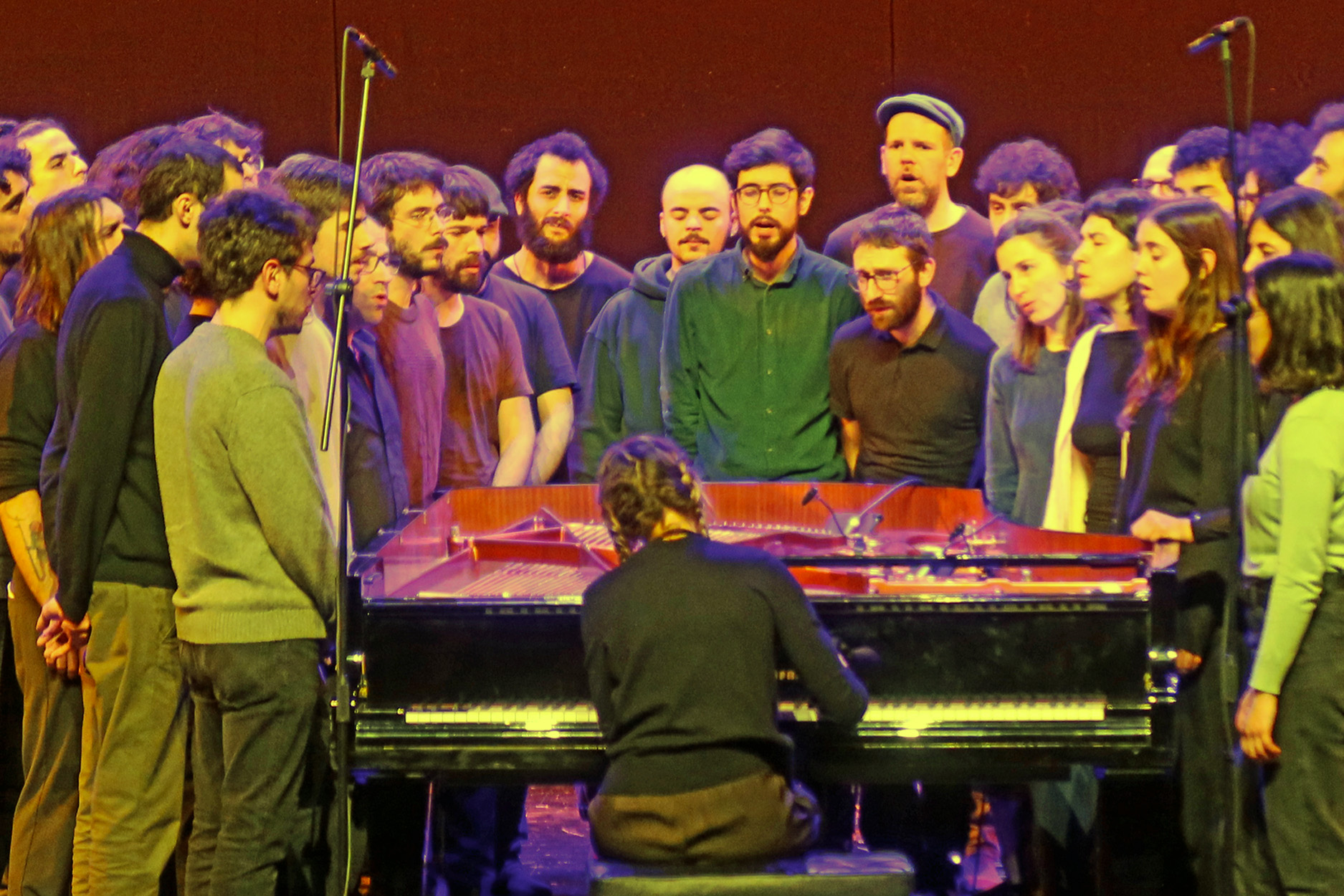
Accompanied only by the slapped keyboard and internal string-set pressure from the mallets and fingers of a single pianist in sequence 35 musicians, all vocalizing, filled the Teatro Rivoli’s main stage (top photo) to perform a new variant on their continuing collective project, Ursa Maior.
Initiated in 2025, this year’s offering was a wordless extrapolation of tones and breath. With the massed chorale sometimes divided into smaller groups, but usually harmonized across the entire assemblage, timbral surprises abounded. Sounding at points like an ecclesiastical choir and at others like a free-form ensemble projecting polyphony or cacophony, the massive group vocalized tessitura that ranged from bel canto lyricism to strident, percussive emphasis on single syllables or fractured and ruptured words.
Encompassing aviary caws, animalistic growls, undulating sibilants, and unredacted mouth noises, the nearly three dozen voices ping-ponged from one climax to the next. Fascinating in execution, although sometimes the idea of a group therapy session lingered as well, Ursa Maior once again confirmed the festival’s willingness to take risks. Its realized uniqueness also confirmed why audiences keep returning to Festival Porta Jazz each year.
§
More photos of individual artists and reviews of their CDs can be found under/Artists.
Material on Jazzword may be reprinted only with permission; please contact [email protected] to make arrangements.