

Music Unlimited 2026

Music Unlimited 40
November 5-8, 2026
Wels, Austria
Review by Ken Waxman
Photos by Susan O’Connor
America (South) came to Austria (Wels) in early November during the 40th anniversary of the city’s annual Music Unlimited (MU) Festival. Curated by Brazilian percussionist Mariá Portugal, many of the musicians featured were from Peru, Argentina and overwhelmingly Brazil, with the remainder hailing from Europe, the Middle East, Australia or America (North).
Portugal, who often vocalizes while playing in varied formations, also introduced a subtheme during this year’s MU program with more sets than usual featuring singers alongside accomplished instrumentalists. The majority of performances took place in the main concert space of the funky Alter Schlachthof, located within walking distance of the city’s downtown, with a couple located at the nearby Landesmusikschule or in the elevated spaces of the suburban Schloss Puchberg. Despite this sonant focus, it turned out that some of the most memorable playing came from all-instrumental combos including The Sleep of Reason Produces Monsters (TSORPM) and Banquet of Consequences (BOC).
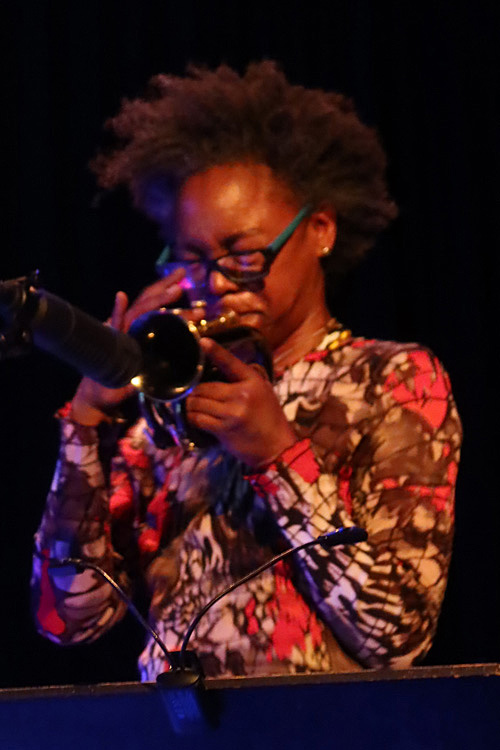
Featured on the festival’s second evening TSORPM, led by UK turntablist Mariam Rezaei, included Italian Gabriele Mitelli playing pocket trumpet and electronics; Danish alto saxophonist Mette Rasmussen, and Austrian drummer Lukas König. Performing the penultimate festival set on November 8, BOC was based around the compositions of Italian bassist Antonio Borghini with French alto saxophonist Pierre Borel; Tobias Delius of the UK on tenor saxophone and clarinet; Japanese pianist Rieko Okuda; Turkish cellist Anil Eraslan; and Australian drummer Steve Heather participating.
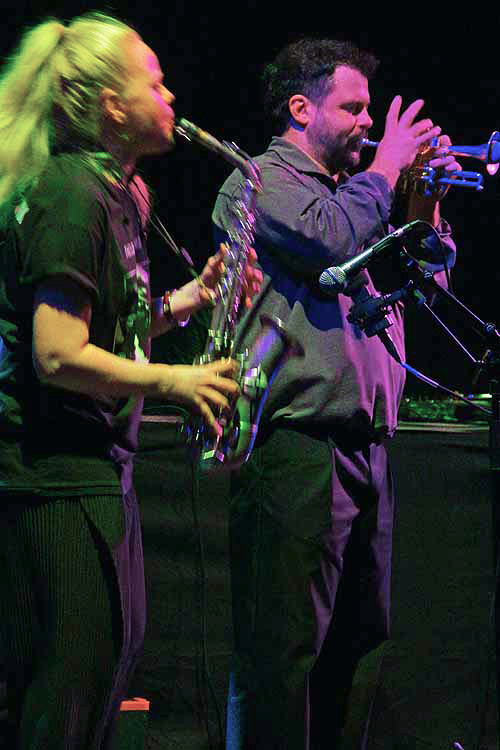
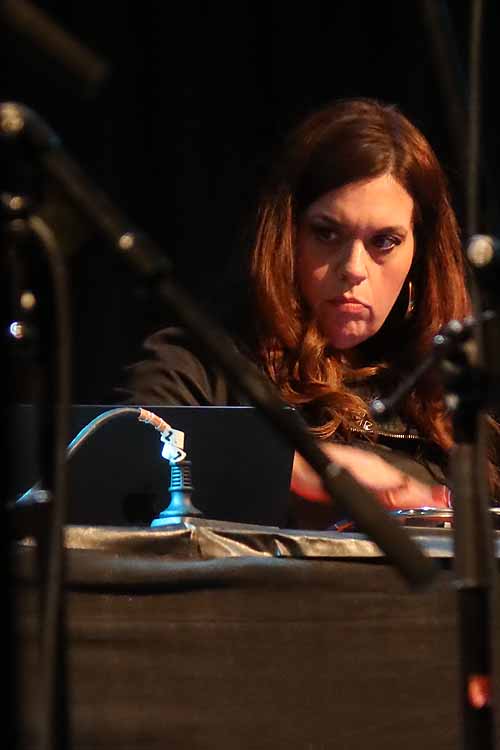
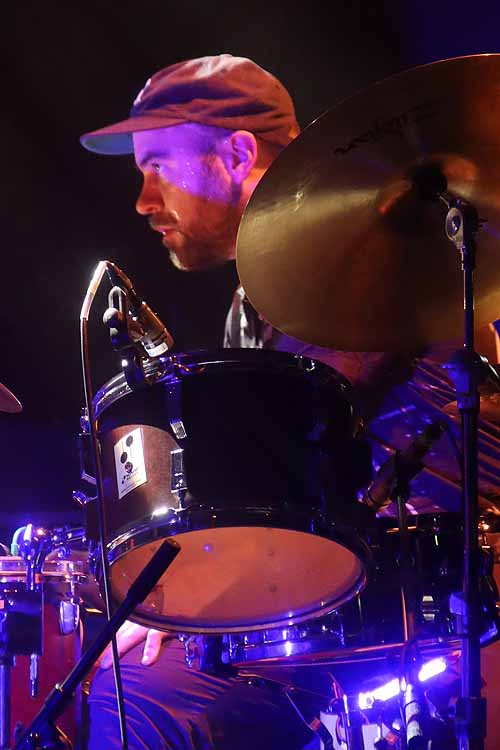
Continually based around the textures, fizzes, drones and samples from Rezaei’s turntables and König’s intricate percussion pulses which encompassed primary taps, rapid crashes, pinpointed slaps and strong patterning, these beats and wave forms created a shifting sound tapestry upon which the TSORPM horn players expressed themselves. From beginning to end, Rasmussen’s affiliation of gyrated split tones, tongue stops, bird-like chirps and hocketing yelps reflected or played off drum rhythms and regularized turntable ostinatos. Meanwhile the juxtaposition of Mitelli’s pocket trumpet portamento or half-valve expressions irregularly suggested an Ornette Coleman-Don Cherry association with him and the alto saxophonist. That’s because more than half of Mitelli’s energies were expended contributing electronic-sourced whizzes and fuzz to the band’s ongoing narratives.
Commonly the solitary front-line improviser, Rasmussen not only slurped out an exciting collection of irregular vibrations, tonal upsurges and buzzes, but made common cause with others during a series of pseudo duets. She emphasized a Blues base when responding to the turntablist’s organ-like sustain; offered squeezed reed bites to counter the trumpeter’s brass triplets; and matched König’s paradiddles and pressure with thick reed overblowing. Acoustically or electronically, at points the other players also adopted motifs and interludes to interact with Rezaei’s ever-shifting collection of textural creations or samples. Taken as a whole, the group interaction was a denouement and definition of this quartet’s skill and identity.
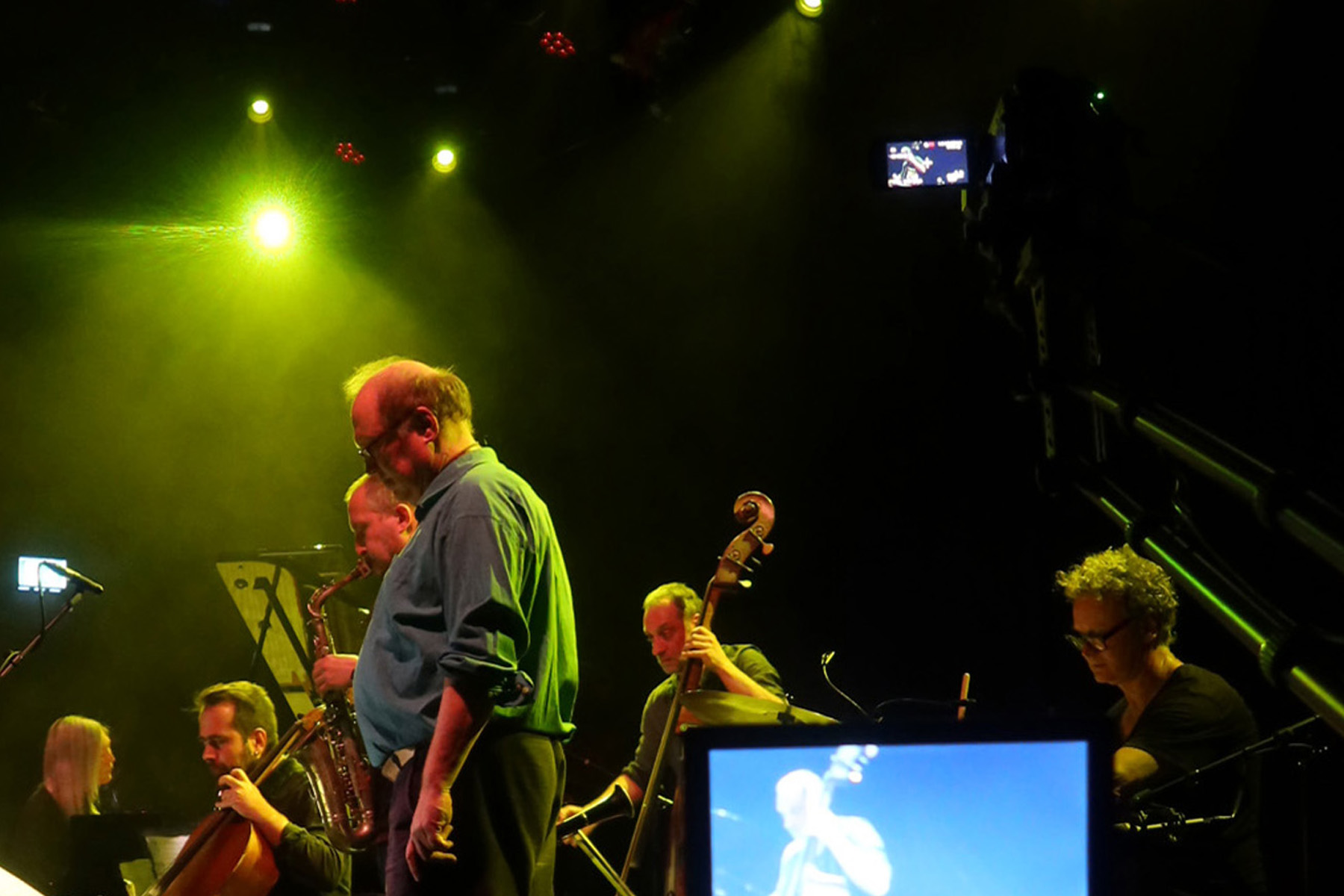
A similar group tonal integration was on tap two days later as BOC members expressed themselves. The most connected and accomplished in interpreting pure swing during this year’s Music Unlimited Festival, the tunes anchored by Borghini’s dedicated slap bass, Heather’s back-beat, and the frequent clarinet-alto sax-piano voicings suggested that the six could have landed a gig opposite the John Kirby Sextet during New York’s 52nd Street heyday in the 1940s.
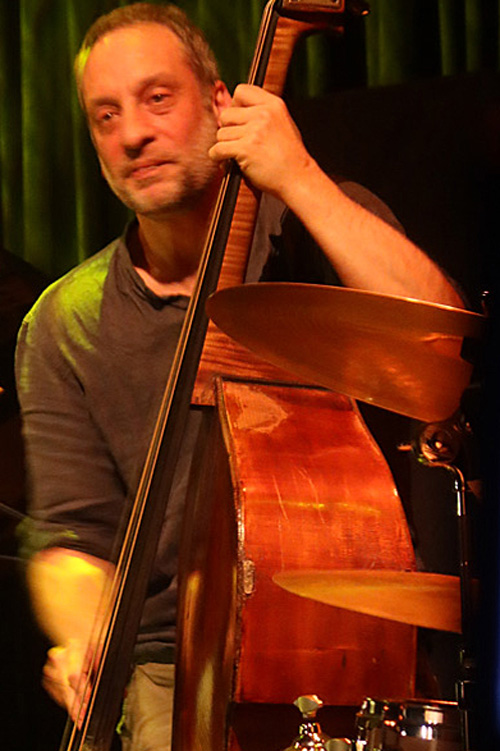
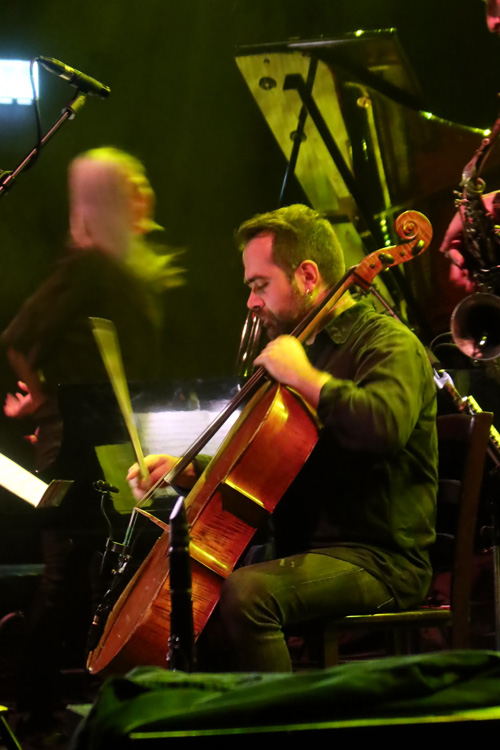
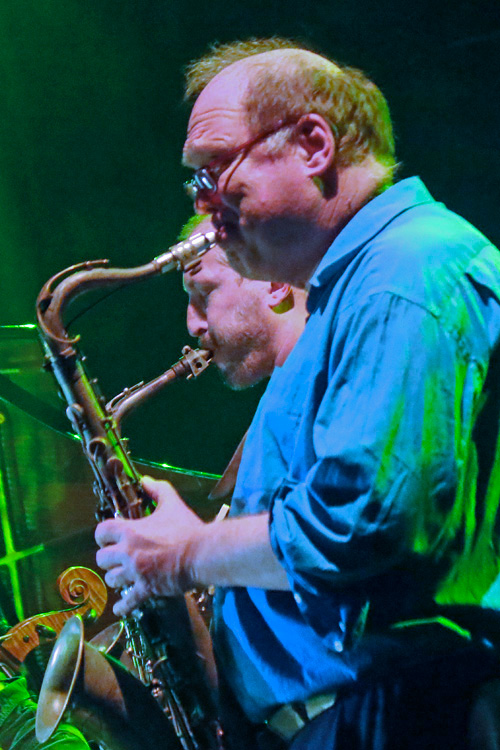
That was partially an illusion however, since the rest of the BOC band definition included thoroughly contemporary and complex tropes such as Eraslan’s jagged string-stropping, Okuda’s tolling piano chords, and Borel’s and Delius’ saxophone tongue slaps, harsh honks and ragged smears.
Never losing the rhythmic impetus related to keyboard clips, heavy pizzicato plucks from both cello and bass, plus the drummer’s steadying thumps, arrangements still touched on influences from the Blues to South African high life. Between tandem saxophone vamps on one hand and timbre-stretching from Heather’s bell-shaking and Okuda’s pedal-point exploration, a better definition of emphasizing both institution and invention in a distinctive manner couldn’t he found – or heard – during this year’s festival.
Elsewhere during the festival, blending technical modernity and traditional music motifs was emphasized. This happened most notably with Argentinean tenor saxophonist Camillia Nebbia’s Toma Chocolate Ensemble, which also played November 8. The ensemble included trumpeter Aquille Navarro, flutist Marina Cyrino, cellist Paula Sanchez, Laura Robles playing cajón and bass guitar; Lázara Rosell Albear on pocket trumpet and drums and Emilio Gordoa on percussion, plus vocalist Ilessi. The group was made up of natives from Peru, Brazil and Argentina.
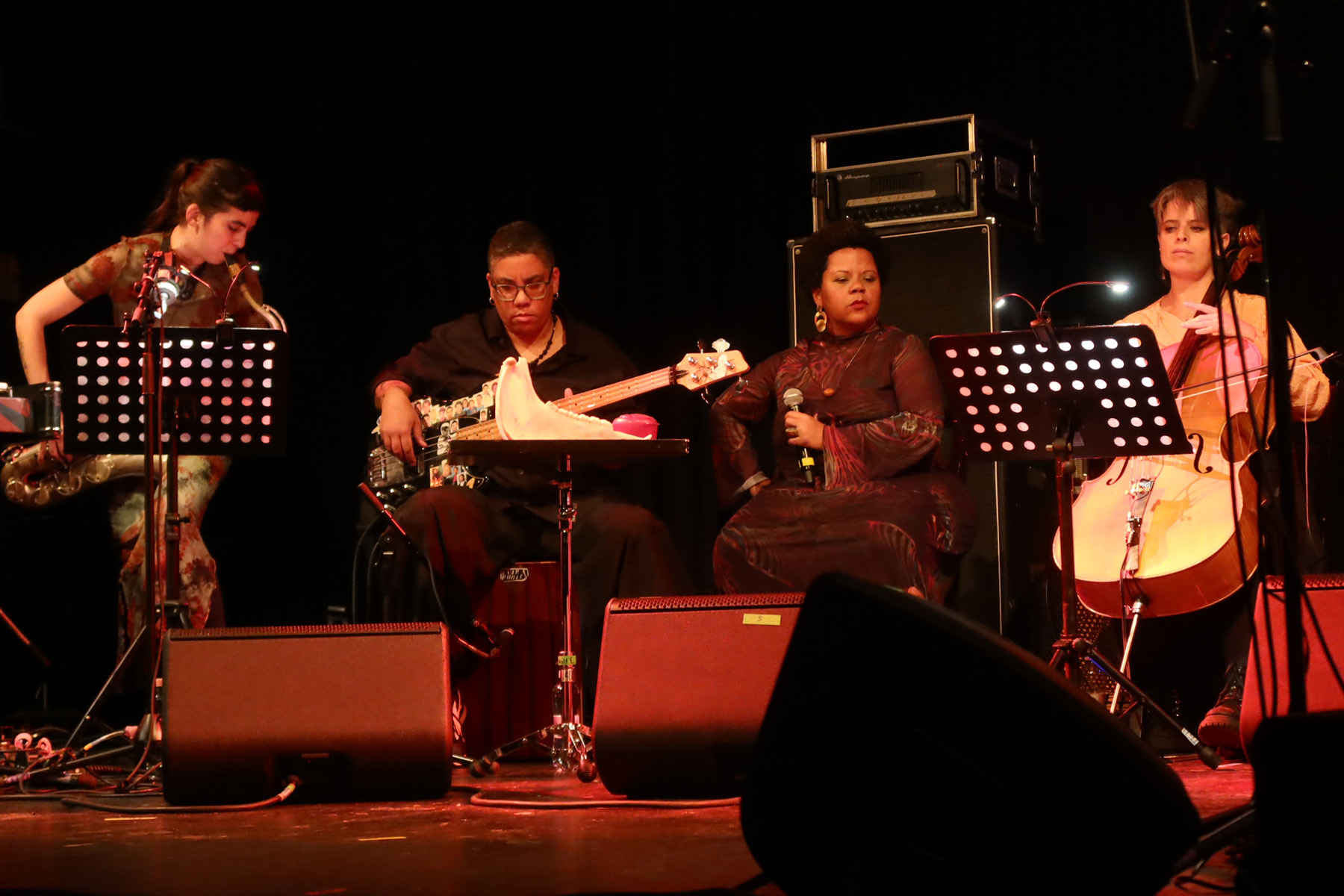
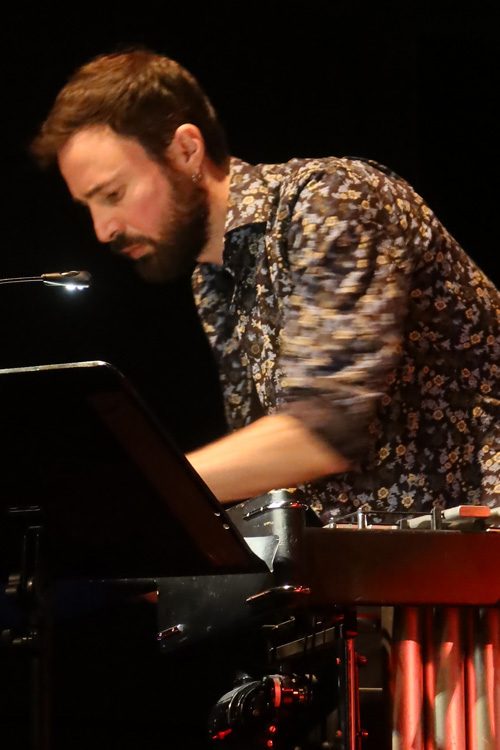
Despite its South American personnel, the Toma Chocolate Ensemble almost completely ignored expected turns towards lyrical ballads, instead emphasizing the rhythmic and African diasporic currents that flow though that continent’s music. This was vouchsafed by distinctive solos by Nebbia, whose reed honks and broken-chord yaps fragmented and expanded dissident antiphony with equivalent taut blasts from trumpeter Navarro, and intermittently by Albear, who projected triplets and brassy breaths from a pocket trumpet when she wasn’t contributing to the fluid rhythmic pitches intensified by Robles and Gordoa. Robles intensified the rhythms in the latter part of the set by playing electric bass as well as cajón drum. Alongside her, Albear produced dedicated beats with the regular kit, while Gordoa moved among an idiophone collection. In addition to resonating metallic sustain from the vibraphone, he snaked a violin bow through its metal bars for extra tension. At junctures he pounded on different sized and shaped idiophones; and even balanced a large percussion instrument on his head – although that might have been more for transportation than timbres.
Dissonant scrapes were added to the evolving program by the cellist, with several of the other musicians slapping cymbals, shaking idiophones and rattling shakers. Standing in front of a mounted computer, Navarro processed an ostinato drone which added otherworldly textures to sounds from the established acoustic instruments. Snatches of male and female vocalizing were briefly heard throughout, but the most expressive tones were projected by featured singer Ilessi.
Her extemporisations comprised an admixture of Africanized, Brazilian and scat suggestions. Climax and capstone of the set came when Carioca Ilessi, whose name has Yoruban roots, sang a variation of a venerable tune of defiance and devotion. Its hypnotic cadences expressed the gradual conflating of Ogum and Catholic saints and rituals dating from the epoch when Africans were brought to Brazil in great numbers during centuries of the slave trade.
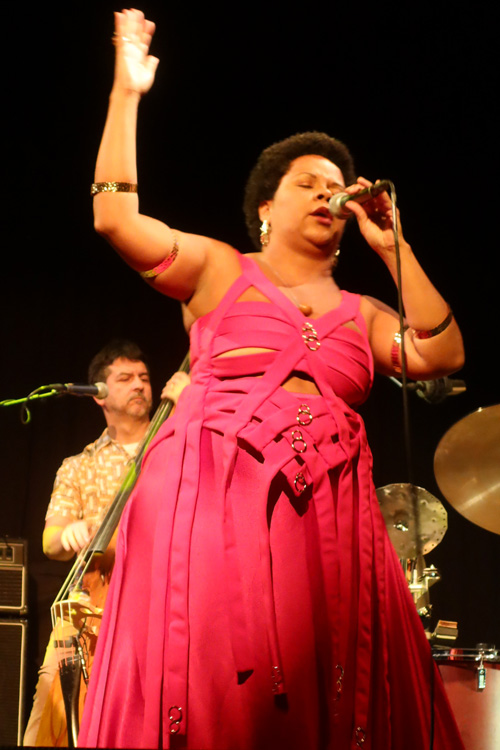
This confident and original exhibit of worldly vocalizing by Ilessi far overshadowed her performance the previous night when she was featured as guest vocalist with the trio of pianist Marcelo Galter with bassist Ldson Galter and percussionist Reinaldo Boaventura. Although Galter’s Afro-Bahian pianistic style and choice of tunes may have had deeper meaning when connected to the local communities from which they sprang, this version came across as rhythmic though merely pleasant. Somehow it stood out like a Rio carnival costume worn during an Austrian snowstorm, especially in the context of a festival established to present unique and exploratory sounds.
In contrast, Laura Robles, who served as music director for the Toma Chocolate Ensemble, was able to express herself more notably during an afternoon concert earlier that day at the distant Schloss Puchberg when she partnered with fellow Peruvian Alejandra Cárdenas, playing guitar and electronics. Built up from wave-form computer buzzes and shakes as well as hard string strums, that part evolved in response to the sounds affiliated from Cárdenas’ table-top guitar string slaps and textures from muted, pre-recorded voices. Meanwhile Robles’ powerful punches ranged all over the wooden-box shaped cajón, which also served as a seat. Besides clangs, vibrations and bumps, she occasionally varied percussion pressure with ratcheting timbres created by scratching the instrument with a small brush. Wrapping up the improvisation, the two came to a point of electro-acoustic blending that emphasized judiciousness over jolts.
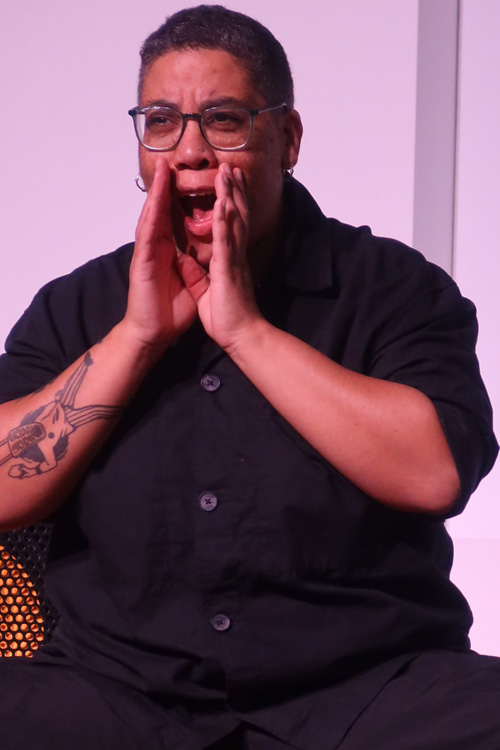
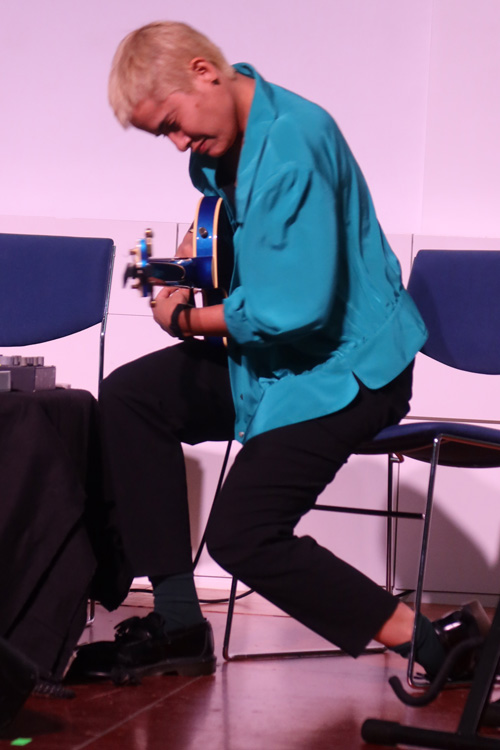
Another band which exhibited similar sound mixtures to Toma Chocolate Ensemble, was drummer Portugal’s Erosão Septet on the same stage the night previously. Its set juxtaposed the leader’s percussion and vocals with the improvised music expertise from players from Germany, Poland, Denmark and Iran: saxophonists Lotte Anker and Angelika Niescier; bassist Reza Askari; tubaist Carl Ludwig Hübsch, and trombonists Matthias Müller and Moritz Wesp.
After months of collaboration, the septet has become even more assured in its presentations as the musicians become more comfortable playing in this group context. It was designed with defined parallelism with two brass, two reeds, matched tuba and double bass low pitches, and Portugal’s drums and voice. For a start the opening salvo was more spectacular than in the past as trombonists Müller and Wesp projected note-bending slurs while playing from the rear of the auditorium behind the seated audience as they marched to join the rest of the band on stage. From that point on, sounds evolved with a combination of foot-tapping rhythms plus astringent and antiphonic runs from the horns.
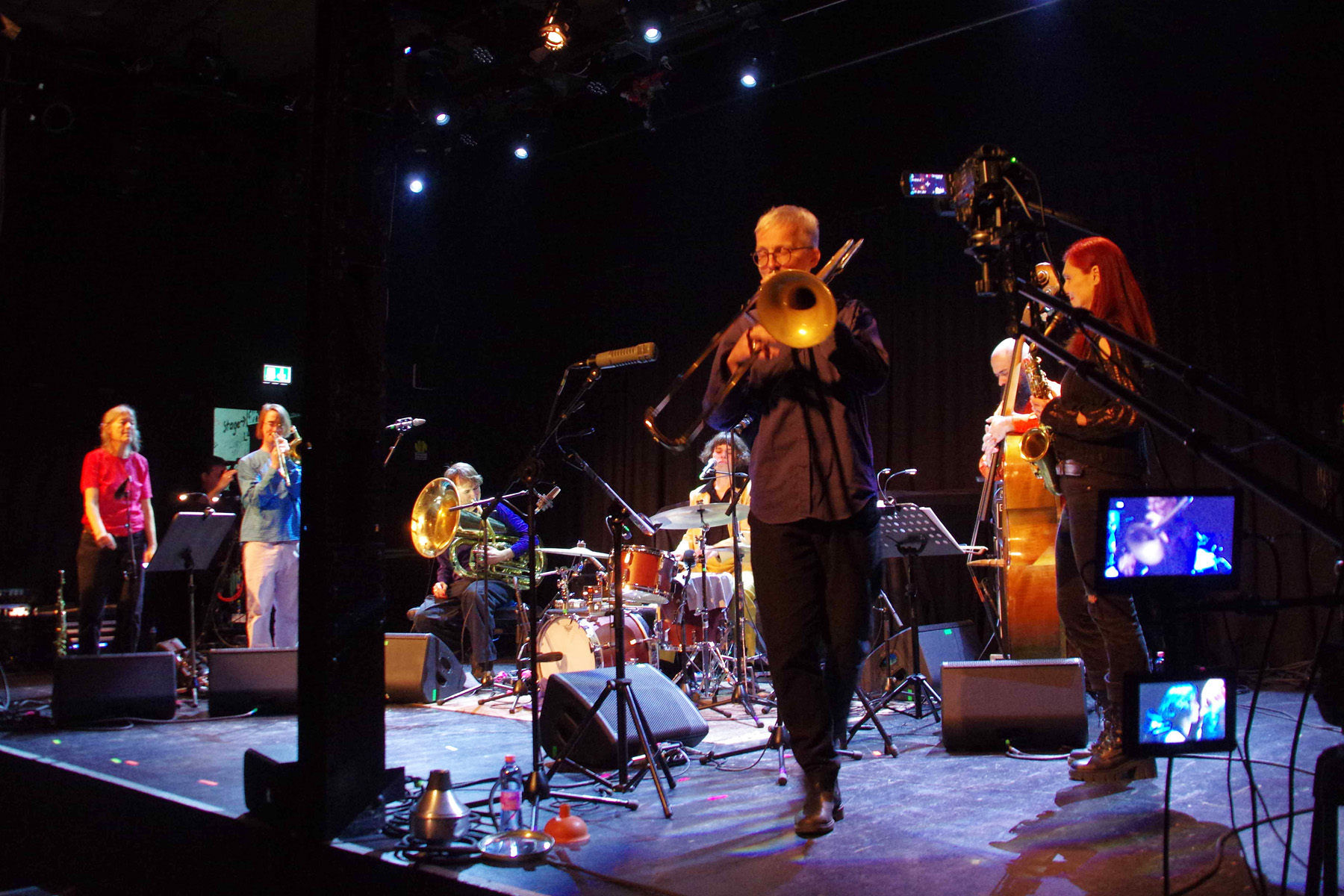
As textures regularized the chief contrapuntal expanse was between the discordant horn expressions placed on top of a concentrated tuba and bass ostinato. These pivots were integrated into the usually melodic Brazilian songs which the drummer vocalized while also time keeping. As the interpretations reached polyphonic affiliations, rough instrumental edges were added to the Portuguese lyrics. However more muted asides shaved off the more astringent forays from soloists as each was given space to express him or herself. Interludes included basso tuba wallows, sprightly and staccato saxophone flutters and reed bites as well as more plunger runs from the trombonists. During the final song, members of the Galter trio and Ilessi congregated behind Portugal’s drum set adding choral harmonies to her concluding lyrical vocalizing.
Portugal’s singing asides were also present but not as upfront as her drumming skills on November 6, when she joined German percussionist Burkhard Beins – who also played bass guitar – and Argentinean percussionist Gordoa – who carefully manipulated electronics as well – to make up the Erosão Percussion Trio.
Built around each trio member selecting a rhythmic pattern as the other two reacted to it, Gordoa brought the most extreme responses to individual challenges, with bell-ringing and electronic hisses adding to his positioned whaps on the gran casa. Meantime Beins rasped a violin bow on top of various sections of his full kit, or carefully wiped down drum tops before turning to emphasizing cymbal timbres both attached and unattached, as well as scraping mini cymbals on drum tops, a technique also used by Portugal. Beins’ subsequent bass guitar rhythms added tautness to Portugal’s vocalizing, encouraging her to raise and roughen her singing. Eventually as the cadences sped up with percussion pops and backbeats, the three reached a point of congruence, with the finale signalled by an elongated pointed dumstick-on-cymbal screech from Portugal.
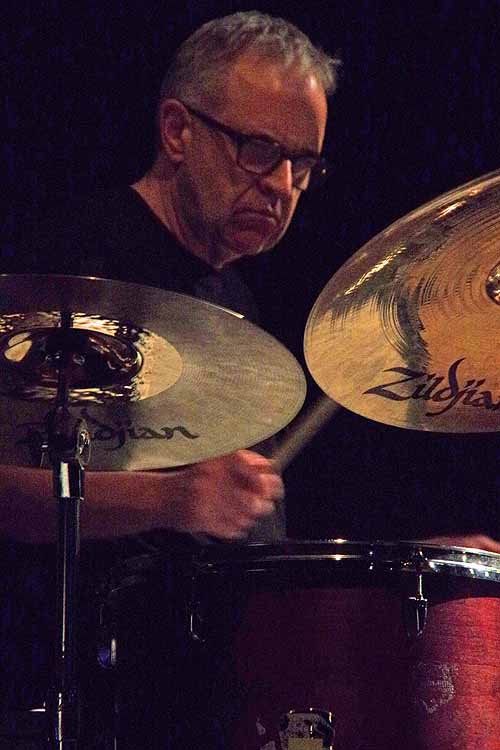
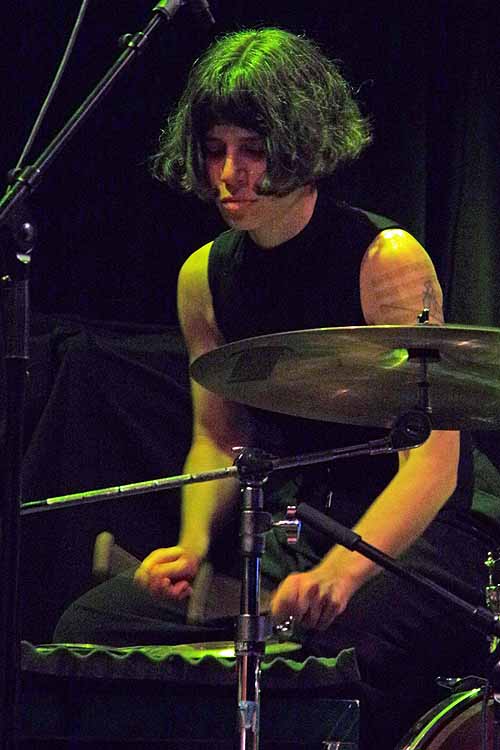
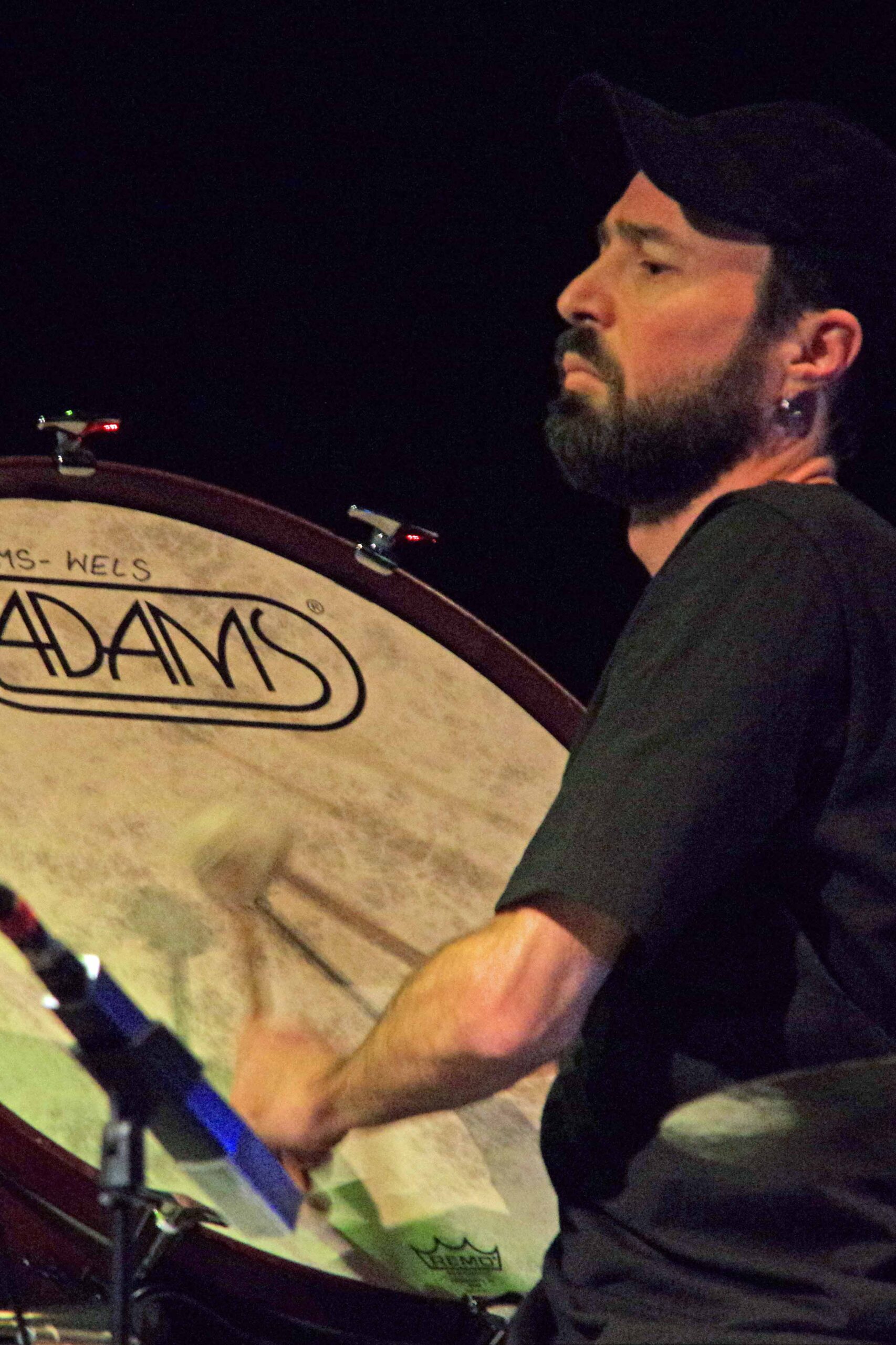
Also including Beins playing percussion, the established Marmalsana trio that also featured Egyptian Maurice Louca on acoustic guitar. and Lebanese Tony Elieh playing acoustic bass guitar was joined on stage the next day by Turkish singer Cansu Tanrikulu, who added a tinge of vocals and electronics to . Her mix of free improv and non-Western vocalizing created a unique coloration and contrast to the primarily South American styles featured elsewhere in the festival.
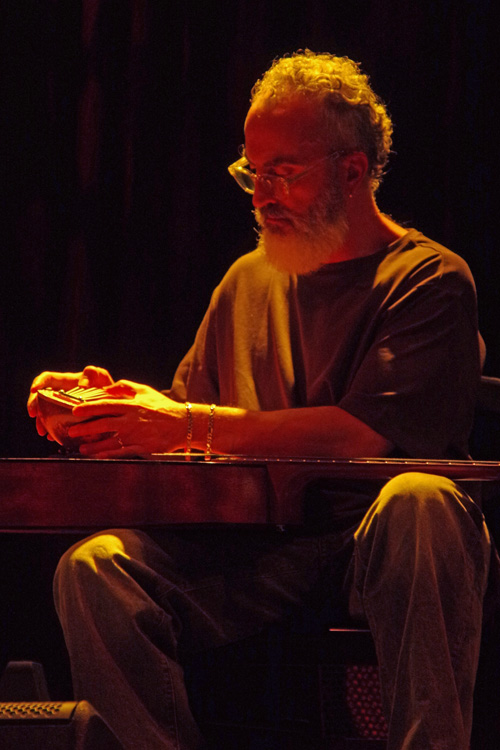
Eschewing words for the most part, alternating between breaths, yodels and often modified by electronic mixing, Tanrikulu intensified the mostly Maghrebi tilt of the music. Still overall the instrumental association was more microtonal than Maghreb. Beins’ wood-block scrapes, cymbal strokes and drum rattles sometimes faded to subtle brush work. Guitar strokes encompassed folksy suggestions as well as metallic ebow drones. Percussively vibrating a stick among the strings was also part of Louca’s output, while Elieh’s bass guitar cadences at points produced a groove, yet at others turned the instrument into a horizontal idiophone when he used mallets to hammer on the strings.
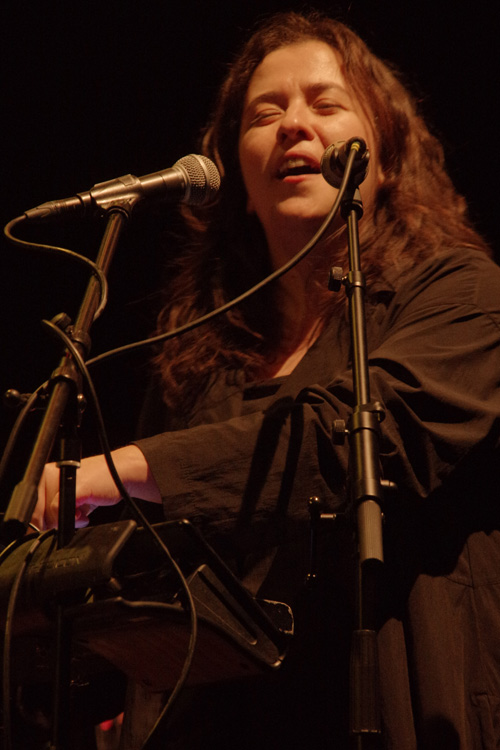
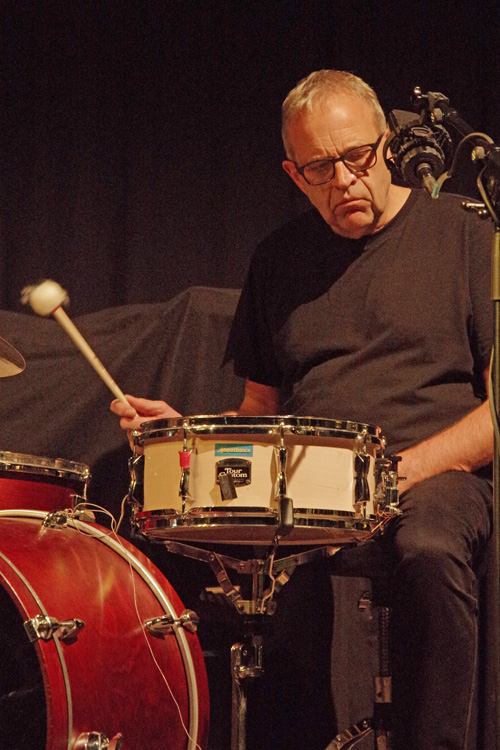
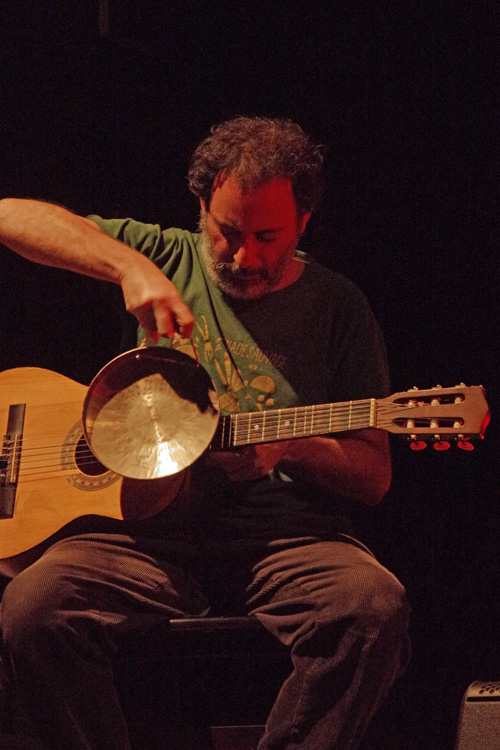
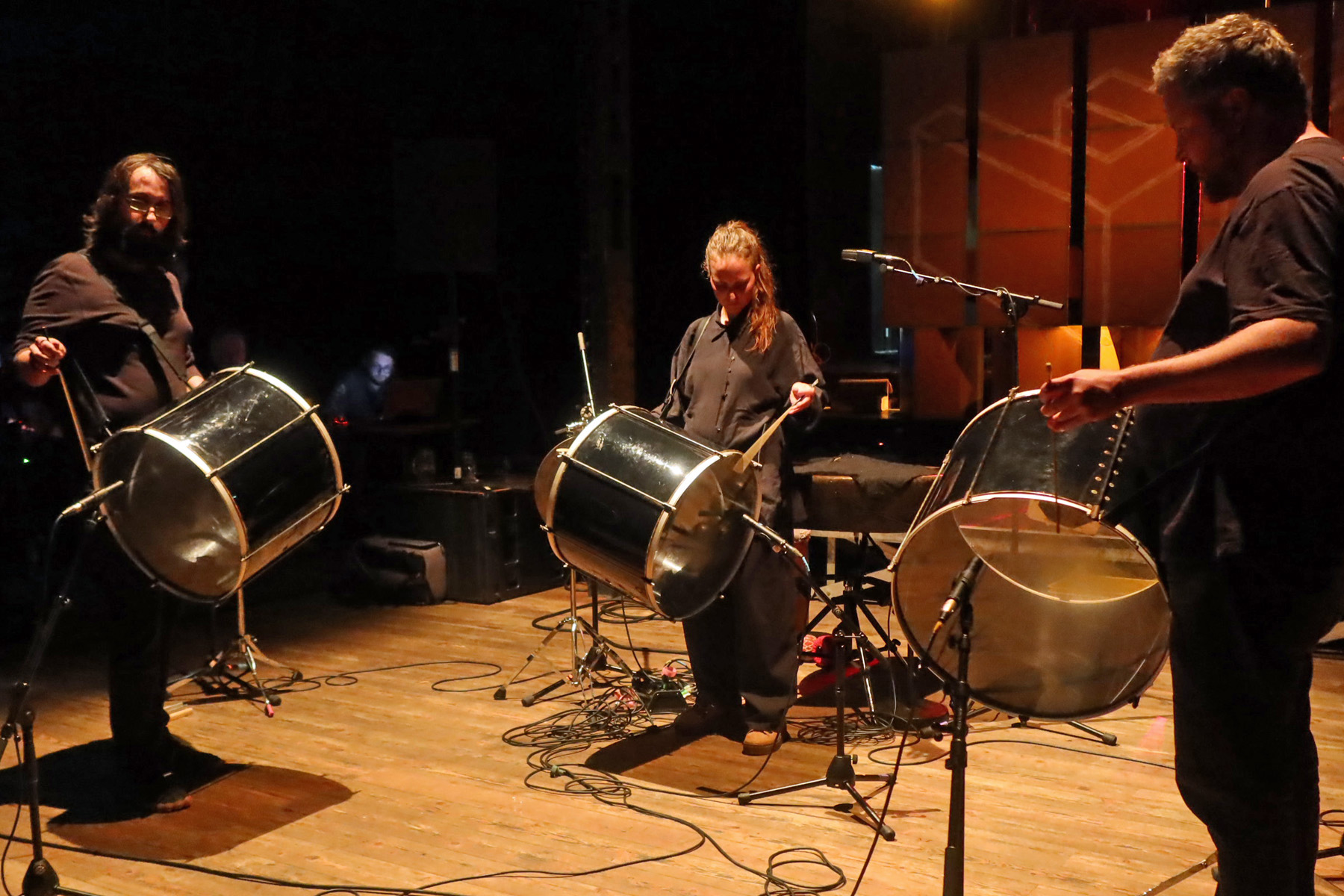
Percussion and nothing but was also the focus of one group on the festival’s opening night. Consisting of three French percussionists, Gabriel Valtchev, Camille Emaille and Pol Small, OTTO concentrated on extracting a series of gripping tones from individual tapans. The tapan is a double-headed cylindrical Bulgarian drum that’s strapped to the player’s waist as in a marching band, while both heads are struck simultaneously to produce a variety of timbres from extended drones to brief patterns. Working together at various speeds and pitches, the tapping and smacking was sometimes supplemented by pressure on smaller idiophones using mallets or a violin bow. Overall the juddering effects were riveting, but lack of dynamics almost created a deadening sameness.
Not every performance at this year’s Music Unlimited focused on percussion or vocals however. Other memorable sets included a highly effective, improvised duo of two Poles, pianist Marta Warelis and alto saxophonist Angelika Niescier on the final night of the Alter Schlachthof program, as well as two notable solo showcases: Austrian Susanna Gartmayer playing bass clarinet and contra alto clarinet, and Syrian Aram Abbas’s recital involving no-input mixing board manipulation.
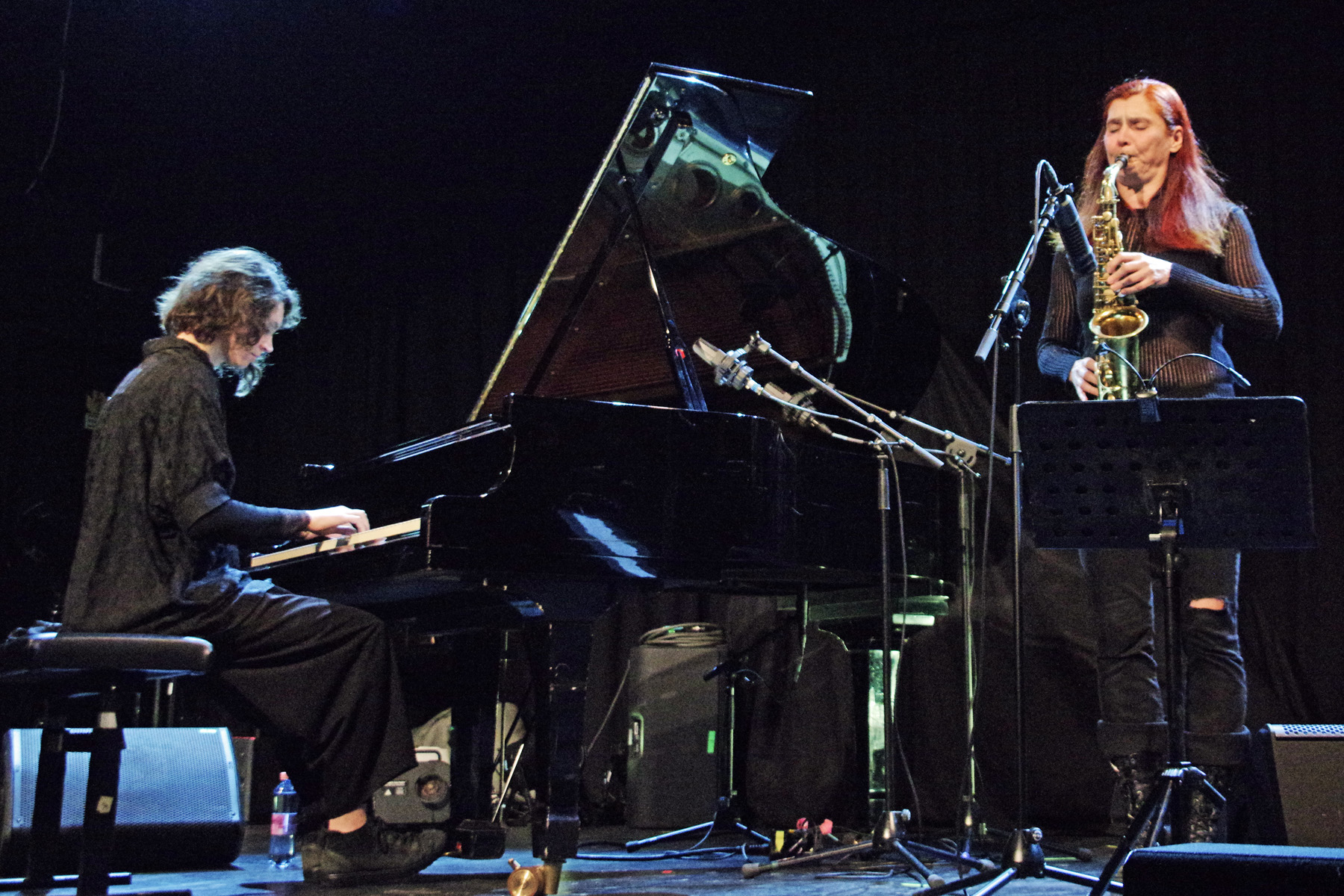
Initially dominated by Niescier’s jagged note-bending and rests, reed squeaks and swirls, her soaring saxophone tempos on that Sunday evening were soon joined by a combination of Warelis’ high-pitched keyboard strokes and speedy sweeps that fell to low-pitched pressure. When the improvisation slowed down to straight-ahead piano comping, the saxophonist extended her tone examination to expose the timbral positions of every note. Eventually Warelis moved from keyboard slides and glissandi to stopped-key percussion. As wide-ranging reed bites were embedded within the pianist’s rolling harmonies, a resulting rapprochement had both players descending the scale in tandem to reach the finale.
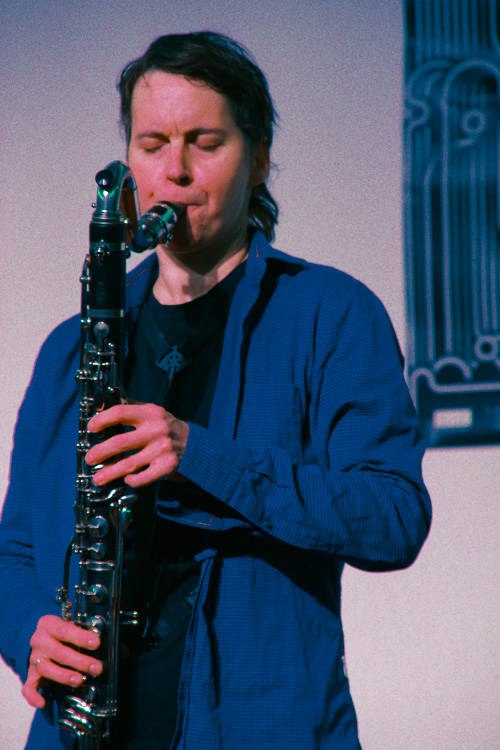
Reed virtuosity was on full display earlier on November 8 during Susanna Gartmayer’s set at Bildungshaus Schloss Puchberg, and was made visually exciting with her conspicuous entrance from behind the auditorium’s doors onto the stage. This took place while outputting expanded tones, thickened snores and tongue stops, and was reminiscent of Müller’s and Wesp’s brass-blasting entrance to their set at Alter Schlachthof the previous evening. The difference of course was that the clarinetist was tout seul, creating every tone from her solo horns from harsh altissimo screams to melodic interludes and on to tongue-slapping rhythms.
Squeezing timbres from both elongated instruments, she was able to centre ground-shaking screeds and key percussion alongside quick changes in pitches and tempos as she roamed across the stage, then once again into the audience, snaking through its perimeter and finally intensifying her output of squeezed and clipped notes as she walked from the back of the auditorium to the stage.
Eventually trading the bass clarinet for the even larger contra alto model, Gartmayer not only emphasized its crow-like caws and basement blasts, but also seasoned them with mid-ranging flutters, yelps and more key percussion. Finally she wrapped up the recital by moving from emphasizing low tones to a broken chord coda that dissolved reed expressions into thin wisps and wafts.
Gartmayer’s cultivated demonstration of a single acoustic instrument’s multiple expressions was matched the day previously as Abbas’ set, which exhibited the varied sonic textures that could be extracted from a non-input mixing board. As electronically focused as her clarinet was exclusively acoustic, his positioning of wires, dials and plug-ins performed in a darkened room at the Landesmusikschule illuminated only by a single lamp, brought a (mad) scientist-like atmosphere to the performance.
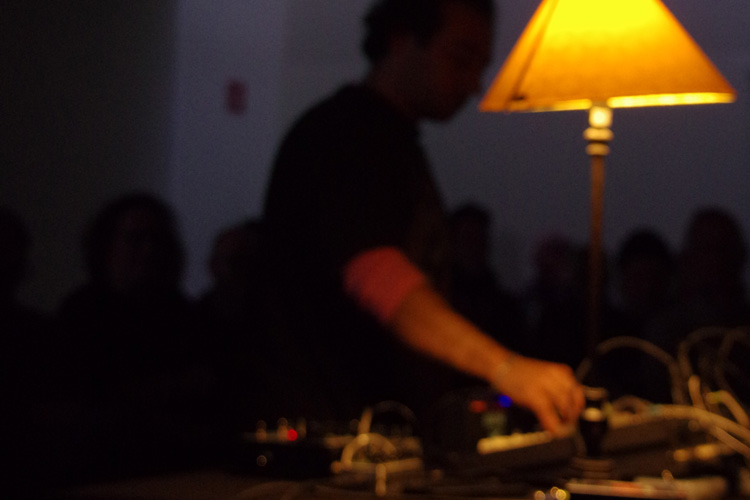
Since feedback drones were ever present, the electronic loops repeated intersecting textures at various speeds that alternated among granulized tones, replications of arching cries and garbled screams, unending crunches, spinning-top-like pitches, doorbell-ringing replications and wave-form crackles.
Intermittently a solid tone was present, but that was frequently buried underneath clarion pitches, bugling extensions and shrill whistles.
Eventually the whooshes, buzzes and clatters reached a crescendo of elevated pitches, then dissolved to silence as quickly as they were first heard. Whether sonic definition was attained was an open question, but Abbas’ skill seemed to be in having the audience follow the contours of his aural journey.
Exposing different musical currents has long been a leitmotif of Music Unlimited and these performances as well as others demonstrated this in 2026. Vigilance in skirting an overload of singular impressions – in this case vocal and South American sounds – was confirmed due to the overall makeup of this four-decade anniversary celebration. Still, concentrating presentations in one direction may be a constant continuing challenge in the future as the mature festival evolves.