

ImproMonday 5
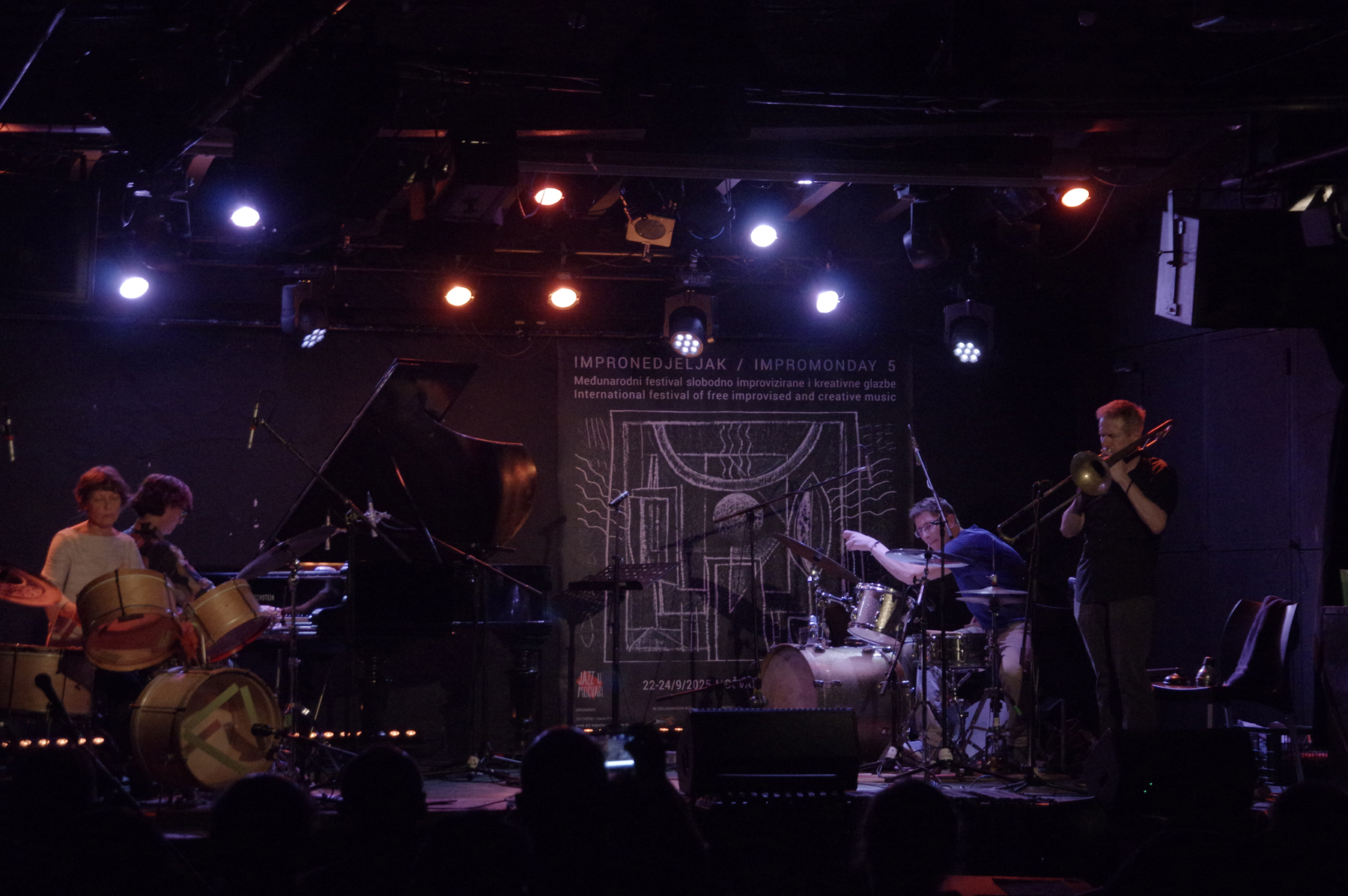
Festival ImproMonday 5
September 22-24, 2025
Zagreb, Croatia
Review by Ken Waxman
Portraits by Susan O’Connor
Rocky shorelines and succulent seafood may be the first things that come to mind when defining Croatia. Despite its other attributes, creative improvised music isn’t high on the list. However, as in many other places throughout the world, a small group of dedicated musicians is working to keep free-form sounds alive in Zagreb, the country’s capital.
As an outgrowth of the sessions held every Monday night in the city’s funky, out-of-the way Močvara Club near Croatian Radio headquarters, multi-instrumentalist Damir Kafka has spearheaded an International festival of free improvised and creative music, the fifth iteration of which took place September 22 to 24.
Presenting a combination of established and ad hoc ensembles, musicians featured were from Finland, Austria, Germany, Italy, Slovenia, Denmark and the U.S. Besides the local improvisers who played with the out-of-the festival climax, was a set of conducted improvisation led by American guitarist Elliott Sharp with 12 Croation musicians. To be honest, and largely because of the professionalism of all concerned, the gap between working and specially assembled ensembles wasn’t really noticeable. Instead, what was obvious in this era of enhanced populism, nationalism and even a drift towards tribalism, was the cooperation exhibited by most players. Another bonus was how the setup allowed for comparisons of distant improvisational approaches, even within the universalist Free music category.
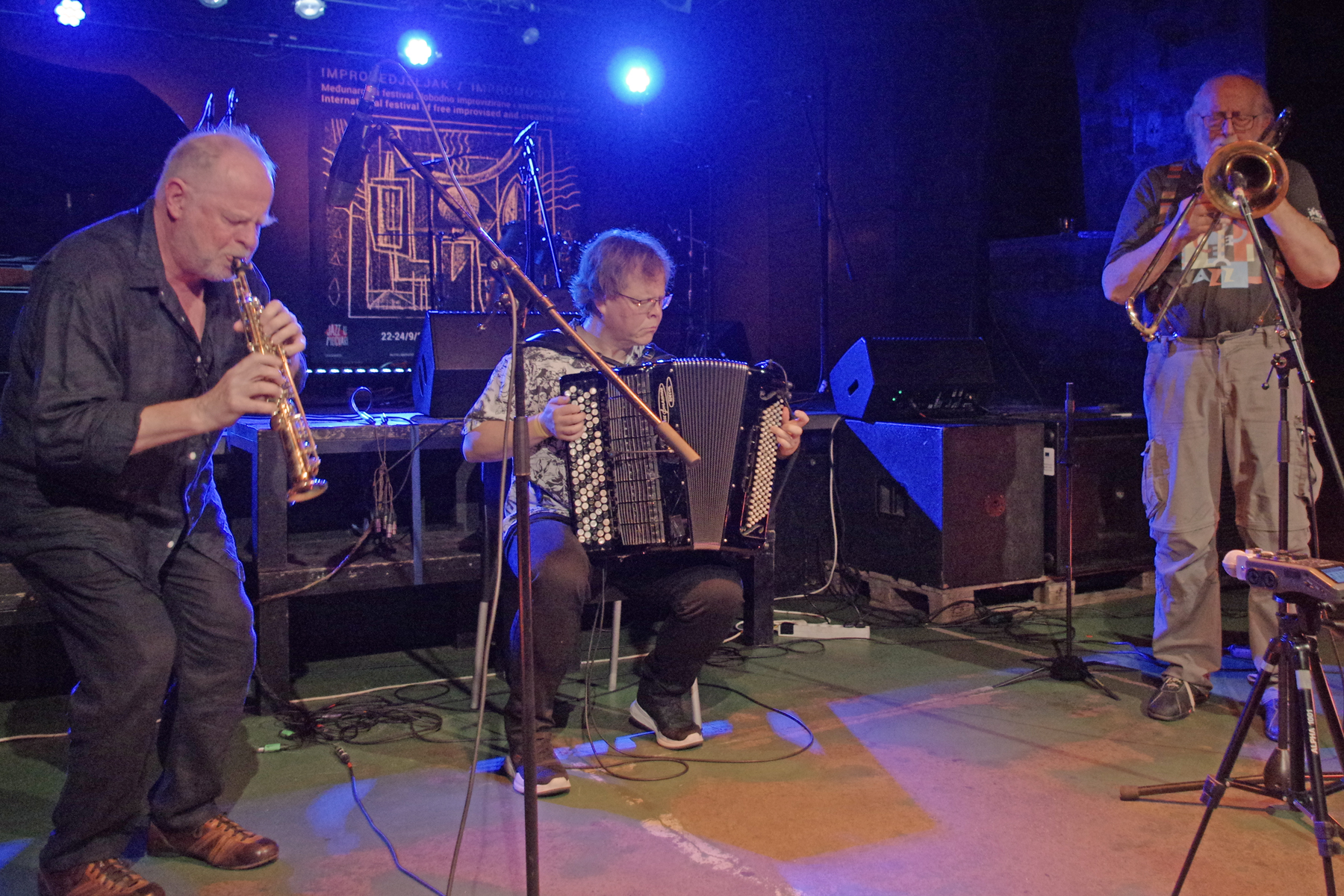
Take for instance, the unique sound strategies exhibited by two trombone innovators, Italian Giancarlo Schiaffini and American Steve Swell. Each performed twice. On the second night Schiaffini was a member of the Windows and Mirrors trio with two Finns: Veli Kujala, accordion, and Harri Sjöström playing soprano and sopranino saxophones.
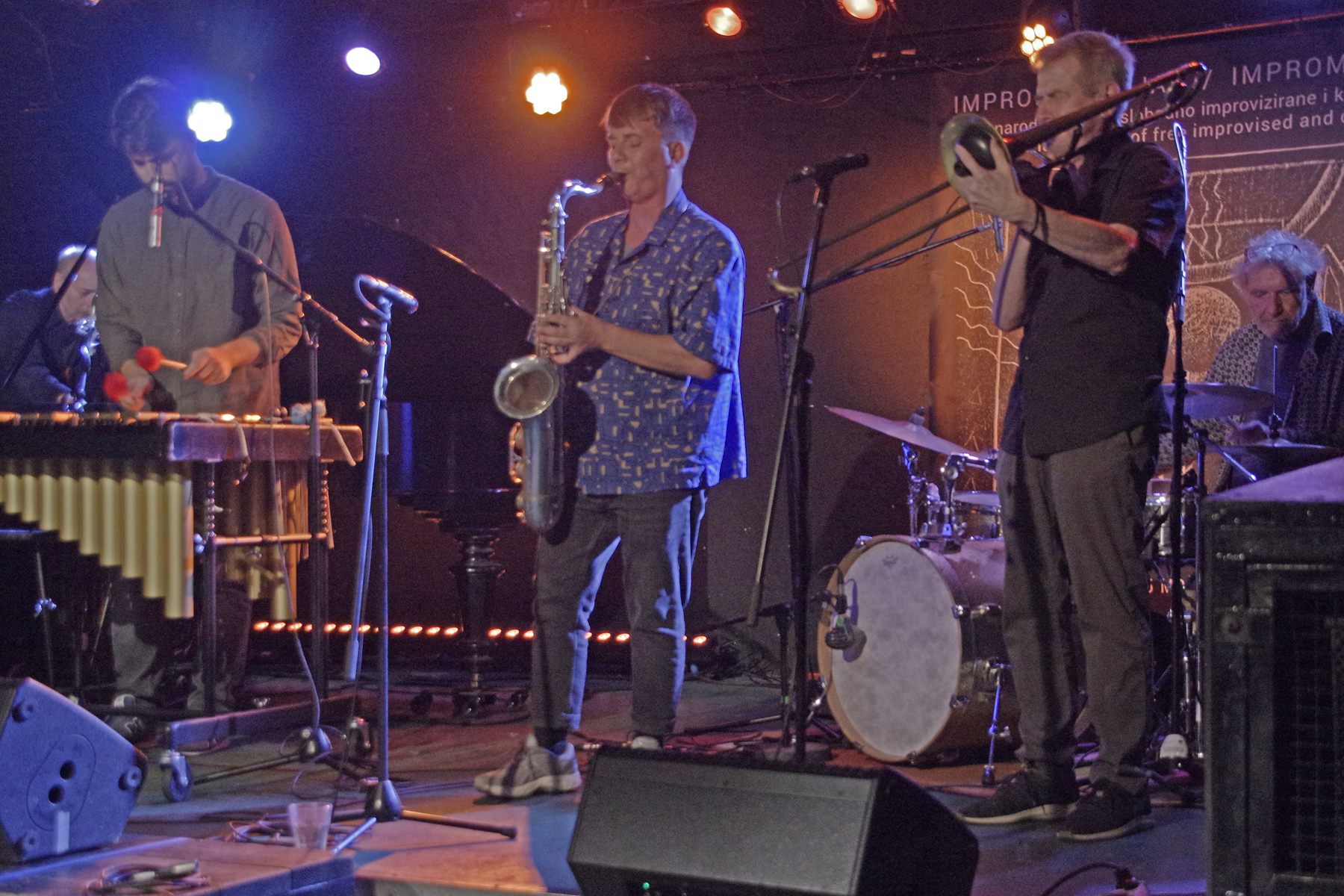
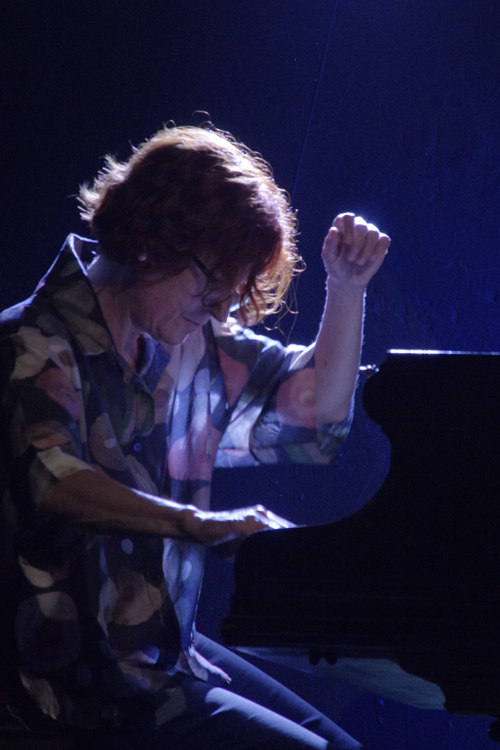
Also on the second night, Swell was part of an ad hoc quintet with Slovenian tenor saxophonist Cene Resnik, Danish drummer Peter Ole Jørgensen and two locals — Kafka on piano and soprano saxophone, and vibraphonist Šimun Matišić. The next night both trombonists were featured in specially organized ensembles, Schiaffini with fellow Free Jazz pioneer, German pianist Alexander von Schlippenbach, plus drummer Per Ole Jørgensen and Sjöström. Meanwhile Swell was matched with Austrian pianist Elisabeth Harnik and two drummers, American Tracy Lisk and Slovenian Urban Kušar.
Veli Kujala’s tremolo accordion hisses and judders on the second evening set up a continuum upon which Schiaffini and Sjöström built an exposition which at times depended on each projecting timbres through mutes. As the saxophonist’s trills thinned and tightened in response to the accordion’s reed-like smears, the trombonist’s plunger measures were converted to elongated smears. An exchange of triplets between the horns suggested a tv cop-show theme.
While Kujala’s multi-fingered exposition underlined the two horns’ projection, as the brass/reed blend solidified, the accordionist’s contributions were intensified and heightened as Sjöström introduced sopranino pops and cries until each member of the trio slid into a polyphonic conclusion.
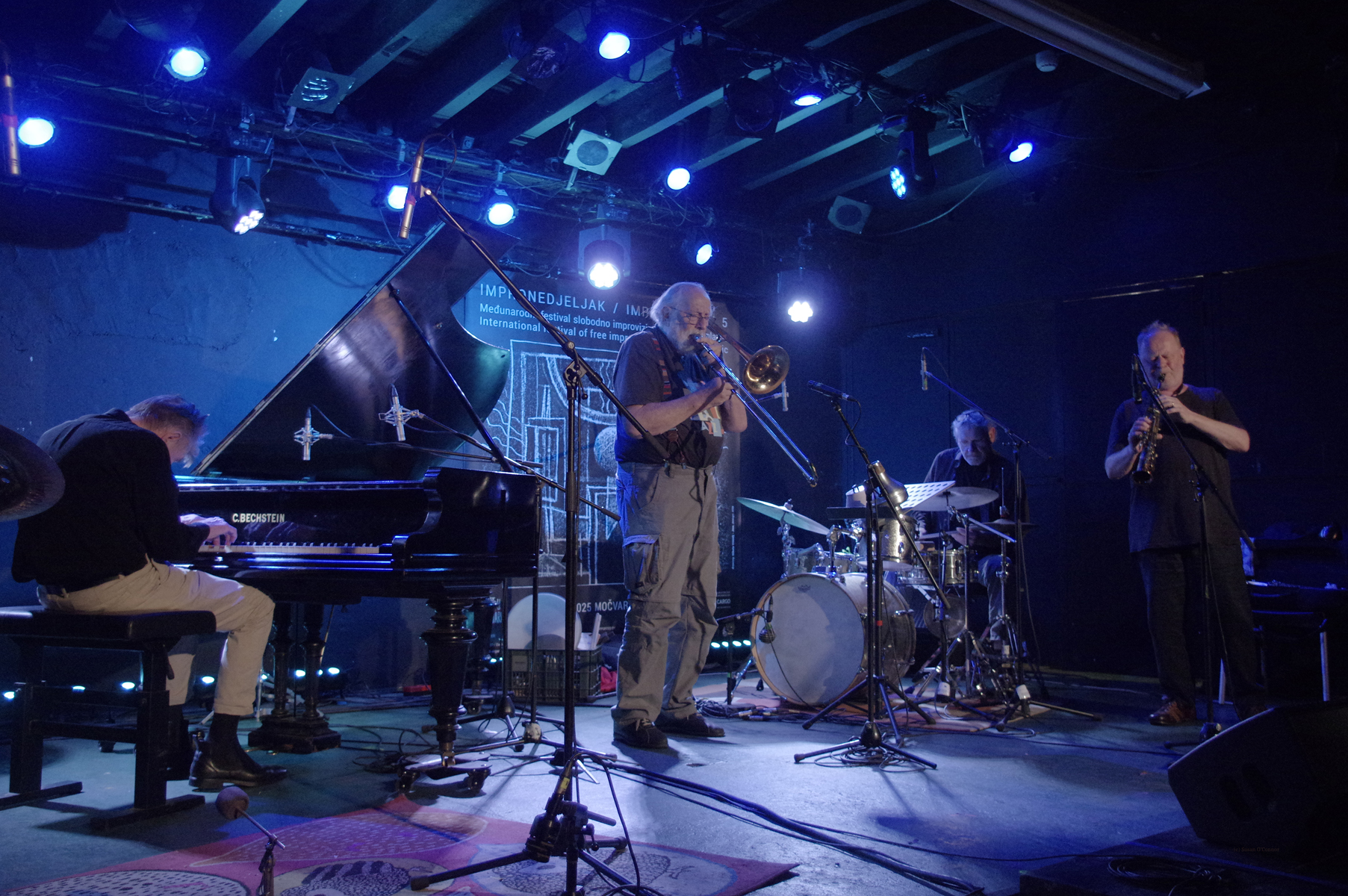
Schiaffini’s and Sjöström’s set with von Schlippenbach and Jørgensen, which begin the subsequent night’s set of improvisations, was simultaneously more advanced and more traditional. That’s because the stooped 87-year-old pianist at points excited the piano’s inner strings for distinct clips, responding to the saxophonist’s spiky reed trills and the drummer’s clips.
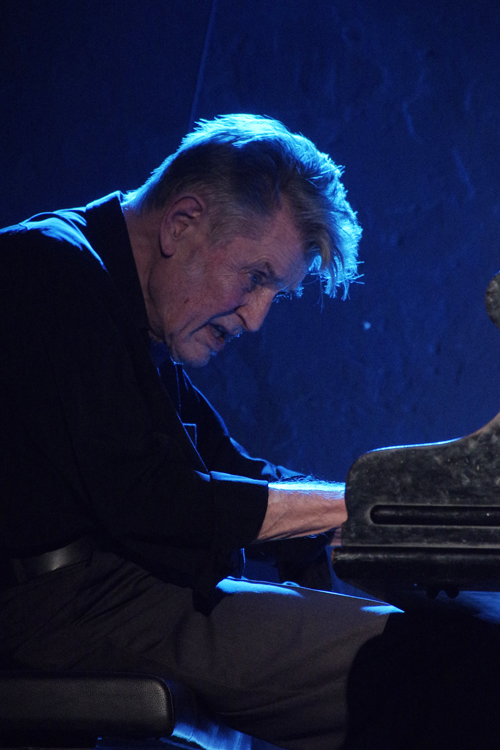
Throughout, however, his experience allowed him to oscillate among varied styles, projecting hints of swing into thematic asides, doubled by reed yelps and brass portamento; matching brass wah-wahs with romantic piano chording that sunk to pedal point; and occasionally descended into Monkish key slaps that coupled with thick gutbucket slurs from Schiaffini, almost turning those interludes into Classic Jazz.
Unwilling to let the improvisation end with conventional notes, Sjöström regularly thinned his vibrato to stabbing beeps and peeps while the trombonist superseded piano comping with an extended vibrating growl that linked New Orleans to New music.
Von Schlippenbach’s solo set, which opened the festival Monday night, provided more scope for him to express his trailblazing and traditional sides. At points clean and elegant with two-handed expression and low-pitch pressure, his quicksilver jabs and expressive tones touched on jazz swing that encompassed ringing glissandi and raggy asides. Alternately he crept up the scale with hard pumps, stop/start emphasis and leaps across the keys. Eventually with sweeps that moved sounds from the instrument’s bowels to the pinnacle of the piano keys – and including a melody sliver that was revealed midway – he emphasized multiple phrases as the finale.
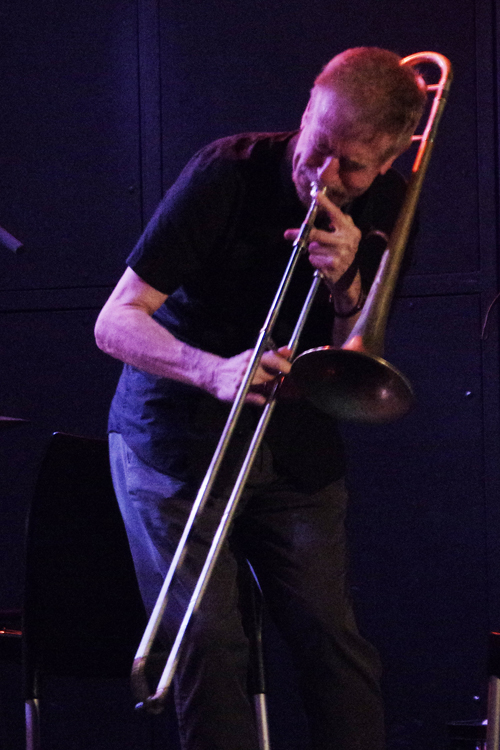
In contrast to Schiaffini’s programs, which expressed his pioneering brass mastery in a realized fashion, Swell’s ad hoc sets offered distinct stylistic variations. True to the concept of in-the-moment sonic adaptations, his brass strategies varied with distinctive style-shifting whether facing musicians he had played with before such as List and Harnik, or with others he was meeting for the first time, including Jørgensen and the three from the Balkans.
Swell also made use of unusual sound-and-motion effects that went beyond expected brass textures. Although his tailgate portamento and speedy tonguing also referenced New Orleans and New music, he didn’t stop there. On the final evening in the quartet with Harnik and two drummers, Swell at points dragged his instrument across the stage floor, using the resulting squeaks and scratches as counterpoint to the pianist methodically ratcheting the piano’s inner strings to add to pummels and rumbles from the drummers.
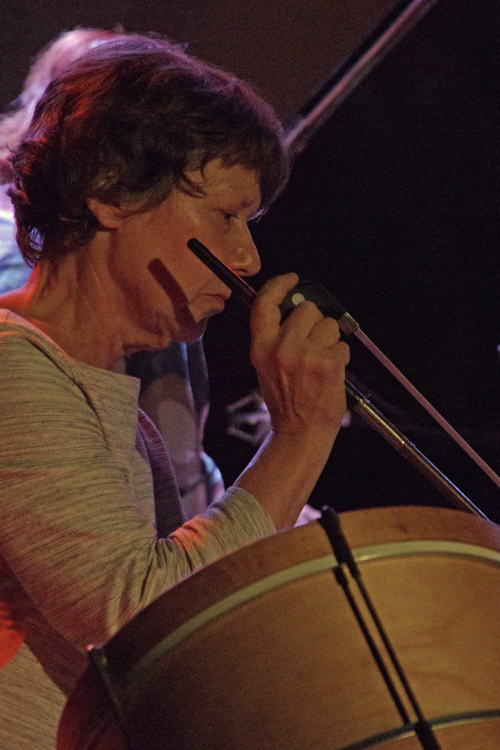
Swell’s brass blasts and resonating slurs were accompanied by a sort of davening, as he repeatedly propelled the trombone’s bell upwards and downwards as he played. Conversely, Harnik’s two-handed comping sometimes attained near-automatic pacing as she played, while Lisk rubbed a violin bow across one cymbal and Kušar added to the controlled cacophony with bass drum booms and by shaking a variety of small instruments alongside his kit.
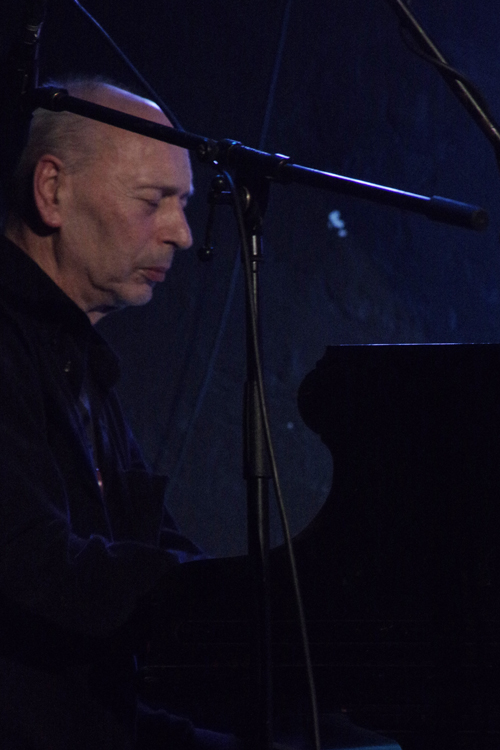
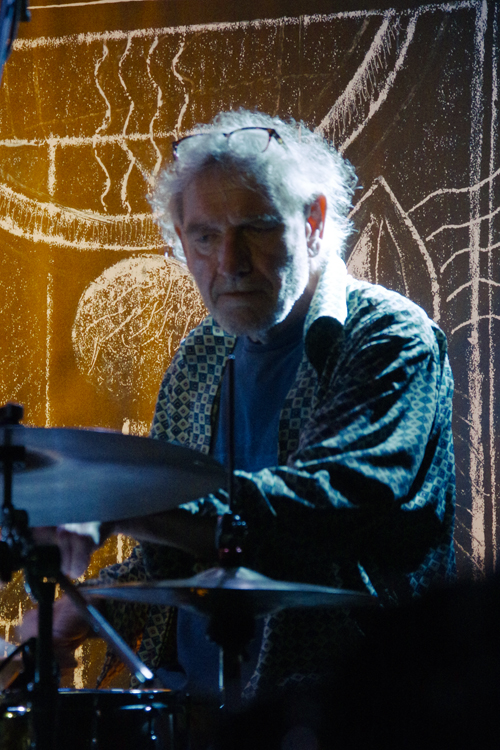
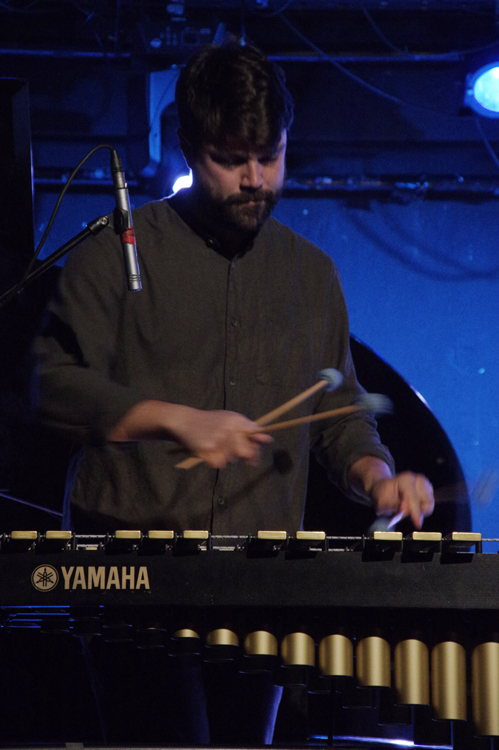
The previous night, in another unique setting featuring Swell, Resnik, Per Ole Jørgensen, Simun Matišić and Damir Kafka, there was balance between the percussion strength of resonating mallets on inner piano strings (Kafka) and vibraphone keys (Matišić) in contrast to Resnik’s moody reed slurs and Swell’s swift plunger extensions.
Other times, another turn was emphasized when both horn players asserted their mettle by intensifying metallic pivots alongside rocketing four-mallet slaps from Matišić. Meanwhile Kafka’s unexpected turn from keyboard comping to soprano-sax interjections boosted the interactive intensity, with cadenced pressure further applied from drummer Jørgensen. Rasping reed squeezes and the trombone’s brassy blats augmented the engulfing tension until methodical vibe pops brought the piece down to responsive moderation.
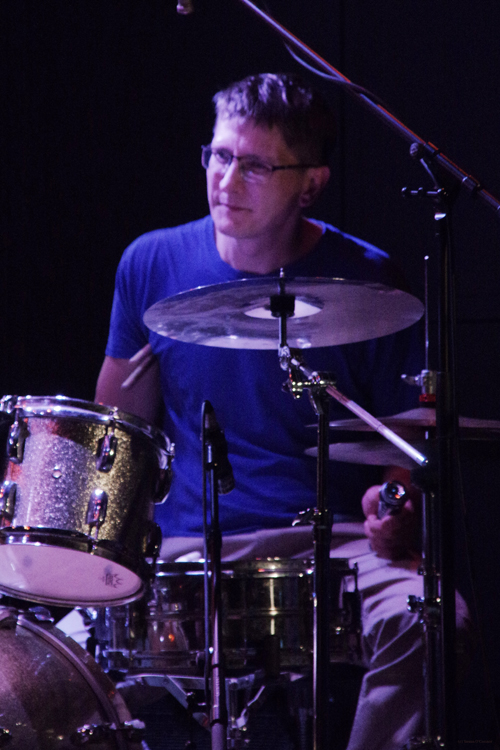
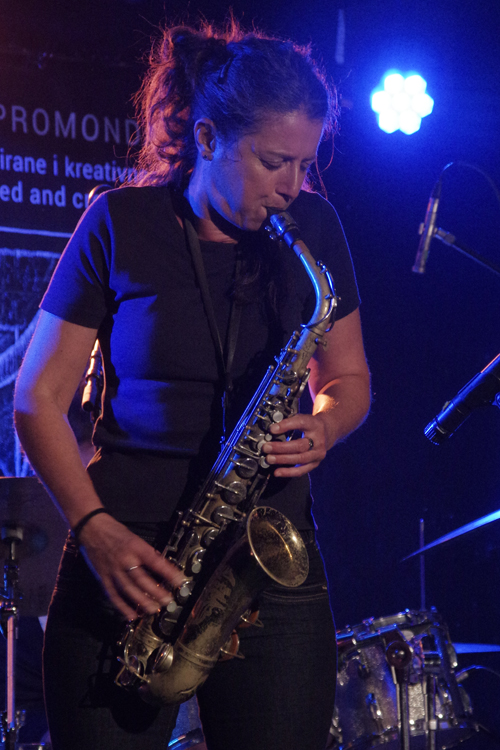
Moderation wasn’t the first noun that came to mind when Kušar and Resnik joined with Austrian alto saxophonist Tania Feichtmair as the Cut Trio during Monday’s final set. As the drummer set up a carpet of ruffs and rebounds plus cymbal color, the alto and tenor saxophonists’ antiphony encompassed intense variations of honks, flutters and splatters that ascended in tempo as they tossed phrases back and forth.
When the tones broke apart with Feichtmair emphasizing key percussion and note-juddering, and Resnik airy higher pitches, Kušar’s press rolls and pseudo-martial beats were equally bypassed as he clattered small unattached cymbals and other percussion add-ons onto his drum tops. This culminated in a hard ruff that complemented a slurred tenor sax obbligato and a leaner alto saxophone peep.
The remainder of the set continued in a similar fashion with the climax occurring in the penultimate minutes as both saxophonists pushed out altissimo peeps when bouncing up and down like jack-in-the-boxes.
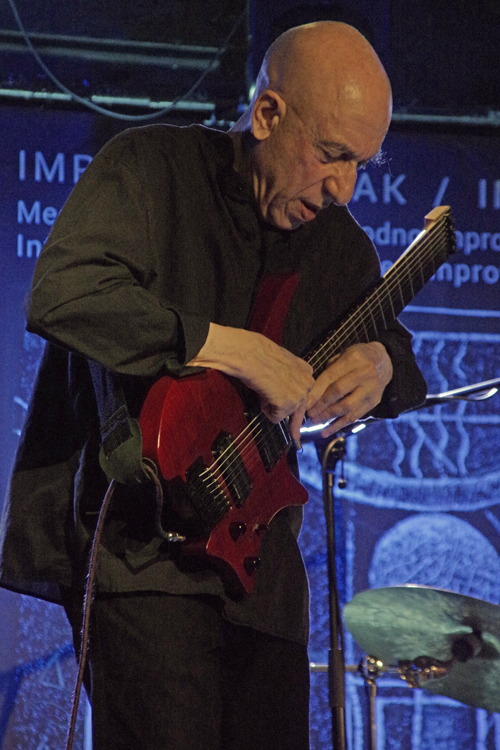
The evening before their meeting with Swell and Jørgensen, pianist Harnik and drummer Lisk were involved in an improvisation with guitarist Sharp, with whom only Harnik had briefly played previously.
Using a combination of cross-handed pianism, inner-string drones, prestissimo chording and keyboard shakes, Harnik preserved a melody when partnering instruments that reflected the advantage of raw power and electricity. Rather than stick to a regular beat, Lisk bopped and smacked her kit, aimed mallet pressure onto a wooden box placed on the drum tops, threw small balls onto the drum tops and ratcheted a bow along the side of a handheld cymbal.
Sharp’s metallic guitar flanges were the least of his dynamic responses to the pianist’s razor-sharp string vibrations and sudden pauses. Using an e-bow for added feedback and decay, his expositions also emphasized surf guitar runs, place-making strums, thickened string vibrations, buzzes, and staccato slides up and down the neck. Eventually a series of hand taps on guitar strings and diminishing piano runs marked the finale.
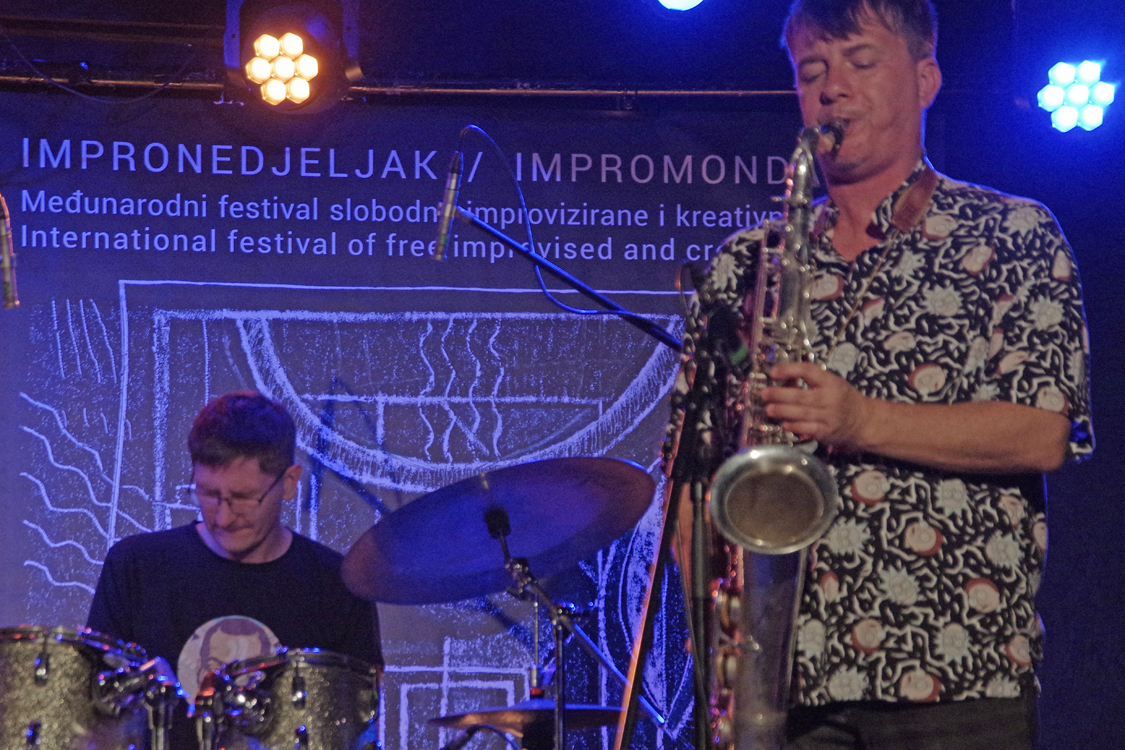
Sharp’s other ad hoc meeting was with the team of accordionist Kujala and saxophonist Sjöström on the festival’s second set on opening night, and a day before the Finns were part of more familiar formations.
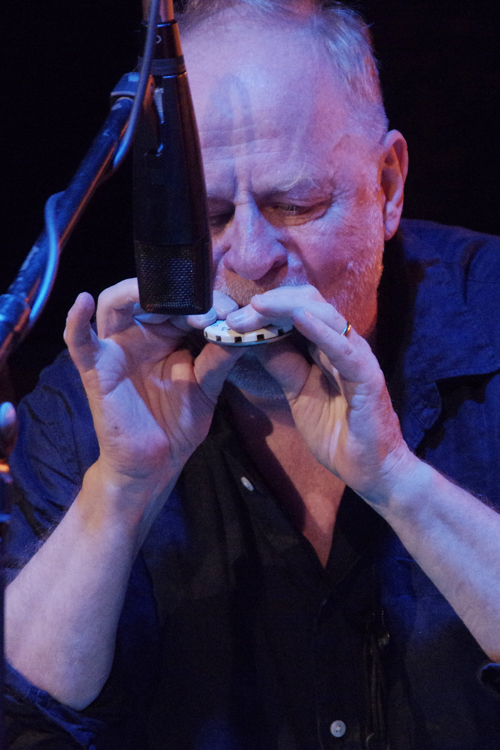
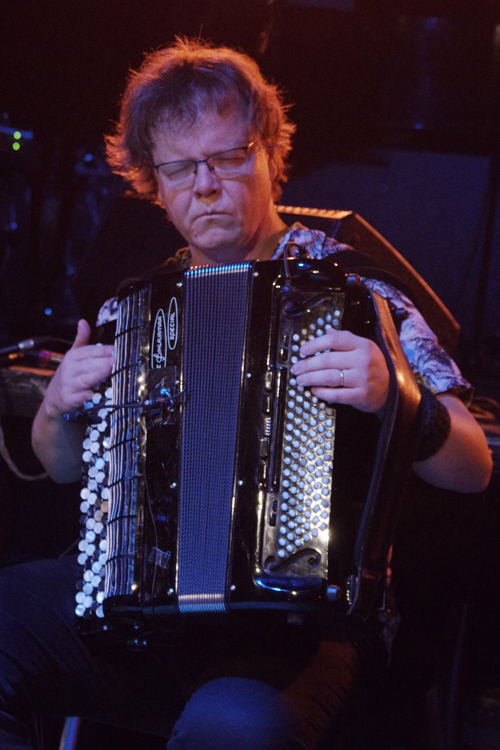
As caustic and spirited as the Harnik/List/Sharp meeting would be mid-range but powerful, the Finnish-American improvisations sped up as the set advanced. Kujala jiggled and wiggled sibilant timbres, Sjöström projected harsh bites from his soprano sax, and Sharp buzzed an e bow against the strings for additional distended effects. As the repeated pressure built, the saxophonist’s spittle-encrusted notes intersected with the accordionist’s tremolo flutters, as well as the guitarist’s tough thumps and tumescent flanges. Before the guitarist’s string clenching and twanging, and the accordion’s undulating sweeps became too pressurized however, the saxophonist’s storytelling trills directed the others into a three-part groove.
Sharp’s participation in these smaller group improvisations served as a prelude to leading the dozen local players in an aleatory reading of three of his compositions as Festival ImproMonday 5’s final set. The program was entitled Apeiron and was the result of a few days of workshop-rehearsals he had with the players beforehand. During the set, anticipation gave way to appreciation as the participants went through the paces. The group consisted of flutist Leo Beslać; saxophonist Ivan Haubrih; Kafka; guitarists Pavle Jovanović, Ivan Vinski and Vid Marinović; bassist Boris Janje; bass guitarist Nenad Sinkauz; vibraphonist Miro Mance; Ivan Mršić playing objects and electronics; and vocalists Magdalena Krall and Dina Puhovski.
As the pieces evolved bringing in elements that ranged from microtonal to Metal, the performance was more of a group blend than a solo showcase for any particular player. The vocalists harmonized creatively, expressing emotions with sharp syllables; the vibes rang percussively as the bass guitarist maintained the groove. Flute and saxophones kept the melodies linear with a combination of riffs, mini-bites and spills, while the emphasized guitar flanges and pedal setups added verve and vigor to the interpretation of the graphic score. As a first-time public performance it was successful, yet distinctive group identity seemed missing along with an assertive stance from the participants.
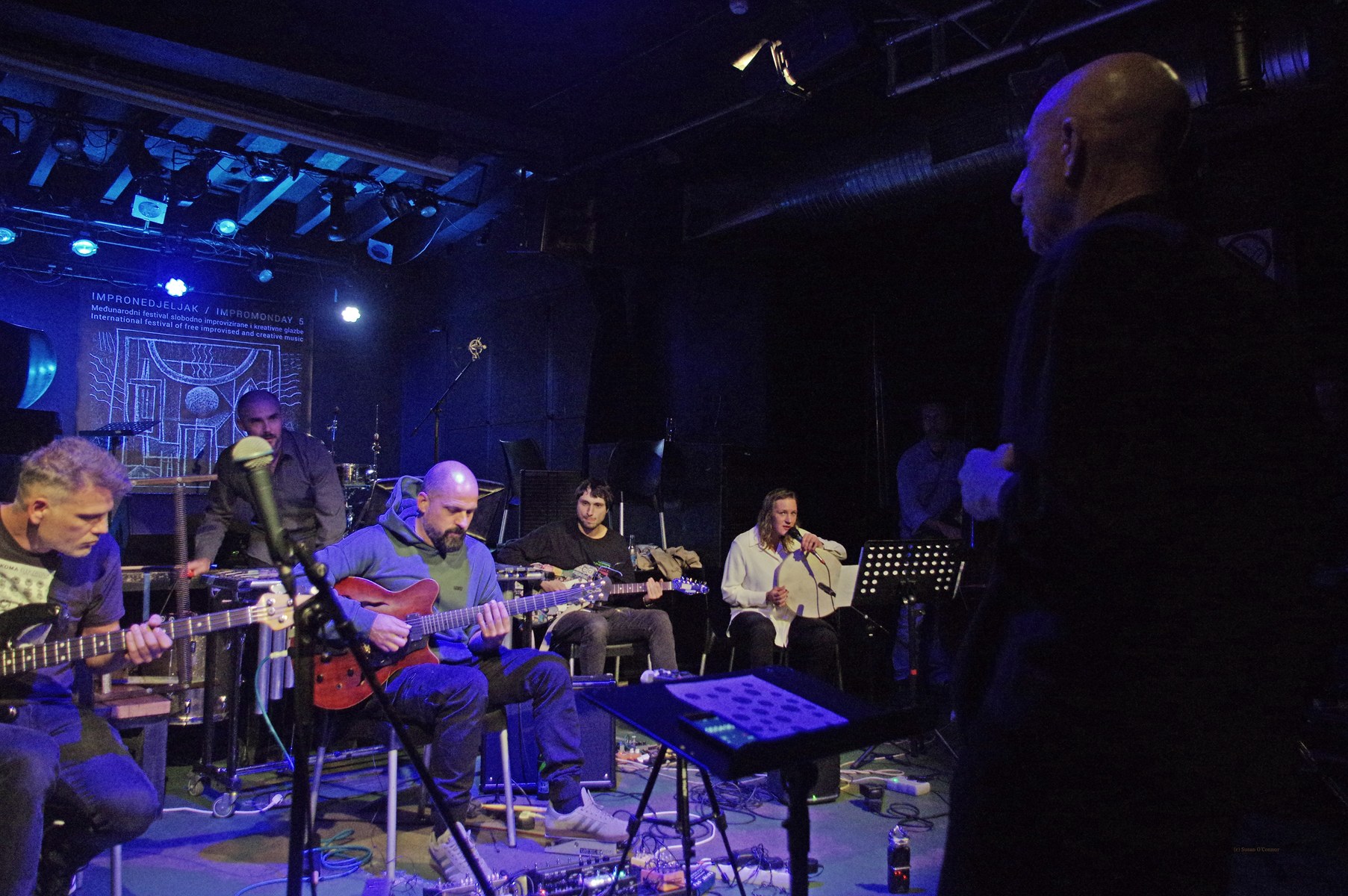
Nevertheless, continued exposure to experienced improvisers as presented during this year’s festival iteration should bring more exploratory ideas into the Croation musical gestalt. Another concept that could be further explored would be organizing more ad hoc ensembles where the locals would play alongside the visiting improvisers.
All in all though, in its fifth year, Festival ImproMonday is already making an indelible mark on the evolving Croation music scene. Now that it has established its presence on the country’s performance calendar, it should be supported to evolve still further as a touchstone for Adriatic musical innovation.
More reports by Ken Waxman are under Festivals and Reviews. Performance portraits by Susan O’Connor are continually being enhanced and added to the Artist pages.
Please contact either of us for licensing and reproduction inquiries: [email protected]